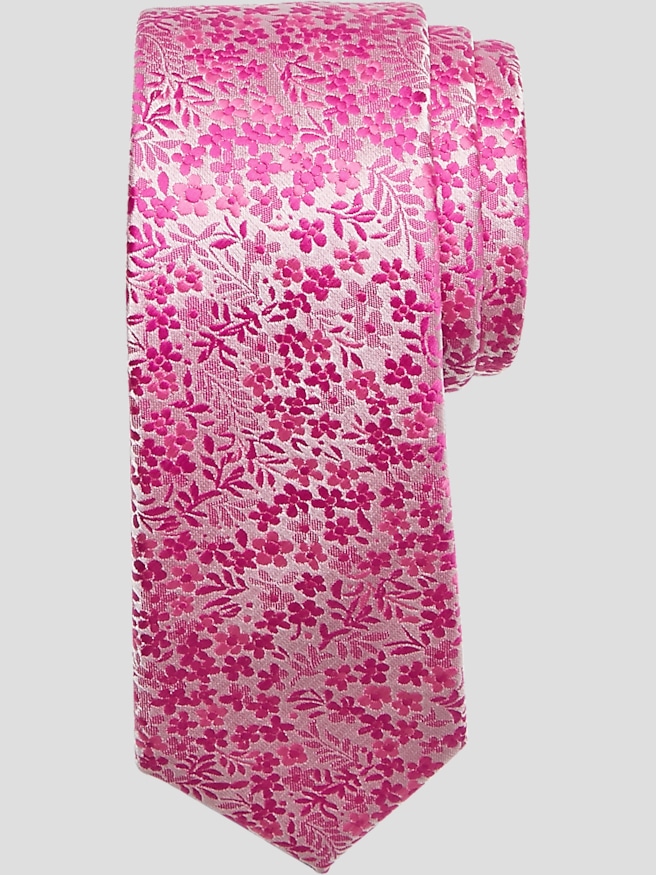
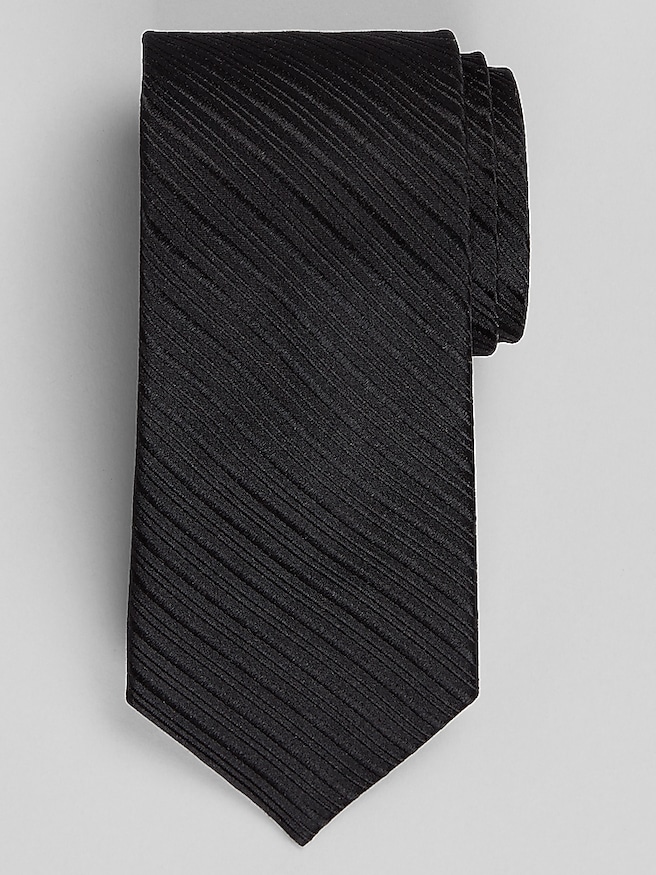
Men’s ties bring color, texture, and a sense of finish to tailored clothing, whether the occasion is a job interview, a wedding ceremony, or an important presentation. A necktie draws the eye toward the face and connects the shirt to the jacket, making even a familiar suit feel more intentional. Solid ties offer a clean foundation, while stripes, small repeating motifs, paisley, dots, and floral patterns give an outfit more personality. The fabric influences both the appearance and the way a tie feels when knotted. Silk is a traditional choice for business and dress occasions because it drapes well and can have anything from a soft luster to a textured, nearly matte surface. Smooth silk creates a polished accent against a crisp dress shirt; woven silk can add dimension without relying on a bold print. Jacquard describes a weaving method that builds a pattern into the fabric, rather than a particular fiber, so the material label remains important. Wool ties generally have a softer, more textured appearance that complements flannel suits, tweed jackets, and other fabrics with visible character. Cotton and linen ties tend to look less glossy and work well with more relaxed tailoring, although their tendency to crease depends on the weave and construction. Knit ties introduce another kind of texture, often with a squared end that feels less formal than a traditional pointed necktie. Polyester ties can offer resilience and color retention, but their drape, sheen, and care requirements vary. The best match depends on the setting as much as the material. A restrained silk tie suits a conservative office, while a textured knit can make a sport coat and button-down shirt feel deliberately dressed rather than overly formal. For a wedding party, consistent color and pattern can create a coordinated appearance without requiring every accessory to match exactly. Bow ties serve a distinct role, particularly with tuxedos and formal evening attire, where the invitation’s dress code should shape the choice.
Proportion matters just as much as color when selecting men’s neckties. Tie width generally looks most balanced when it relates to the jacket’s lapels and the wearer’s frame: a very narrow tie can seem disconnected from broad lapels, while a wide tie may overwhelm a slim jacket. A tie around 3 inches wide often provides a middle ground, though personal taste and the cut of the suit should lead the decision. Length deserves equal attention. When tied, the broad tip should generally reach the waistband or belt buckle rather than stopping well above it or extending far below. Taller wearers, those with longer torsos, and anyone who prefers a fuller knot may need additional length; height alone does not determine the right fit. The shirt collar also helps set the scale. A four-in-hand knot has a slightly asymmetrical shape and usually works comfortably with point collars, while a half-Windsor offers a more balanced triangle. A fuller Windsor can suit a spread collar, provided the tie’s thickness does not make the knot bulky or crowd the collar opening. Fabric changes the result: a substantial woven tie produces a larger knot than a thinner fabric tied the same way. Color coordination is often simplest when the tie contrasts with the shirt and picks up a tone from the jacket. Navy or burgundy against a white or pale blue shirt gives a business outfit definition without demanding attention. The stronger colors and pronounced patterns associated with Mens Power Ties can create a more assertive focal point for presentations and professional events. Patterned combinations work best when their scales differ, such as a fine-striped shirt beneath a tie with a larger, more widely spaced motif. A pocket square can echo one color in the tie without duplicating its entire design. These relationships leave room for individual style while keeping the finished outfit cohesive, whether the wearer prefers understated solids or a more expressive pattern.
A well-chosen tie should also hold its shape through repeated wear. Fabric quality, stitching, lining, and construction all contribute to durability, and no single fiber guarantees a longer-lasting accessory. A tie should drape smoothly, with edges that lie cleanly rather than twisting and seams that appear secure. Its internal structure helps support the knot and restore the fabric’s shape afterward, but a thicker tie is not automatically a better one. Comfort and flexibility matter, especially for someone who wears a tie throughout a workday. Care begins with the label, since silk, wool, cotton, linen, and synthetic blends can require distinct treatment. Gently loosening and untying the knot after wear puts less strain on the fabric than pulling against a tight knot, and storing a tie untied helps prevent persistent creases. Hanging ties neatly or rolling them loosely can keep them organized without compressing the fabric; knit ties may benefit from flat or loosely rolled storage to limit stretching. A spill deserves prompt attention, but vigorous rubbing can spread the stain or damage the surface. Blotting gently and following the care instructions is safer than applying a household cleaner, particularly on silk. Professional cleaning may be appropriate when the label recommends it, and direct heat should be avoided unless the stated care method permits pressing. Rotating ties gives each one time to rest between wears and reduces repeated stress in the same area. These practical details matter for daily office dress as well as accessories reserved for celebrations. Ties also make thoughtful gifts for a father, brother, partner, mentor, or graduate, particularly when the selection reflects how that person dresses. A subtle pattern can fit easily into an established business wardrobe, while a distinctive texture or favorite color adds a personal touch. For someone starting a new role, a versatile tie that complements existing shirts and suits can be useful well beyond the first day. For a milestone celebration, the right tie becomes part of an outfit remembered in photographs, balancing individual taste with the occasion’s level of formality.