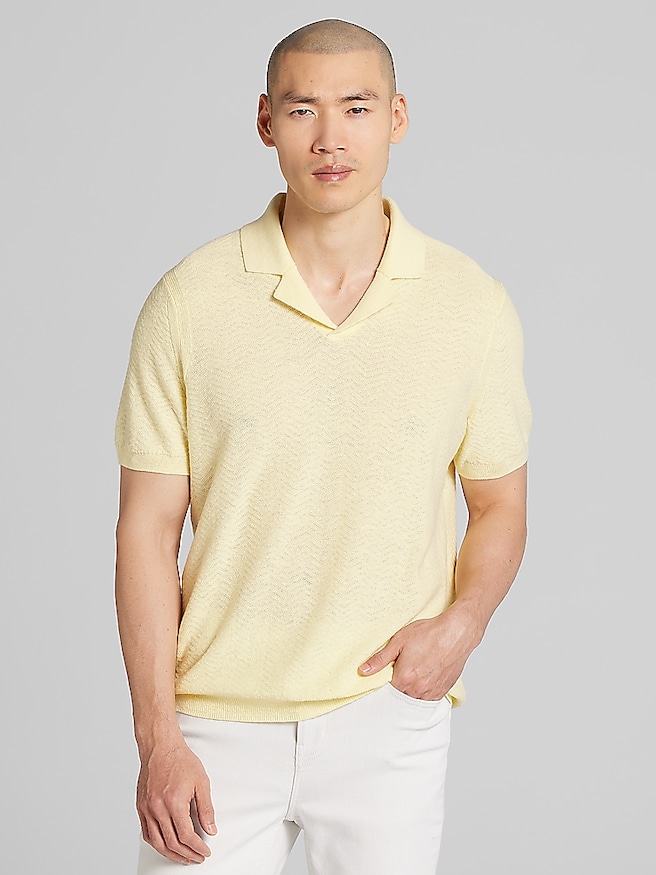
Masculine sweaters bring together classic knitwear shapes, substantial-looking textures, and clean proportions that work with both tailored clothing and casual separates. The look often comes from straightforward details: a well-shaped neckline, defined ribbing at the cuffs, a shoulder that sits comfortably, and a pattern that adds interest without overwhelming an outfit. Crewneck sweaters offer a simple, versatile foundation, while V-necks leave space for a shirt collar and tie. Cardigans and quarter-zip styles make layering more adjustable, and shawl collars give knitwear a fuller, more pronounced frame around the neck. Cable knits, shaker stitches, and ribbed constructions create depth; smooth, fine-gauge knits have a quieter appearance that fits easily beneath a jacket. Gauge describes the fineness of the knitting, so a fine-gauge sweater generally looks smoother and less bulky than a chunky knit, although the fiber and construction also affect its weight. Navy, charcoal, brown, olive, and cream support an understated wardrobe, while burgundy or a muted blue can add color without becoming the focal point. Material matters as much as silhouette. Cotton often has a familiar, comfortable hand and can provide crisp stitch definition. Merino wool is typically finer and softer than coarser wool fibers, with natural resilience that helps a garment recover its shape. Cashmere is known for its soft feel and lightness, though it benefits from careful handling to limit friction and surface wear. Blended yarns combine fiber characteristics, sometimes adding strength, stretch, or easier care, depending on their composition. No single fiber guarantees durability or comfort: yarn quality, knit density, finishing, and personal sensitivity all matter. A sweater worn directly against the skin calls for particular attention to softness at the neck and wrists. One intended mainly for layering over shirts may put greater emphasis on structure and enough room through the sleeves. These details help distinguish a sweater that simply looks appealing from one that feels natural throughout a full day.
Fit gives masculine sweaters much of their character, whether the intended effect is trim and tailored or relaxed and substantial. On a conventional set-in sleeve, the shoulder seam generally sits close to the edge of the shoulder; raglan sleeves and deliberately dropped shoulders follow a different construction and should be judged by their overall drape. Across the chest, the knit should lie comfortably rather than pull into horizontal lines. Sleeves need enough room to bend at the elbow without stretching tight, and cuffs should finish near the wrist without covering the hand. A ribbed hem can sit neatly around the hips, but it should not grip so tightly that the body balloons above it. When layering over a button-down shirt, allow space for the collar, upper arms, and shirt fabric through the torso. When layering beneath a sport coat, a smoother knit and less bulky sleeves generally make movement easier and keep the jacket from feeling crowded. Trying the intended layers together provides a more useful fit check than judging the sweater alone. Sit down, reach forward, and bend both arms; persistent pulling or bunching can reveal a mismatch in size or cut. Clean lines and restrained details make modern men's sweaters easy to coordinate with tailored trousers, chinos, or dark denim. For an office day that ends with dinner, a fine-knit crewneck over a collared shirt can look composed without requiring a tie. A V-neck lets a patterned shirt show through while keeping the overall outfit orderly. A textured cardigan over a plain T-shirt creates a more relaxed combination, especially when the trousers have a clean, uncomplicated shape. Balance helps: a fuller cable-knit sweater usually looks more intentional with straight or gently tapered pants than with an equally voluminous lower half. Texture also benefits from contrast. A pronounced rib or cable pattern stands out against smooth cotton trousers, while a plain sweater can settle a look built around a checked shirt or textured jacket. The result should feel considered, not overly coordinated.
Long-term satisfaction with a sweater depends on how it handles repeated wear and how realistically its care requirements fit everyday life. The care label is the starting point, since two sweaters with similar fiber content can require different treatment because of their construction, dyes, or finishing. Machine washing is appropriate only when the label permits it; a gentle cycle, suitable detergent, and protection from rough hardware can help reduce unnecessary abrasion. Sweaters labeled for hand washing need careful handling rather than vigorous rubbing or twisting. After washing, support the wet garment, gently press out excess water, and reshape it for drying as directed. Many knits should dry flat because hanging them while wet can stretch the shoulders and lengthen the body. Folded storage also helps heavier sweaters maintain their shape between wears. Before putting knitwear away for an extended period, clean it according to its label and make sure it is completely dry. Pilling can develop where fibers rub together, especially beneath the arms, along the sides, or where a bag strap rests. It does not automatically mean a sweater is poorly made, but rough handling can make it worse. A fabric comb or sweater shaver may help when used cautiously on a suitable knit, avoiding raised stitches and delicate sections. Small snags deserve similar restraint: pulling or cutting a loop can cause further damage, so repair may be the better choice. For frequent use, consider how the neckline, cuffs, and hem recover after gentle stretching, and whether the knit feels stable rather than loose and easily distorted. For gifting, familiar preferences are often more useful than a dramatic change in style. A recipient who regularly wears collared shirts may appreciate a simple V-neck or cardigan, while someone drawn to denim and sturdy footwear may favor a more textured knit. Softness, preferred fit, and willingness to follow a care routine are practical considerations. A thoughtfully chosen sweater earns its place through comfortable wear, easy coordination, and a shape that continues to suit its wearer.