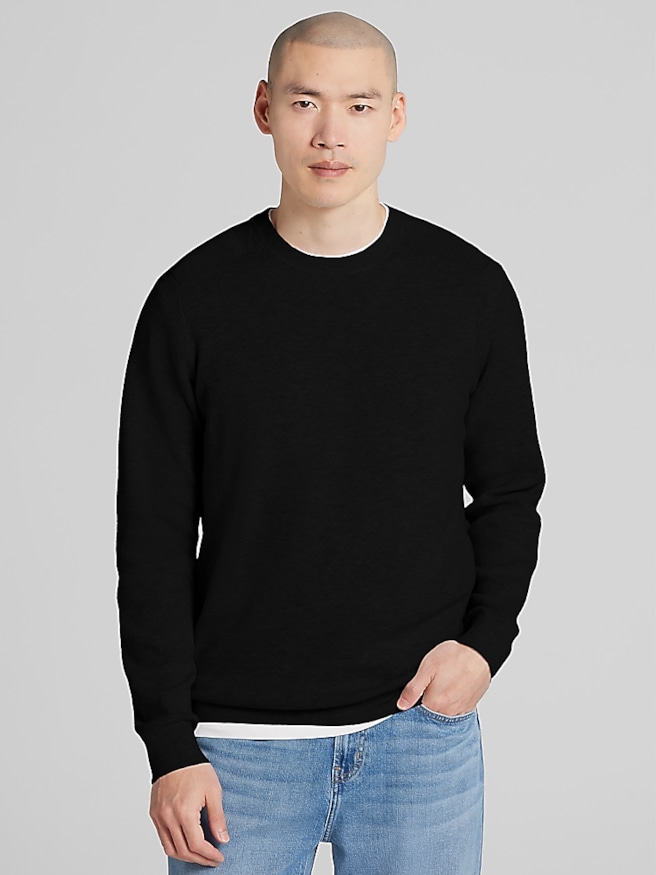
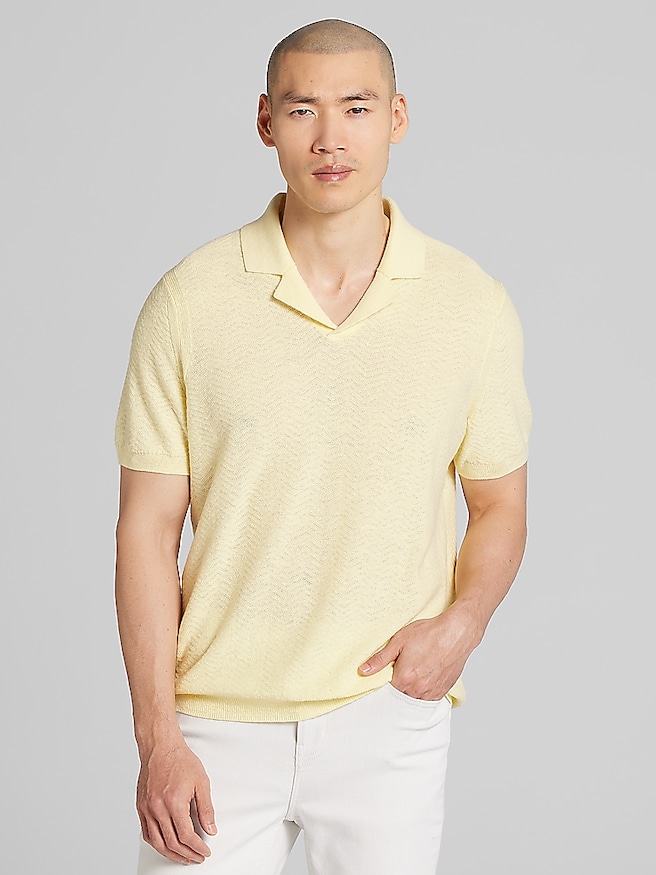
Men’s sweaters bring texture and structure to everyday dressing without the formality of a jacket or the simplicity of a T-shirt. A smooth crewneck with tailored trousers creates a clean outline for an office presentation, while a textured knit with dark denim feels natural at a neighborhood restaurant or a casual family gathering. Necklines help shape that impression. A crewneck frames the face with an understated, rounded edge and leaves room for a shirt collar to show above it. A V-neck opens the neckline, making it especially useful over a button-down when the collar and a portion of the shirt front are meant to remain visible. A quarter-zip offers another way to adjust the look, with a higher neckline when closed and a relaxed opening when worn over a simple tee. Cardigans add a buttoned front that can sit neatly over a shirt, with the option to leave it open for a less structured silhouette. A wardrobe built around Modern Men's Sweaters can move comfortably between a client lunch, an evening performance, and a relaxed weekend gathering. The most useful choices tend to work with clothing already worn regularly: navy alongside gray trousers, charcoal with indigo denim, or an earthy neutral against a crisp white shirt. Texture creates variety even within a restrained color palette. A fine knit looks smooth beneath a tailored jacket, while a cable pattern or pronounced rib brings more visual depth when the sweater is the main layer. Proportion matters as much as color. A sweater with a tidy hem complements trousers with a defined waistband; a slightly more relaxed shape works easily with casual pants. For men who prefer an uncomplicated routine, a few distinct neckline and texture combinations can make familiar outfits feel considered without adding unnecessary complexity. That flexibility makes knitwear useful for commuters, professionals, students, and anyone whose day includes settings with different expectations for dress.
Materials influence how a sweater feels against the skin, how it drapes, and how much attention it needs over time. Cotton knits often have a familiar, breathable feel and enough substance to create a relaxed silhouette, though their weight varies considerably with yarn thickness and construction. Wool has natural elasticity that helps a knit recover its shape, while fine merino fibers can produce a smoother surface suited to close-fitting layers. Cashmere is known for its soft hand and lighter feel, but softness alone does not determine durability; the yarn, knit density, and finishing all contribute to how a sweater wears. Blended fibers can balance different qualities, including softness, resilience, and ease of care. The fabric label gives a more dependable picture than appearance alone, especially when two sweaters look similar but have different textures or maintenance needs. Fit should leave enough space for the intended base layer without creating excess fabric around the torso. A sweater worn over a dress shirt needs room through the chest, upper arms, and underarms so the shirt does not bunch or pull. One worn over a thin tee can sit closer to the body. On a conventional set-in sleeve, the shoulder seam generally rests near the edge of the shoulder; deliberately relaxed constructions may place it lower. Sleeves should allow easy movement without swallowing the hands, and cuffs should hold their shape without feeling restrictive. The hem typically works best when it covers the waistband and stays in place during ordinary movement. Reaching for a bag, sitting at a desk, or bending to tie a shoe can reveal whether the body length and sleeve proportions feel right. Ribbing at the cuffs and hem helps define the silhouette, while smooth seams and an even knit surface contribute to comfort. These construction details are particularly important for a sweater worn repeatedly under a jacket, where bulky seams or excess fabric can interrupt an otherwise clean fit.
Good care helps sweaters retain the qualities that make them comfortable and easy to wear. The care label should set the routine, since fiber blends, dyes, and construction can require different treatment even within the same general material category. Some knits tolerate machine washing on the specified cycle, while others call for hand washing or professional cleaning. When washing is permitted, gentle handling and the recommended detergent help protect the fibers; twisting or wringing can distort the shape. Drying flat, when directed, supports the garment’s weight and allows the sleeves and body to settle into their original proportions. Hanging a heavy knit can stretch the shoulders or lengthen the body, so folded storage is often the better choice. A drawer or shelf with enough space to avoid tight compression keeps the knit from developing deep creases. Friction from a backpack strap, a desk edge, or repeated contact at the underarms can lead to pilling, especially in softer fabrics. Small pills do not automatically signal poor quality, and careful removal with a tool appropriate for the fabric can improve the surface without tugging at the yarn. Snags deserve similar care: pulling a loose loop can enlarge the damage, while a suitable repair can preserve the surrounding knit. For travel, a folded sweater can serve several outfits, paired with chinos for a daytime visit and tailored trousers for dinner. That versatility also makes sweaters thoughtful gifts for a father, brother, partner, or friend, particularly when the recipient’s preferred fit and care habits are familiar. Someone who wears button-down shirts most days may appreciate a neckline that accommodates a collar, while a person who favors denim and sneakers may get more use from a relaxed crewneck. A familiar color, a comfortable texture, and manageable care requirements matter more than an unfamiliar styling statement. With those details in balance, a sweater becomes a dependable part of a wardrobe rather than something reserved for a single occasion.