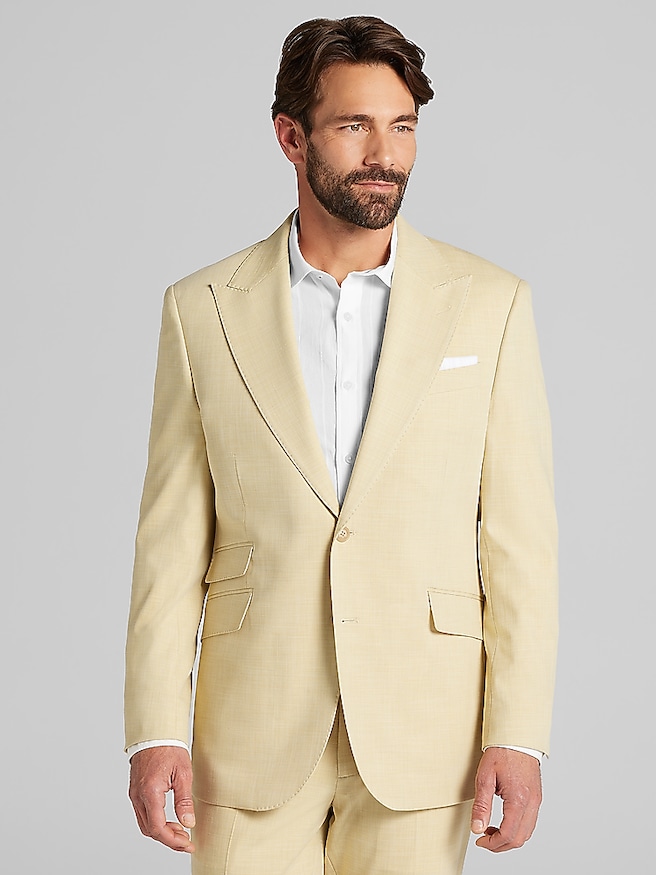
A man in a tailored suit has a defined silhouette built on balanced proportions: shoulders that sit cleanly, a jacket that shapes the torso without pulling, and trousers that fall smoothly from the waist. The effect comes from fit and construction rather than a tight cut. A tailored suit follows the body while leaving enough room to sit through a meeting, reach for a handshake, or move comfortably through a reception. At the shoulders, the fabric should lie smoothly without pronounced divots or overhang; through the chest, the lapels should rest flat rather than bow outward. Gentle shaping at the waist creates definition, while a balanced jacket hem keeps the overall appearance composed from the front, side, and back. Jacket length also affects proportion, with a hem that generally covers the seat offering a familiar foundation for business and occasion dressing. Sleeve length can leave a small amount of shirt cuff visible, adding a crisp boundary between jacket and hand. Trousers complete that line when the waistband rests securely, the seat has sufficient room, and the fabric falls without excessive bunching around the thighs or ankles. A slight break at the shoe feels traditional, while a cleaner, shorter finish gives the same suit a more contemporary character. These details matter across builds, whether the wearer has broad shoulders, a fuller midsection, a lean frame, or muscular thighs. Tailored does not mean slim, and a modern silhouette does not require sacrificing ease. It describes a controlled shape that works with the wearer’s proportions. Ready-made suits can achieve this appearance with suitable alterations, although some changes, especially major adjustments to the shoulders or jacket length, are more limited than adjustments at the waist or trouser hem. For an interview, an important presentation, or a wedding portrait, the strongest impression often comes from this quiet balance: clothing that looks intentional without appearing strained, restrictive, or conspicuously oversized. A comfortable fit also lets the wearer focus on the occasion instead of repeatedly adjusting a collar, waistband, or jacket front.
Fabric gives a tailored suit much of its character, influencing how the jacket drapes, how the trousers move, and how the surface looks under office lighting or in photographs. Wool is a familiar choice because its natural resilience helps the cloth recover from ordinary creasing, while its drape supports a smooth, structured silhouette. The weave makes a noticeable difference: a fine twill can create a subtle diagonal texture, while an open basket weave adds visible depth and a less polished surface. Wool blends bring other characteristics into the fabric, including added strength, softness, or stretch, depending on their composition. A small amount of stretch can make movement easier, but it does not replace adequate room through the chest, seat, and thighs. Linen and cotton offer distinct textures and a more relaxed expression, with creasing that becomes part of their appearance rather than something the fabric fully resists. Inside the jacket, interlining helps establish shape through the chest and lapels. Canvas construction can encourage a dimensional drape, while well-executed fused construction can also produce a clean finish; the finished appearance depends on the cloth, workmanship, and fit together. Lining affects how easily a jacket slides over a shirt, and details such as reinforced pocket openings, secure buttons, and neatly finished seams contribute to everyday durability. The balanced shaping associated with Modern Tailored Suits offers a useful middle ground between a generous traditional cut and a closely fitted silhouette. Solid navy and charcoal provide understated foundations for professional settings and many celebrations, while a subtle stripe, small check, or textured weave brings more visual personality. Notch lapels suit a wide range of business and social occasions; peak lapels create a more pronounced line through the upper body. Single-breasted jackets offer familiar versatility, while double-breasted construction creates a stronger overlapping front. None of these details determines quality alone. Their appeal lies in how naturally they work together and how well they match the setting, from a client meeting to a ceremony followed by dinner and dancing.
A tailored suit earns its place in a wardrobe through repeated use, not just its appearance on a hanger. For someone who wears suits frequently, comfort during long stretches of sitting can matter as much as the line of the jacket when standing. For someone dressing for a milestone, the priority may be a silhouette that feels familiar enough to wear confidently while still marking the importance of the day. A dark suit with a crisp dress shirt and restrained tie can serve interviews, presentations, and many weddings, subject to the stated dress code. A fine-gauge knit or an open-collar shirt can soften the same general silhouette for less formal occasions. A black-tie invitation, however, typically calls for a tuxedo rather than a standard business suit. Shoes and accessories influence the final impression without needing to compete with the tailoring: polished leather footwear, a neatly arranged pocket square, and a tie with appropriate scale can support the suit’s proportions. Longevity depends partly on what happens between occasions. A broad, shaped hanger supports the jacket’s shoulders, while properly hanging the trousers helps preserve their line. Allowing the suit to air out after wear, gently brushing away surface dust with a suitable clothing brush, and addressing marks according to the care label can reduce unnecessary cleaning. Dry cleaning should follow the garment’s instructions and condition rather than an automatic schedule after every wear. Professional pressing can refresh the shape when needed, while excessive heat or pressure can leave unwanted shine on some fabrics. Pockets also affect the silhouette: a bulky phone or overfilled wallet can distort a jacket front or pull trousers out of line. For gifting, a tailored suit can mark a graduation, a career milestone, or another significant achievement, but the recipient’s measurements, preferred fit, and intended occasions are essential considerations. Leaving room for personal choice and a fitting helps make the gift useful beyond a single photograph. With appropriate care and a fit that accommodates natural movement, a suit can remain a dependable part of dressing well for both everyday responsibilities and memorable events.