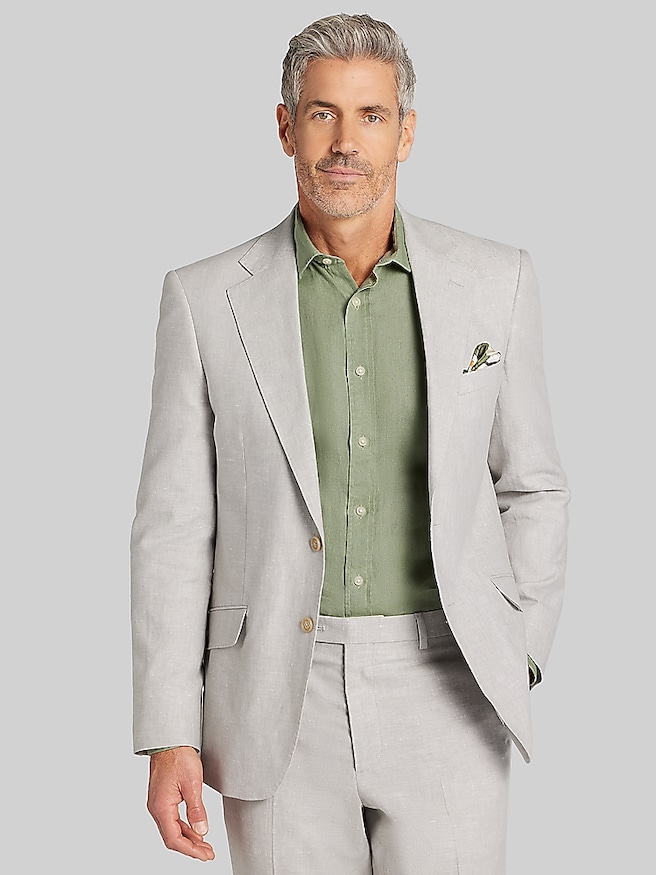
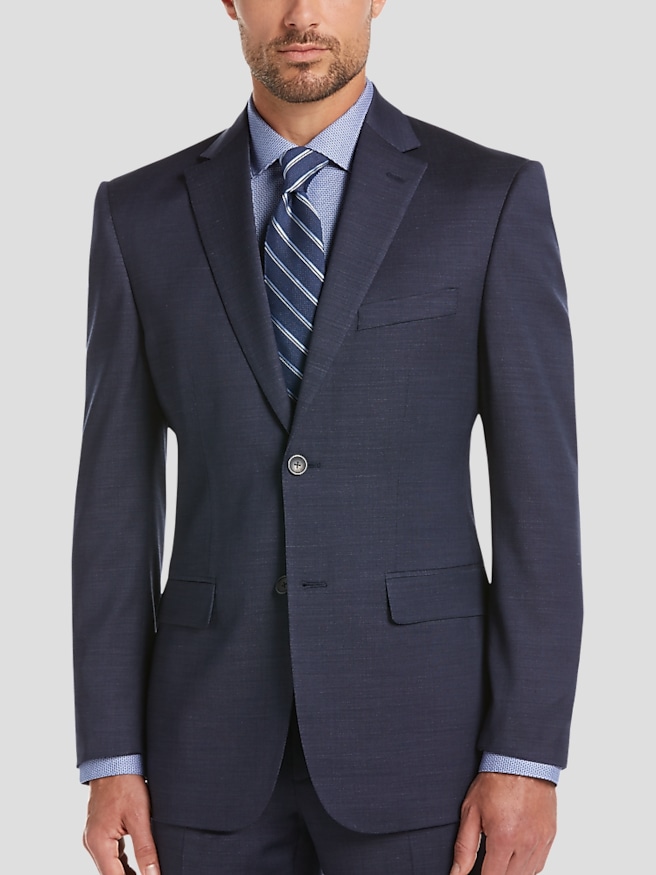
Men’s formal suits combine a matching tailored jacket and trousers, with an optional coordinating vest for a three-piece look. Their appeal comes from a consistent fabric, balanced proportions, and a clean silhouette that feels appropriate for occasions requiring more than everyday clothing. Weddings, award ceremonies, milestone celebrations, and formal business gatherings are common settings for a suit, although the invitation’s dress code determines the right level of dress. A dark suit with a dress shirt and tie can work well for many dressy events; a black-tie invitation generally calls for a tuxedo rather than a conventional suit. Navy, charcoal gray, and black are familiar formal suit colors, each with a distinct character. Navy brings depth without looking severe, charcoal offers an understated backdrop for a crisp shirt, and black creates a particularly sharp contrast with white. Solid fabrics keep the emphasis on shape and tailoring, while a subtle textured weave adds dimension without making the outfit feel busy. A two-piece suit has a straightforward finish that transitions comfortably from a ceremony to a seated dinner. A three-piece suit adds a vest that maintains a composed appearance when the jacket comes off, especially during a reception or an extended celebration. Single-breasted jackets create a clean vertical line and are easy to combine with a range of shirts and ties. Double-breasted jackets have an overlapping front and a stronger visual presence, with proportions that benefit from a close fit through the shoulders and torso. Notch lapels are common on versatile suits, while peak lapels introduce a more pronounced, dressy shape. For meetings, presentations, and workplace occasions with a suit-and-tie expectation, Business Formal Suits reflect a closely related approach to polished dressing. Across these settings, the most convincing formal look is not necessarily the most elaborate. A consistent fabric, properly fitted jacket, and trousers that fall cleanly over dress shoes often make a stronger impression than an abundance of decorative details.
Fabric affects how a formal suit looks, moves, and holds its shape through an event. Wool is a traditional choice because it drapes smoothly, allows breathability, and has natural resilience that helps ordinary wrinkles relax between wears. Wool blends combine those qualities with other fibers, which may contribute strength, softness, stretch, or easier maintenance depending on the composition. A modest amount of stretch can make sitting through a ceremony or reaching across a dinner table more comfortable, but it does not replace a well-proportioned fit. Smooth worsted fabrics give formal suits a crisp surface, while finer textures can soften the appearance without sacrificing a tailored outline. Fabric weight, weave, and lining also influence the feel of the finished suit. A dense weave can provide structure, while a more fluid cloth follows the body with less stiffness. An exceptionally fine fabric may feel soft against the hand but still require careful handling; softness alone is not a measure of durability. Secure seams, well-finished buttonholes, and a lining that lies smoothly all contribute to how a suit wears over time. Fit begins at the shoulders, where the jacket should follow the natural outline without extending noticeably beyond it or pulling tightly across the upper back. The lapels should rest flat against the chest, and the collar should sit close to the shirt collar rather than leaving a visible gap. When the jacket is buttoned, the front should remain smooth enough to avoid pronounced pulling around the fastening. Slim, modern, and classic fit descriptions suggest general proportions, but their exact dimensions vary. The better measure is how the garment behaves while standing, sitting, and moving. Trousers need enough room through the seat and thighs to sit comfortably, with a waistband that stays in place without excessive pressure. A slight break at the shoe creates a traditional finish, while a shorter, cleaner hem produces a more streamlined outline. Sleeve length that reveals a small amount of shirt cuff helps the jacket look intentional rather than oversized. Adjustments to hems, sleeves, and the waist can refine the overall shape, although substantial shoulder corrections are more complex.
The supporting pieces give men’s formal suits their finished character without needing to compete with the tailoring. A white dress shirt creates a clear, traditional contrast against dark fabric, while pale blue brings a softer effect where the occasion allows it. The shirt collar should sit neatly beneath the jacket and support the tie knot without spreading awkwardly. A silk tie with a restrained pattern adds texture, and a pocket square can introduce a small point of contrast rather than exactly duplicating the tie. Smooth leather dress shoes suit the clean lines of formal tailoring; polished black shoes are a dependable companion for black and charcoal, while navy can also work with dark brown where the dress code permits. A belt, when needed, generally looks most cohesive when it relates to the shoes in color and finish. For someone standing in a wedding party, delivering a toast, or attending an important presentation, these details help the outfit stay composed in photographs and in person. Proper care preserves that effect beyond a single occasion. The garment’s care label should determine cleaning methods, particularly when the shell fabric and lining contain different fibers. Many tailored suits require professional dry cleaning, but cleaning after every wear is not always necessary. Airing the jacket and trousers, gently brushing away surface dust, and treating a stain promptly through an appropriate professional service can reduce unnecessary cleaning. A broad, supportive hanger helps the jacket retain its shoulder shape, and hanging trousers neatly limits persistent creases. Pockets should be emptied before storage so keys or other heavy objects do not distort the fabric. Professional pressing can restore a clean finish; excessive heat or direct pressure can leave shine on some materials. A breathable garment bag protects the suit during storage without enclosing residual moisture. As a gift for a partner, adult son, or recent graduate, a formal suit can mark a meaningful transition, from a first major professional event to a wedding celebration. Accurate measurements and room for fitting adjustments matter more than guessing from casual clothing sizes. With appropriate care and a fit suited to its wearer, a formal suit can serve across many significant occasions.