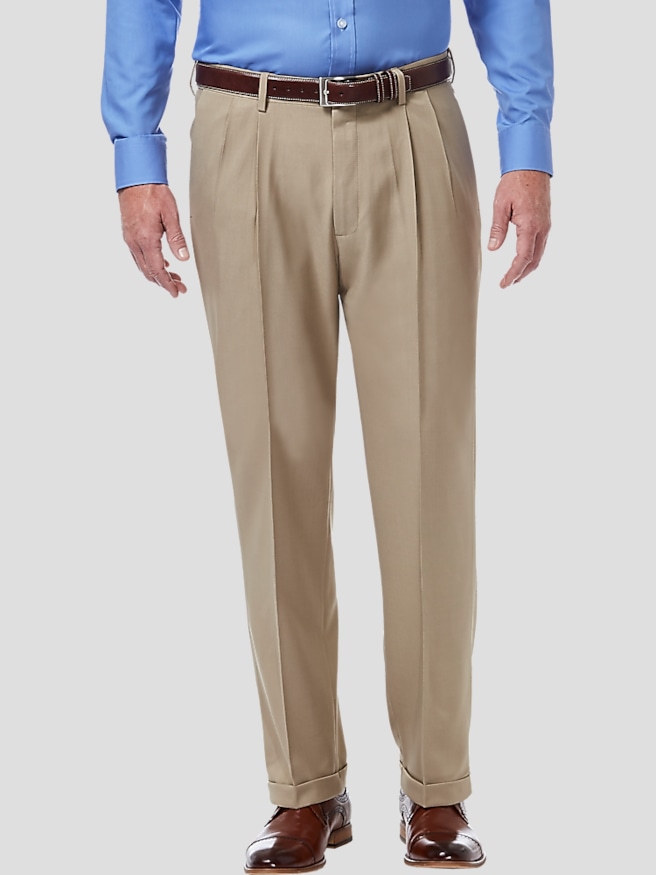
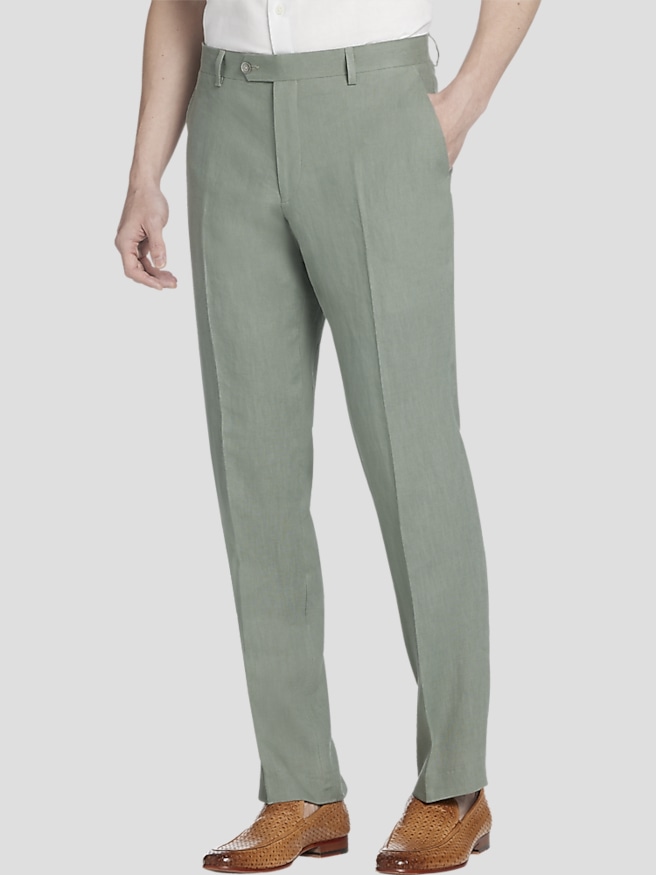
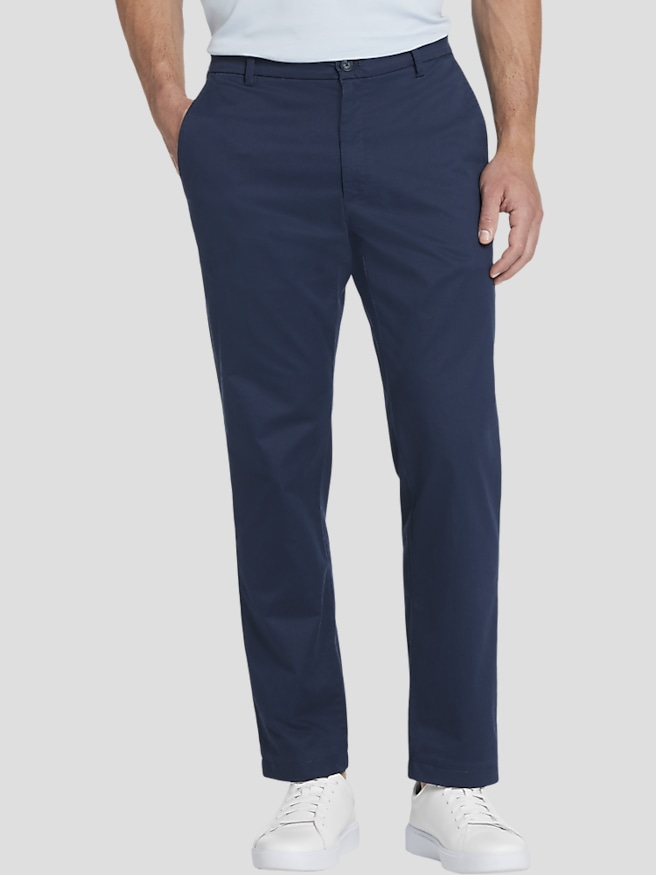
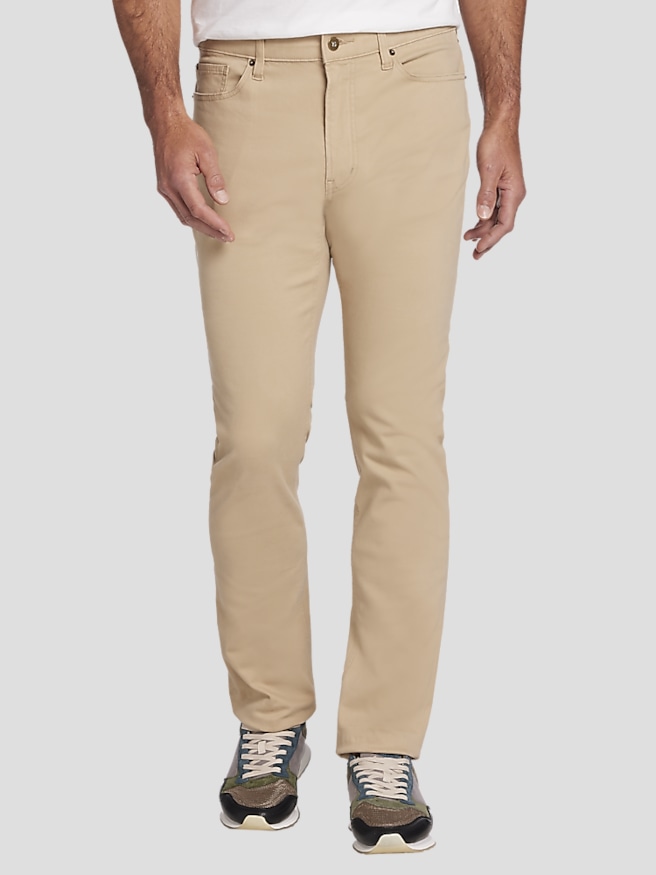
Luxury chinos bring together the easy familiarity of cotton trousers and the considered finish of tailored clothing. Their appeal lies in details that become noticeable over a full day: fabric that feels smooth against the skin, a waistband that sits comfortably without pinching, and a leg that falls cleanly rather than clinging or collapsing. Chinos are traditionally made from cotton twill, a woven fabric with subtle diagonal lines that give it texture and strength. Within that tradition, more refined versions may use fine cotton yarns, carefully finished seams, and fabric treatments that create a supple hand. Brushed or peached cotton has a soft, almost velvety surface, while a smoother twill offers a crisper appearance that pairs naturally with a dress shirt. Some fabrics incorporate a small amount of stretch fiber for ease when sitting, walking, or getting into a car; others rely on the weave and cut for comfortable movement. Neither approach alone defines quality. Luxury chinos are better understood through the relationship among fabric, fit, construction, and finish, rather than a single material or manufacturing origin. Cotton-rich blends can offer a balance of softness and resilience, while specialty blends containing wool or cashmere may introduce a more tailored drape or a softer touch. Fiber content deserves attention because it affects texture, maintenance, and how the trousers settle with wear. Color contributes just as much to the overall impression. Sand, stone, navy, olive, and charcoal give chinos a place beside both casual staples and more structured clothing. A muted shade lets the fabric and silhouette do the work, whether the outfit includes a white button-down and leather loafers or a fine-gauge knit and understated sneakers. For a man who wants a polished alternative to denim without the formality of suit trousers, luxury chinos occupy a useful middle ground: composed enough for a business-casual office, comfortable enough for a long lunch, and adaptable enough to keep wearing afterward.
Fit determines whether that versatility feels effortless in practice. A well-proportioned pair should sit securely at the intended waist position, with enough room through the seat and thighs to sit down comfortably and move without pulling at the pockets. Side pockets that flare open or pronounced horizontal creases across the front can indicate that the cut is too close, although pocket construction and posture also influence how the fabric rests. Excess fabric beneath the seat or heavy bunching around the ankles can interrupt an otherwise clean silhouette. Slim chinos typically follow the leg more closely, straight fits maintain a more consistent line, and tapered cuts narrow toward the ankle while potentially leaving more space above the knee. These labels are useful starting points, but the measurements and proportions matter more than the name. An athletic build may benefit from additional thigh room with a measured taper, while someone who prefers a less fitted look may appreciate a straight leg that hangs without gripping the calf. Rise also changes the experience: a higher waistband can sit comfortably near the natural waist and create a longer-looking leg, while a lower rise sits farther down on the hips. Length finishes the picture. A slight break over leather shoes reads traditional and relaxed; a hem that just meets the shoe creates a cleaner outline. The goal is a deliberate finish, not an ankle crowded with folds. Construction details deserve the same attention as silhouette. Secure buttons, neatly worked buttonholes, smooth pocket edges, and even stitching help trousers feel finished without drawing attention to themselves. Reinforcement at stress points can support durability, and seam allowances may give a tailor room for certain adjustments, depending on the garment. Exploring fashionable chinos can also offer perspective on how leg shape, color, and styling change the character of this familiar trouser. The strongest choice remains one that suits the wearer's proportions and works naturally with the shoes, shirts, and jackets already in regular rotation.
That everyday usefulness is what makes refined chinos more than an occasional wardrobe addition. In an office with a business-casual dress code, navy chinos with a pale blue shirt and a textured sport coat can look professional without suggesting a matching suit. For dinner, a dark pair with a knit polo and polished loafers creates a quieter, less formal alternative to dress trousers. A stone-colored pair worn with a simple crewneck and clean sneakers feels relaxed while retaining a defined shape. Chinos can also make sense for travel when the itinerary includes both seated stretches and plans that call for a neat appearance, though wrinkle resistance and stretch depend on the particular fabric. They are not substitutes for formal attire when an invitation specifies a suit or black tie; their strength is the space between dressed-down clothing and occasion-specific tailoring. As a gift, they can be a thoughtful option for a partner, father, brother, or graduate building a versatile wardrobe, especially when waist size, preferred rise, and usual leg shape are known. A familiar neutral color often integrates more easily than an unfamiliar silhouette. Preserving the finish starts with the care label, since cotton twill, stretch blends, and specialty fibers do not all respond to the same treatment. When machine washing is permitted, turning trousers inside out, using a gentle cycle, and washing with similar colors can help limit surface abrasion and color transfer. High heat may cause shrinkage or affect stretch fibers, so drying instructions matter as much as washing instructions. Promptly removing chinos from the washer or dryer can reduce stubborn wrinkles, while ironing or steaming should follow the recommended settings for the fabric. Some constructions and blends require professional cleaning. Between wears, allowing trousers to air out and hanging them neatly can help maintain their shape. Avoiding overfilled pockets reduces strain and keeps the outline tidy, and addressing a loose button or opened seam early can prevent a minor repair from becoming a larger problem. With an appropriate fit and consistent care, luxury chinos can serve as dependable trousers whose comfort and understated finish remain relevant across many settings.