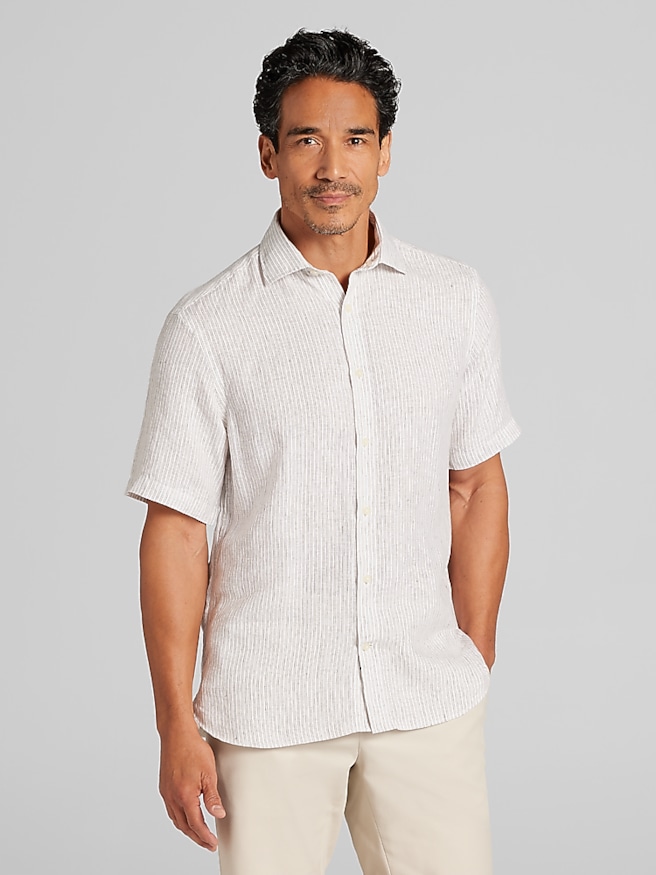
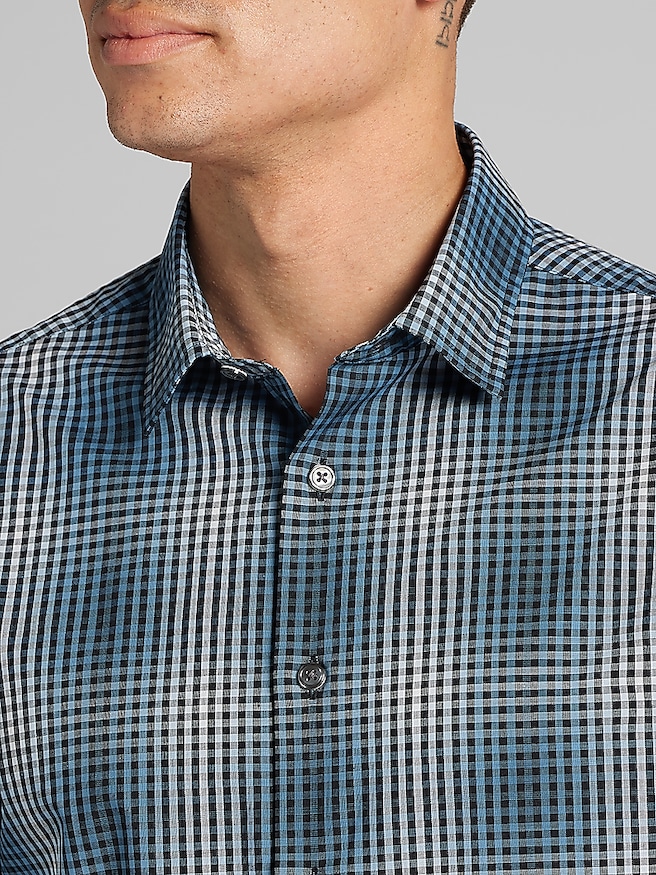
Lightweight men's shirts for travel combine a low-bulk feel with the comfort and versatility needed for days spent moving between destinations. The most useful qualities are breathability, freedom of movement, manageable care, and a fabric that suits the trip's activities. A shirt that feels comfortable during a long flight should also look appropriate when the itinerary moves straight from baggage claim to lunch or a meeting. Fabric composition makes a meaningful difference in that balance. Cotton has a familiar, soft feel and works well for everyday sightseeing and casual meals, although it can hold moisture and develop creases in a tightly packed bag. Cotton blends can retain some of that natural softness while adding resilience or easier care, depending on the other fibers and fabric finish. Polyester and nylon fabrics often dry faster than cotton, making them practical when laundry time is limited, while a small amount of elastane can provide stretch for reaching overhead or settling into a seat. Fine-gauge merino wool offers another approach, with natural odor resistance that can be useful on repeated wears; its care requirements still deserve attention. Fabric weight and construction matter alongside fiber content. A thin shirt is not automatically breathable, and a tightly woven fabric can feel quite distinct from an open knit of similar weight. Smooth woven shirts tend to create a cleaner outline, while lightweight knits offer a softer drape and an easygoing appearance. Breathability allows air and moisture vapor to move through the fabric, moisture-wicking construction helps move perspiration away from the skin, and quick-drying performance describes how readily moisture evaporates. These features serve related but separate purposes, so none should be assumed from the word “lightweight” alone. Wrinkle resistance is similarly helpful rather than absolute: it can reduce the upkeep needed after unpacking, but it does not guarantee a perfectly pressed shirt after hours inside a carry-on.
Fit determines whether a lightweight travel shirt feels effortless or becomes something to adjust throughout the day. Enough room across the upper back and chest allows comfortable movement when lifting luggage, fastening a seat belt, or carrying a shoulder bag. Shoulder seams that sit close to the natural shoulder line help maintain a neat shape without pulling the sleeves out of position. A trim fit can work well beneath a blazer, provided the buttons lie flat and the fabric does not strain when seated. A more relaxed cut offers extra ease, but excess material can bunch under a jacket or make a tucked shirt feel bulky. Stretch can improve mobility, though it cannot compensate for a shirt that is too small. Length deserves equal attention. An untucked hem should look intentional and allow access to pants pockets, while a shirt intended for tucking needs enough length to stay in place through ordinary movement. Collar shape, sleeve length, and the fabric's surface also influence how much use a shirt gets away from home. A soft collar and subtle texture suit museum visits, neighborhood walks, and informal dinners. A structured collar and smooth finish create a more polished impression for client meetings, conferences, or an evening reservation. For itineraries with a more formal dress code, Dress Shirts For Travel offer a related focus on a tailored appearance away from home. Solid colors and restrained patterns make it easier to repeat a shirt with distinct outfits without making every day look identical. Navy, white, light blue, and muted neutrals can coordinate with chinos, jeans, and dress pants, while a small check or understated stripe adds variety. Lightweight construction also makes layering less bulky, whether a shirt sits beneath a sport coat or over a simple undershirt. The result is a smaller, more adaptable travel wardrobe rather than a separate outfit for every stop.
Care and durability help determine how practical lightweight men's shirts for travel remain beyond the first trip. A fabric that packs easily still needs to stand up to repeated folding, laundering, and contact with bag straps. Even stitching, neatly finished seams, secure buttons, and a stable collar are useful signs of thoughtful construction. Thin fabric does not necessarily mean fragile fabric, but an especially delicate weave may need more protection from abrasive luggage surfaces or hook-and-loop closures. Lightweight knits can also be susceptible to snags, so the demands of the itinerary matter as much as the feel of the material. Easy-care features are particularly useful for travelers who prefer a carry-on, make frequent overnight trips, or need to refresh clothing between hotel stays. The care label remains the best reference for washing, drying, and ironing because shirts with similar textures can have very distinct requirements. Quick-drying fabric may make a brief wash more convenient, but drying time still depends on airflow, fabric thickness, and how much moisture remains after washing. Wrinkle-resistant finishes can simplify upkeep, although excessive dryer heat or prolonged compression can affect the result. Removing a shirt promptly after laundering and smoothing the collar, placket, and cuffs can reduce the work needed before wearing it. Packing also influences how a shirt looks on arrival. Folding along the seams and avoiding an overfilled bag helps limit hard creases; rolling can work for flexible knits, while structured collars generally benefit from being kept flat and protected. A shirt that coordinates with several pairs of pants earns its space more readily than one that works for only a single occasion. That versatility makes these shirts useful for frequent business travelers, weekend visitors, and anyone balancing planned events with unstructured time. They can also make a thoughtful gift for someone preparing for a trip, especially when the recipient's usual size, preferred fit, and care habits are known. The strongest travel wardrobe rests on comfortable shirts that are straightforward to wear, repeat, and maintain.