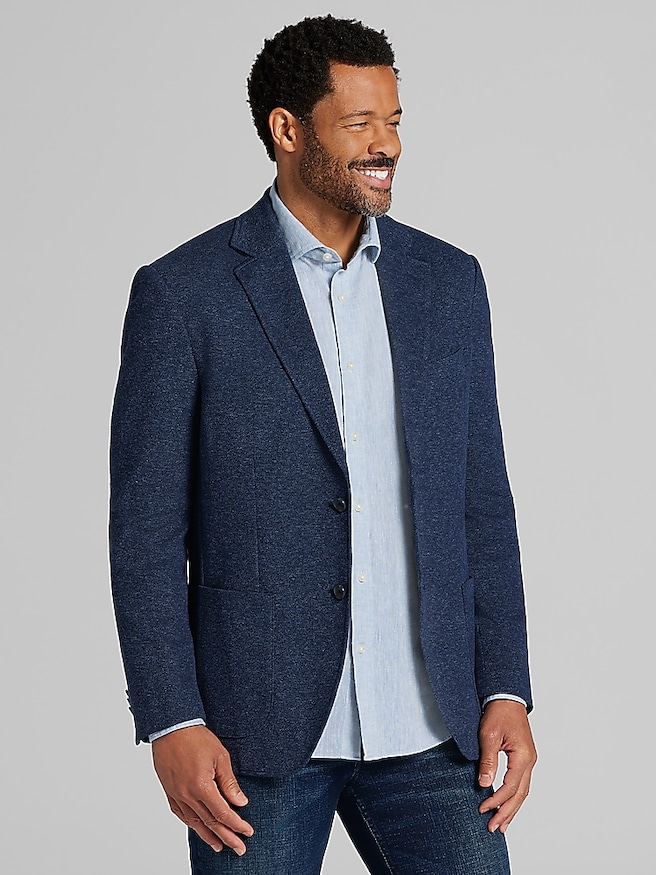
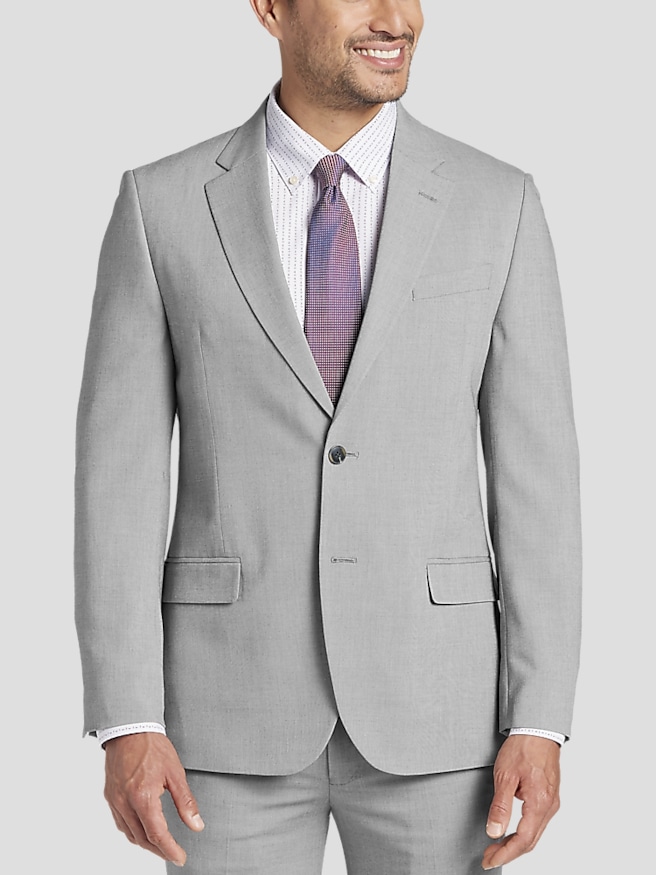
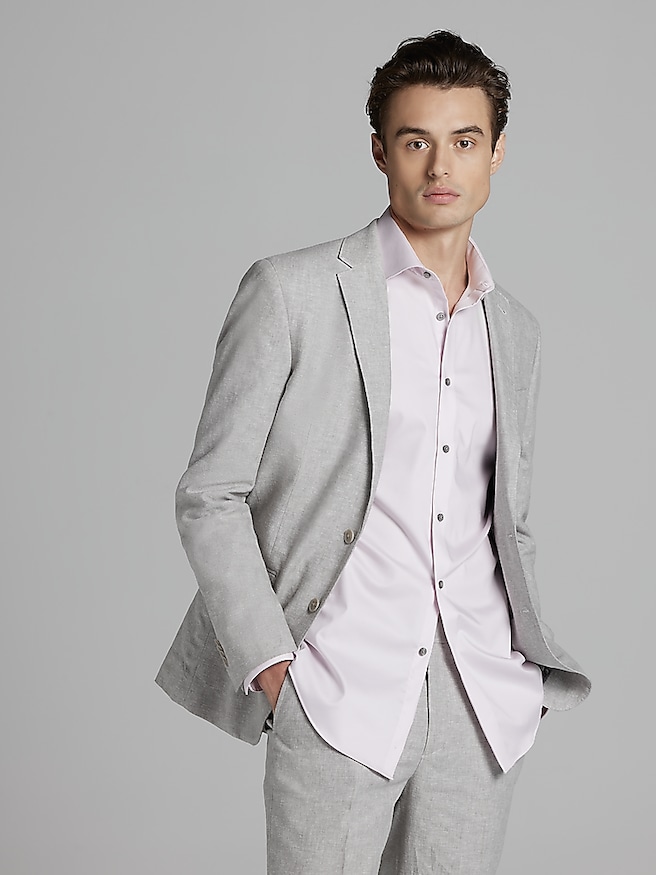
A light gray blazer is a tailored jacket in a pale neutral shade, typically worn with contrasting trousers rather than as part of a matching suit. It brings structure to an outfit without the more formal appearance of a complete suit, making it useful for business-casual offices, dinners, presentations, and celebrations where separates suit the dress code. The color sits comfortably alongside navy, charcoal, black, brown, and blue, so a single jacket can work with several combinations already in a wardrobe. Navy trousers and a white button-down create a crisp contrast for a client lunch; dark, clean-lined jeans and a fine-gauge knit give the same jacket a more relaxed character for dinner. With stone or beige chinos, light gray produces a softer combination, especially when the shirt adds enough contrast to keep the outfit from looking washed out. Texture matters as much as color: a subtly patterned weave can give a plain shirt and trousers more depth, while a smooth finish keeps the overall effect restrained. Shoes help establish the level of formality, with leather lace-ups lending polish and loafers making an outfit feel less businesslike. A light gray blazer can also accommodate a tie, though the shirt, trousers, and footwear should support that dressier direction. Small-scale navy patterns, burgundy accents, and muted blue shirts complement gray without competing with it. For a wedding guest, the invitation and venue should determine whether a blazer and separate trousers are appropriate. When an occasion calls for coordinated tailoring instead, a light gray wedding suit provides a matching-jacket-and-trouser alternative. The distinction is useful: a blazer is not automatically a substitute for a suit, but it offers considerable flexibility wherever the dress code allows separates. Its pale shade also makes details such as lapel shape, buttons, and fabric texture more noticeable, allowing a straightforward outfit to feel considered without relying on bold color.
Fabric and construction influence how a light gray blazer hangs, feels, and holds its appearance through repeated wear. Wool can offer a clean drape and natural resilience, helping a tailored jacket recover from light creasing between wears. Wool blends vary according to their fiber content, so the fabric label provides more useful information than appearance alone. Cotton often has a more relaxed, matte character, while linen brings visible texture and a tendency to develop creases that become part of its casual appeal. Knit constructions and fabrics with added stretch can allow easier movement, although flexibility should complement a good fit rather than compensate for a jacket that is too small. A smooth, closely woven cloth generally reads dressier than a pronounced basket weave or softly textured surface. Lining and internal structure also affect the experience of wearing the jacket: a more structured shoulder can create a defined outline, while lighter construction may follow the body more softly. Neither approach is automatically better; the right choice depends on the intended use and preferred silhouette. For someone who spends much of the day seated at a desk, reaches across a conference table, or carries a briefcase between appointments, comfort through the upper back and armholes matters as much as the view in a mirror. The shoulder should sit cleanly, the collar should rest near the shirt collar, and the lapels should lie flat rather than bow away from the chest. With the jacket buttoned as intended, pronounced pulling across the front can indicate insufficient room. Extra fabric pooling at the waist or sleeves can make an otherwise polished outfit look less precise. Slim fits generally follow the torso more closely, while roomier cuts provide additional ease; fit labels are starting points, not substitutes for checking measurements. Sleeve length should allow a small amount of shirt cuff to show, and jacket length should balance the torso and trousers. Tailoring can refine certain proportions, but sound shoulder and chest fit provide the strongest foundation.
Regular care helps preserve both the pale color and the shape of a light gray blazer. The care label should govern cleaning, since wool, cotton, linen, blends, linings, and internal components do not all respond to the same treatment. A jacket labeled for professional dry cleaning should not be treated as machine washable simply because its outer fabric feels casual. Between cleanings, a garment brush can remove loose surface dust, and airing the jacket in a ventilated space can help it freshen without unnecessary processing. Spills deserve prompt attention: gentle blotting is generally preferable to rubbing, which can spread a mark or disturb the fabric surface. Any spot-treatment product should be appropriate for the material and consistent with the care instructions. A broad, shaped hanger supports the shoulders more effectively than a thin wire hanger, while enough closet space keeps the sleeves and lapels from being crushed. Heavy objects left in pockets can distort the front, and repeatedly carrying a loaded bag against the same shoulder may create localized wear. Rotating jackets between wears gives fabric time to relax and makes everyday care easier to maintain. Visible construction details also deserve attention, including secure buttons, even stitching, and a lining that allows movement without obvious strain. Durability depends on fabric, construction, fit, and treatment together; a tight jacket under constant tension can wear poorly even when its cloth feels substantial. For travel, careful folding and unpacking soon after arrival help limit deep creases, while any steaming should follow the fabric’s care guidance. As a gift, a light gray blazer can suit someone building a professional wardrobe, celebrating a graduation, or adding a polished option for dinners and family occasions. Knowing the recipient’s jacket size, usual fit, and preferred level of structure makes the choice more personal and practical. The most useful blazer is one that feels comfortable enough to wear regularly and works naturally with the shirts, trousers, and shoes already in rotation.