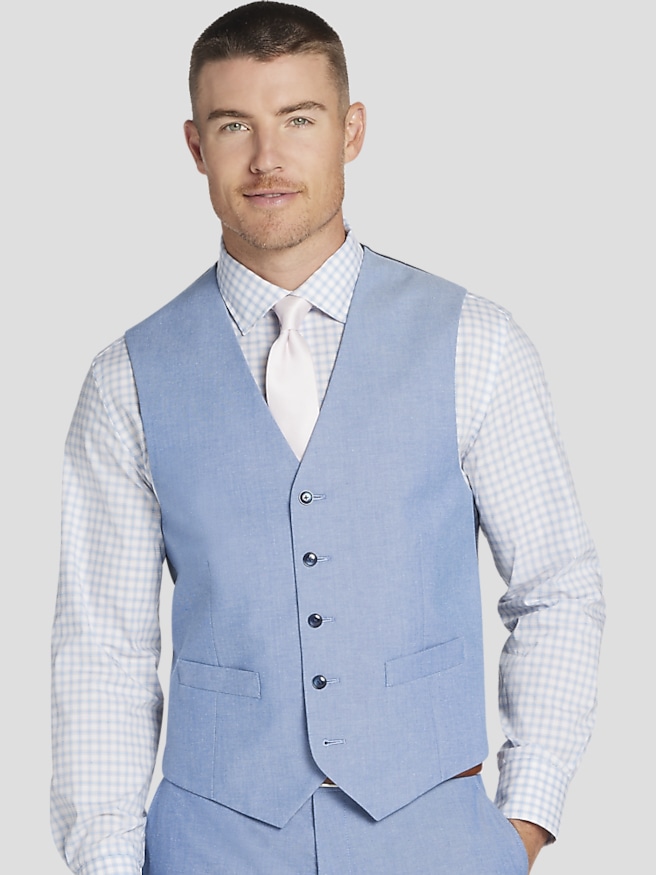
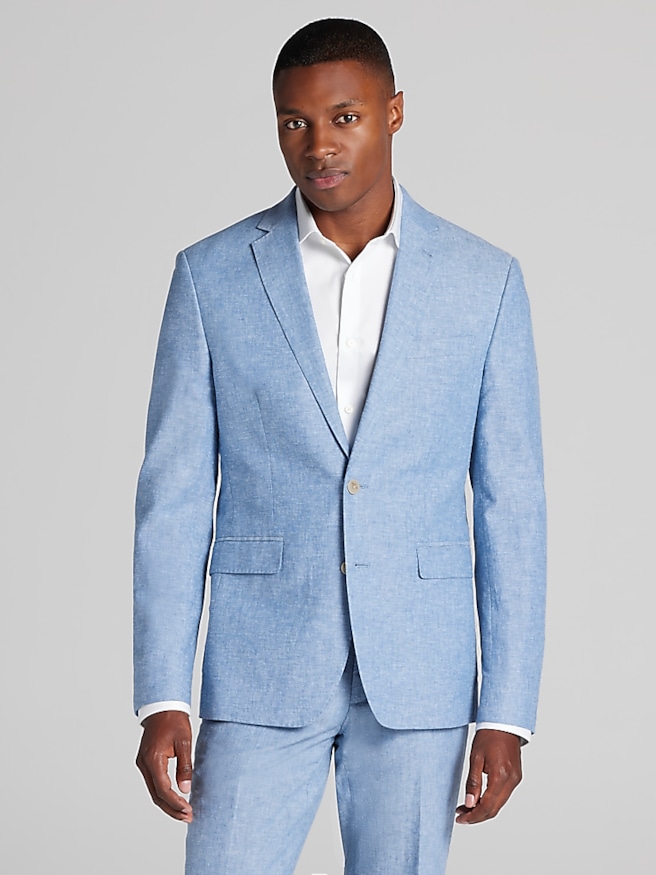
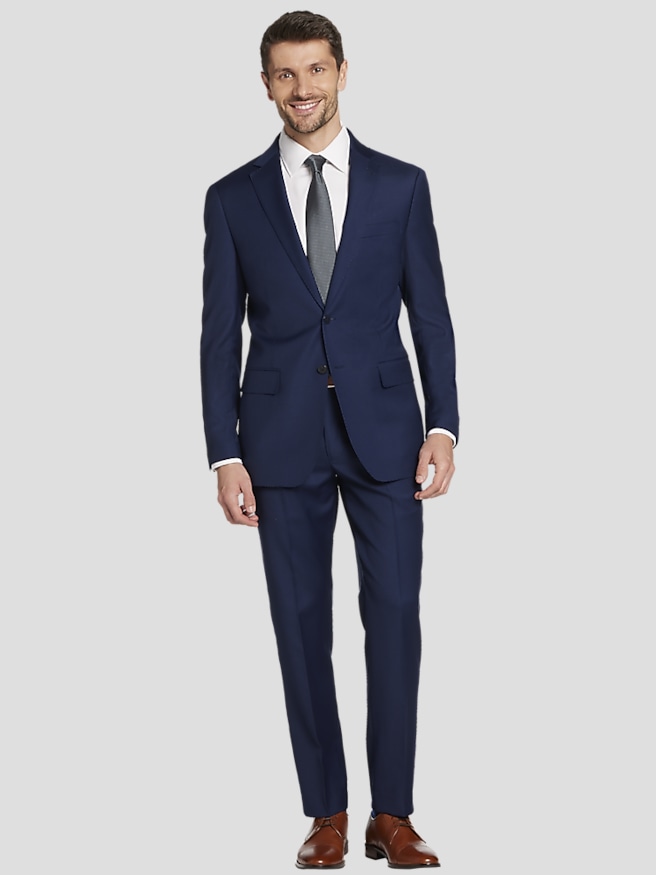
A light blue groom suit brings a softer point of view to wedding tailoring without losing the clean lines that make a suit feel ceremonial. The color has enough presence to distinguish the groom in a group portrait, yet it leaves room for the details that make the outfit personal: a textured tie, a carefully folded pocket square, a boutonniere with a meaningful flower. Within the broader blue groom's suit palette, lighter shades can feel understated or expressive depending on their undertones and the fabric’s finish. A muted blue with a touch of gray reads differently from a clearer powder blue, while a matte surface creates a quieter impression than a fabric with noticeable sheen. Those distinctions matter alongside the wedding setting, whether the ceremony takes place in a courthouse, an art gallery, a garden, or a traditional event space. Light blue works particularly well when the celebration calls for a suit rather than a tuxedo; a black-tie dress code still calls for the appropriate formal attire. For coordinated wedding parties, the groom does not need to match every attendant exactly. A light blue suit can stand apart from deeper blue or gray tailoring while shared accessories establish a clear connection. It can also complement a partner’s attire through a common accent color rather than an exact fabric match. Looking at the suit beside the actual shirt, tie, and wedding colors helps reveal combinations that feel cohesive in person and in photographs. Beyond the ceremony, the same suit can have a place at engagement celebrations, anniversary dinners, milestone gatherings, and other occasions where tailored clothing feels appropriate. That versatility depends on the details: restrained styling and a comfortable fit tend to make a distinctive color easier to wear again, rather than leaving the suit tied to a single afternoon.
Fabric gives a light blue groom suit much of its character, influencing how the color appears, how the jacket hangs, and how the outfit feels through a full celebration. Wool is valued in tailoring for its drape and resilience, with a smooth worsted weave offering a cleaner surface and a more textured weave adding visual depth. Linen has a distinctive grain and develops visible creases with wear, which can suit a relaxed wedding setting but may not appeal to someone who wants a consistently crisp finish. Cotton can create a matte, structured appearance, while blended fabrics may combine several qualities, including softness, shape retention, or stretch. Fiber content alone does not tell the whole story; weave, fabric weight, lining, and construction also affect movement and the way a suit settles on the body. A small amount of stretch can add flexibility, but it cannot correct a jacket that pulls across the chest or trousers that bind at the seat. For a groom, fit has to work beyond the fitting-room mirror. Signing a marriage license, embracing family, sitting through dinner, and dancing all place demands on the same outfit. Jacket shoulders should follow the natural shoulder line without pronounced overhang or dents, and the collar should rest neatly against the shirt rather than standing away from the neck. With the jacket fastened, the front should lie smoothly instead of forming tight diagonal lines around the button. Slim, tailored, and more relaxed silhouettes can all look polished when the proportions suit the wearer. Trousers need enough room through the seat and thighs to sit comfortably, with a hem that complements the shoe and the intended silhouette. Alterations to sleeve length, trouser length, and the jacket’s waist can refine the overall appearance, though major shoulder corrections are more involved. Trying the suit with the intended dress shirt and shoes gives a more useful picture of the finished look, especially when checking sleeve exposure, trouser break, and balance from the side.
The finishing pieces can give a light blue groom suit either a crisp, traditional direction or a softer, more textured character. A white dress shirt creates clear contrast and keeps the color combination straightforward, while an ivory shirt may work when it intentionally relates to a partner’s attire or the broader wedding palette. Shirt fabric matters here, too: a smooth surface looks clean and understated, while a subtle woven texture adds depth without introducing another pattern. Navy, burgundy, muted pink, and silver-gray ties can each bring out a distinct side of light blue, but the strongest combination is usually the one that connects naturally with the setting and the wearer. When a tie has a noticeable pattern, a quieter pocket square gives the eye somewhere to rest. The two accessories can share a color without repeating the same design. Brown leather shoes often create a softer contrast, while black shoes lend a sharper edge; the belt, when worn, should relate closely to the footwear. Socks that connect with the trousers help maintain a continuous line when seated, and a boutonniere should sit securely without weighing down the lapel. Once the celebration is over, careful handling helps preserve both the fabric and the shape. The care label is the starting point, since cleaning and pressing requirements vary by material and construction. A broad, supportive hanger helps the jacket retain its shoulders, and trousers benefit from hanging neatly along their crease or from suitable trouser hangers. Emptying pockets before storage prevents unnecessary strain and distortion. Gentle brushing can remove surface dust, while stains are best addressed promptly with a cleaner experienced in tailored clothing rather than vigorous rubbing at home. Cleaning only as needed, following professional recommendations and the care label, can help avoid unnecessary treatment. Store the suit clean and fully dry with room around it, using a breathable garment bag when protection is needed. These practical habits help a light blue groom suit remain ready for meaningful occasions well beyond the wedding photographs.