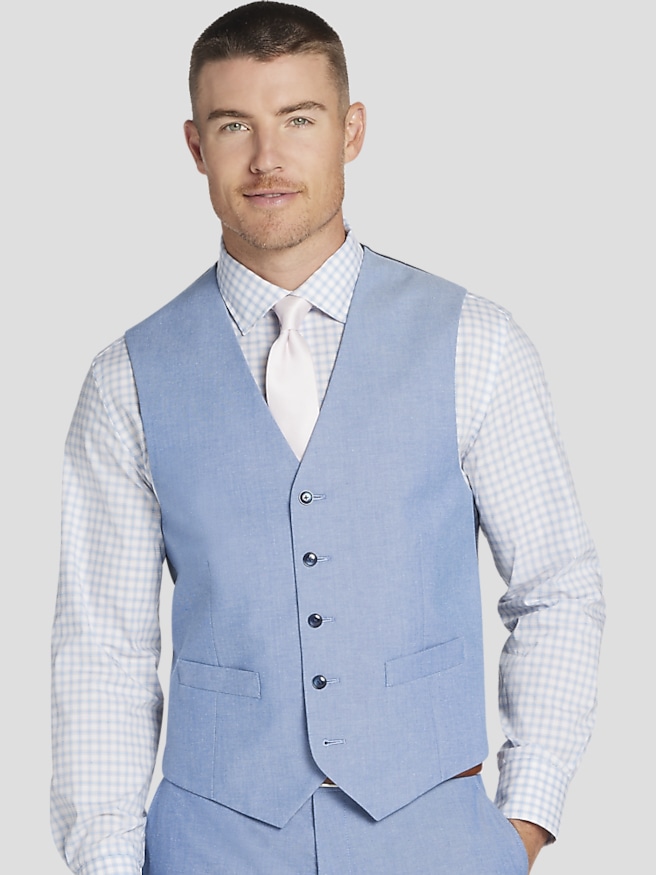
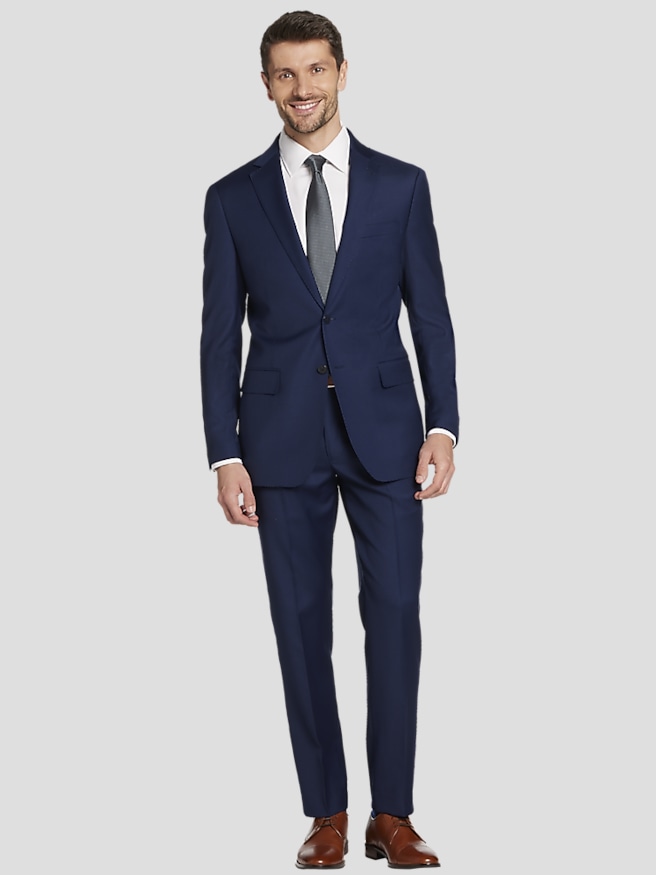
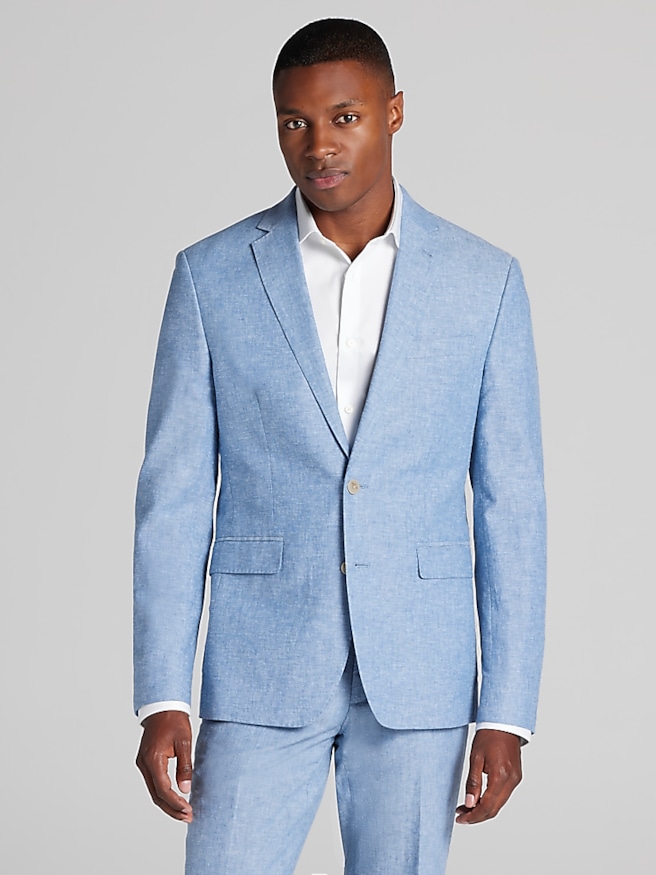
Light blue groomsmen suits bring a softer color to wedding-party dressing while keeping the structure of a coordinated suit. Shades ranging from pale powder blue to a slightly deeper sky blue offer an alternative to navy, gray, or black, with enough distinction to make the wedding party recognizable without drawing attention away from the couple. The look works especially well for garden ceremonies, waterfront venues, and relaxed celebrations, but a smooth fabric and precise fit can also feel at home in a ballroom or an elegant restaurant. The wedding’s dress code matters more than the color alone: a light blue suit is appropriate for many cocktail and semiformal celebrations, while a black-tie invitation generally calls for a tuxedo. Fabric gives each suit much of its character. Wool can provide a clean drape and natural resilience, making it a practical option for a polished wedding-day appearance and future occasions. Linen has a more textured surface and develops visible creases, which suit an intentionally relaxed setting rather than a sharply pressed look. Cotton tends to create a crisper, more structured impression, while blends can balance texture, softness, and wrinkle resistance depending on their composition. A small amount of stretch may make movement easier, though it cannot replace a well-proportioned cut. Smooth weaves emphasize the suit’s clean lines; subtle texture adds depth to a pale shade without introducing a strong pattern. Lining, pocket construction, and the shape of the lapels also affect the overall impression. A notch lapel keeps the styling versatile, and a restrained pocket design helps the lighter color remain the focus. For a wedding party, consistency in shade, fabric, and finish usually matters more than making every accessory identical.
A coordinated appearance does not require every groomsman to wear the same silhouette. Light blue groomsmen suits look most natural when each person’s fit reflects his proportions while maintaining shared details across the group. Slim cuts sit closer through the chest, waist, and legs; more relaxed cuts provide additional room without needing to look oversized. The jacket shoulders should lie smoothly, with the shoulder seam near the edge of the shoulder rather than hanging over the upper arm. When the jacket is buttoned, pronounced pulling across the front can signal that the chest or waist needs more room. Enough space to sit comfortably, reach forward, and raise a glass makes a noticeable difference over a ceremony, dinner, and reception. Jacket length should balance the torso and trousers, and sleeves should allow a small amount of shirt cuff to show. Trouser fit deserves equal attention, especially for a group that will spend time standing together for photographs. A clean seat, comfortable rise, and consistent approach to the hem help create visual unity even when body types vary. A slight break offers a familiar tailored finish, while little or no break creates a cleaner line above the shoe. Pale fabrics can make wrinkles and pocket outlines more noticeable, so bulky wallets and phones are better kept out of jacket and trouser pockets during portraits. Durability depends on fabric, construction, fit, and care rather than color alone; clothing that pulls or strains at the seams is less comfortable and can experience unnecessary stress. Between wears, a broad, supportive hanger helps preserve the jacket’s shape, and airing the suit before storage allows everyday odors to dissipate. A soft garment brush can remove surface dust. Cleaning and pressing should follow the care label, with professional attention for stains or fabrics that require it. Storing the jacket and trousers together helps keep the suit ready for another occasion.
The versatility of light blue makes coordination straightforward, but small choices determine whether the finished outfit feels understated, traditional, or more expressive. A white dress shirt creates a crisp contrast and keeps the suit color clear, making it a dependable choice when several groomsmen need to look cohesive. An ivory shirt offers a softer effect, provided it complements the wedding palette rather than appearing unintentionally mismatched beside other whites. Navy ties add definition, dusty rose introduces muted warmth, and soft gray keeps the combination restrained. A textured tie can add interest to a smooth suit, while a simple solid tie gives a more detailed weave room to stand out. Pocket squares do not need to duplicate ties exactly; a white square with a clean fold can provide enough contrast on its own. Tan or medium-brown leather shoes lend the outfit an approachable character, while darker brown shoes create a more grounded finish. Black footwear can work when other details support a sharper, more formal interpretation. Matching the general tone and formality of shoes across the wedding party helps the group look intentional without requiring every pair to be identical. The groom can wear the same light blue with a distinct tie or boutonniere, while a dark blue groom's suit creates a clear contrast alongside lighter blue groomsmen attire. Keeping shared elements, such as white shirts and a coordinated tie palette, connects the two looks in photographs. For groups dressing from separate locations, agreeing on the actual fabric color is more reliable than comparing phone images, which can make the same blue appear noticeably lighter or darker. Beyond the wedding, a restrained light blue suit can work for graduation celebrations, milestone dinners, and other occasions that call for tailored clothing without the gravity of a very dark suit. Simple styling and a comfortable, well-finished fit give it usefulness long after the final reception photograph.