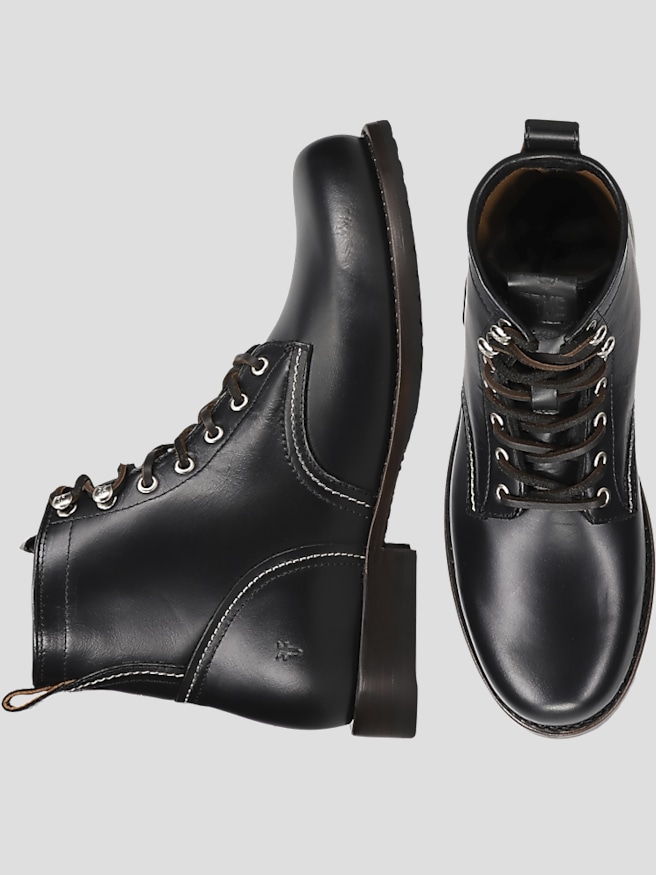
Leather work boots combine durable leather uppers with supportive construction for demanding routines, from walking concrete warehouse aisles to spending hours at a workshop bench. Their suitability depends on more than a rugged appearance: leather quality, outsole design, toe protection, fit, and construction all affect how a pair performs. Full-grain leather retains its natural grain surface and can develop a distinctive patina with use, while nubuck has a softly buffed texture that calls for care suited to its finish. Oiled leather often has a rich, broken-in appearance, although its resistance to moisture depends on the leather treatment and the boot’s overall construction. Leather alone does not make footwear waterproof, and a protective finish is not the same as a waterproof membrane or sealed construction. For hands-on work, scuff resistance and reinforced high-wear areas can matter as much as the look of the upper. Toe design is another important distinction. Soft-toe leather work boots offer structure without a protective safety cap, making them appropriate only where workplace rules do not require safety-toe footwear. Steel and composite safety toes provide protection when the boots meet the applicable standards; the material name alone does not establish a boot’s rating. Composite toes are nonmetallic, but weight, interior space, and protection depend on the complete design. Marked ASTM ratings and employer requirements provide a more reliable basis for assessing protective footwear than appearance or broad descriptions. Electrical-hazard ratings, puncture resistance, and other protective features address separate risks and should not be assumed simply because a boot has a safety toe. Electrical-hazard footwear is supplemental protection under specified conditions, not a substitute for safe work practices. For a carpenter, maintenance professional, delivery driver, or someone tackling projects around the house, the most suitable leather work boots match the actual tasks and surfaces involved. A boot intended for casual workshop use may have very different requirements from footwear worn around heavy materials or regulated jobsite hazards.
Fit gives leather work boots their everyday usefulness, especially when a shift includes standing, kneeling, climbing, and repeated trips across hard flooring. A secure heel and comfortably held midfoot help limit sliding, while adequate toe room allows natural movement without pressure against the front or sides. Safety-toe caps will not stretch to accommodate cramped toes, even as the surrounding leather softens. Leather uppers can become more flexible with wear, but a painful fit should not be treated as a normal break-in requirement. Sock thickness, foot shape, and any prescribed orthotics all influence how the interior feels. Removable footbeds can make room for compatible inserts, although extra cushioning should not crowd the foot or lift the heel out of position. Generous padding around the collar can soften contact at the ankle, while a padded tongue helps distribute pressure from the laces. Lace-up construction offers adjustment through the instep and ankle; pull-on designs rely more heavily on the shape of the heel, instep, and shaft for a secure fit. Boot height also affects coverage and freedom of movement, with taller shafts providing more coverage without automatically delivering greater stability. Underfoot, outsole shape makes a noticeable difference. A relatively flat wedge sole spreads contact across a broad area and can feel comfortable on smooth, hard surfaces, while deeper lugs provide a more pronounced tread pattern for uneven ground. Neither profile guarantees traction, and slip-resistant performance depends on the outsole compound, tread condition, surface, and contaminants present. Oil resistance describes a separate material property and should not be confused with slip resistance. Construction influences flexibility and long-term upkeep as well. Cemented soles can support a lighter, more flexible feel, while certain welted or stitchdown designs may allow professional resoling. Repair potential depends on the specific construction and condition of the upper, not simply on whether visible stitching appears around the sole. The practical balance is enough structure for the work without unnecessary stiffness or weight that becomes tiring over a long day.
The appeal of leather work boots extends beyond the jobsite because their substantial shape and textured finish work naturally with sturdy everyday clothing. Brown leather develops character alongside dark denim, canvas work pants, and a flannel shirt, while black leather creates a cleaner visual line with charcoal pants or a simple overshirt. A rounded toe and understated stitching tend to feel versatile; heavily reinforced panels and pronounced tread communicate a more task-focused purpose. Within the broader category of Men's Work Boots, leather offers a combination of structure, surface character, and care requirements that differs from textile-heavy footwear. Its durability depends partly on how well the upper, lining, and sole are maintained. Embedded grit can abrade leather around flex points, and accumulated debris in the tread can interfere with the outsole’s contact with the ground. Regular removal of loose dirt with a soft brush or cloth helps preserve the surface without unnecessarily stripping its finish. Cleaning and conditioning products need to suit the leather type: a treatment intended for smooth leather may darken nubuck or alter its texture. Conditioner can help maintain flexibility in compatible leather, but excessive application can leave residue and change the finish. Boots that become damp from cleaning or workplace exposure benefit from drying naturally away from direct heat, which can stiffen or damage leather and affect adhesives. Allowing the lining to dry between wears also helps keep the interior more comfortable. Worn tread, loose stitching, cracked uppers, or damaged protective components deserve attention rather than being dismissed as cosmetic wear. For a gift, leather work boots can be a thoughtful choice for a father, partner, or friend who values practical clothing, particularly when the recipient’s size, preferred fit, and workplace requirements are already known. Familiarity with those details matters more than choosing the toughest-looking design. Whether worn for skilled trades, property maintenance, or everyday tasks, a well-matched pair earns its place through comfortable support, appropriate protection, and materials that respond well to consistent care.