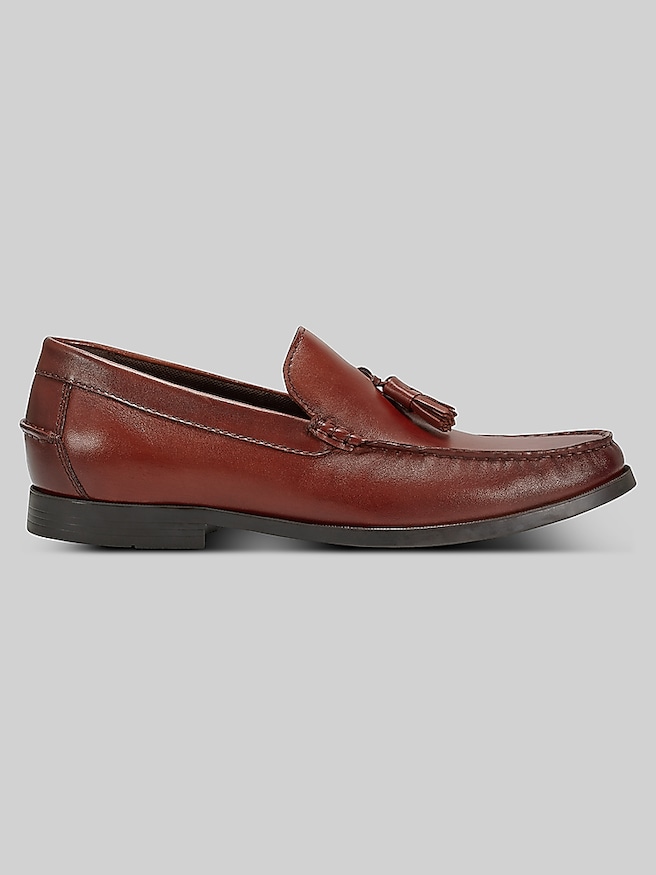
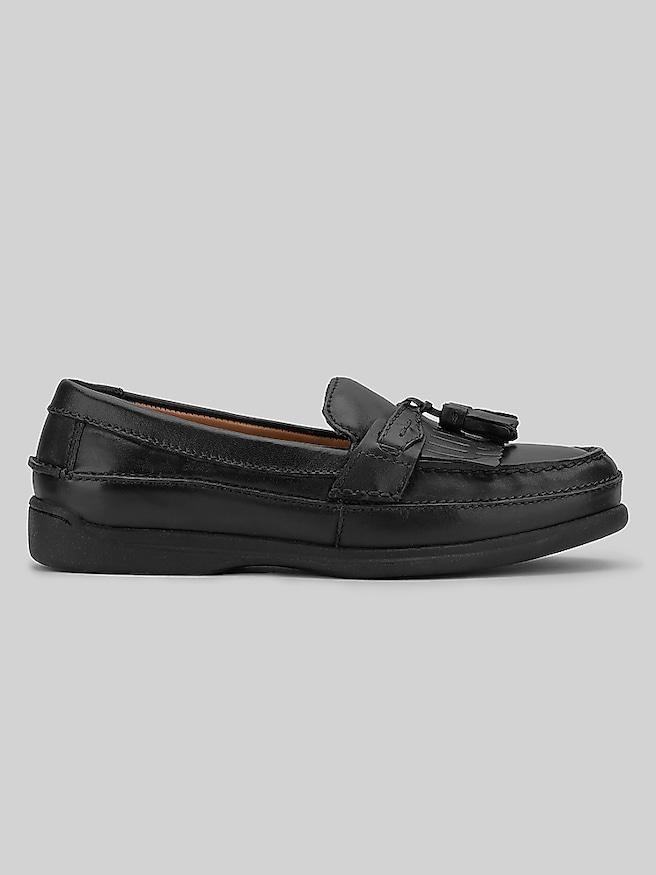
Leather tassel shoes, commonly called tassel loafers, are slip-on shoes with decorative leather tassels over the instep. The tassels often sit at the ends of a short leather cord and add detail without any laces to tie. Some styles have a kiltie, a fringed leather panel beneath the tassels, while others keep the top of the shoe simple. An apron toe, outlined by a seam around the front of the shoe, is another traditional detail. A raised apron seam emphasizes the shape of the toe, while fine stitching lets the tassels stand out on their own. Long associated with American prep style, the tassel loafer sits between a plain casual slip-on and a traditional lace-up dress shoe. A slim profile and smooth leather can look at home with a suit in a business setting, while a rounder toe and heavier sole fit more naturally with chinos or dark, straight-leg jeans. Color makes a difference, too. Black Tassel Loafers offer an understated option with charcoal trousers or a navy suit, especially when the tassels and stitching match the upper. Dark brown has a softer contrast against tan chinos, and burgundy brings a subtle bit of color to gray slacks. The proportions of the pants can matter as much as the color. A hem with a slight break leaves enough of the shoe visible to show the tassels, whereas fabric that pools at the ankle can hide much of the detail. With a blazer and trousers, socks close in color to the pants carry that line down to the shoe without drawing attention away from the leather.
The leather’s finish affects both the appearance of the shoe and how it fits into a wardrobe. Smooth leather has a cleaner look with pressed trousers, and a light polish can bring out the shape of the toe and the apron seam. Pebbled leather has a textured surface that tends to make minor marks less noticeable, a practical quality for a pair worn often. Suede has a soft nap and a more relaxed appearance, particularly alongside cotton twill or denim. Underfoot, a leather sole can give a loafer a slim profile, while a rubber sole typically offers more grip on slick floors. A thin rubber sole can still look dressy with tailored pants, so traction doesn’t have to come with a chunky silhouette. Fit deserves particular attention because a tassel loafer has no laces to adjust. The leather across the top of the foot should feel secure without pressing into the instep, and the ball of the foot should sit at the widest part of the shoe. There should be enough room to move the toes without the foot sliding forward. A little heel movement can happen in a new pair, but a heel that repeatedly lifts free is a poor fit, even if the toe feels comfortable. Leather may soften and adapt with wear, but it won’t reliably make a short shoe longer or fix a shape that pinches. The socks make a noticeable difference in a close-fitting style: a pair that feels right with a thin dress sock may feel snug with a thicker everyday sock. Trying on both shoes with the socks most likely to be worn, then walking far enough to notice any rubbing or slipping, gives a better sense of fit than standing still.
How well leather tassel loafers hold up depends on the upper, the sole, and where the shoes see the most use. Rough pavement can wear down the heel and toe edges faster than smooth indoor floors, even while the leather above them still looks good. Catching a worn heel early can keep the damage from reaching the layers above it, and some constructions allow a cobbler to replace a sole without replacing the upper. Everyday care is mostly about small habits. A soft cloth lifts surface dust from smooth leather, and a cleaner or conditioner meant for the finish can help when the upper starts to look dry. Testing it on an inconspicuous spot is worthwhile, since some products can darken lighter leather. Suede calls for a brush made for its nap rather than polish, which can flatten the texture and leave an uneven finish. Around the tassels, a soft brush can reach the folds in a fringed panel or the stitching along an apron toe without tugging on the cords. A shoehorn helps protect the back of the heel when slipping the shoes on, and well-fitting shoe trees help the leather keep its shape between wears. Some creasing across the vamp, where the shoe bends with each step, is normal even with good care. A pair can make a thoughtful gift for someone putting together a work wardrobe or someone who prefers slip-ons but still likes the look of a dress shoe. The best clues are in the shoes that person already reaches for: a familiar toe shape, a sole that suits the amount of walking they do, and a color that works with the trousers they wear most. Knowing the recipient’s fit in other loafers is especially useful, since the same marked size in a lace-up may not feel the same without the adjustment that laces provide.