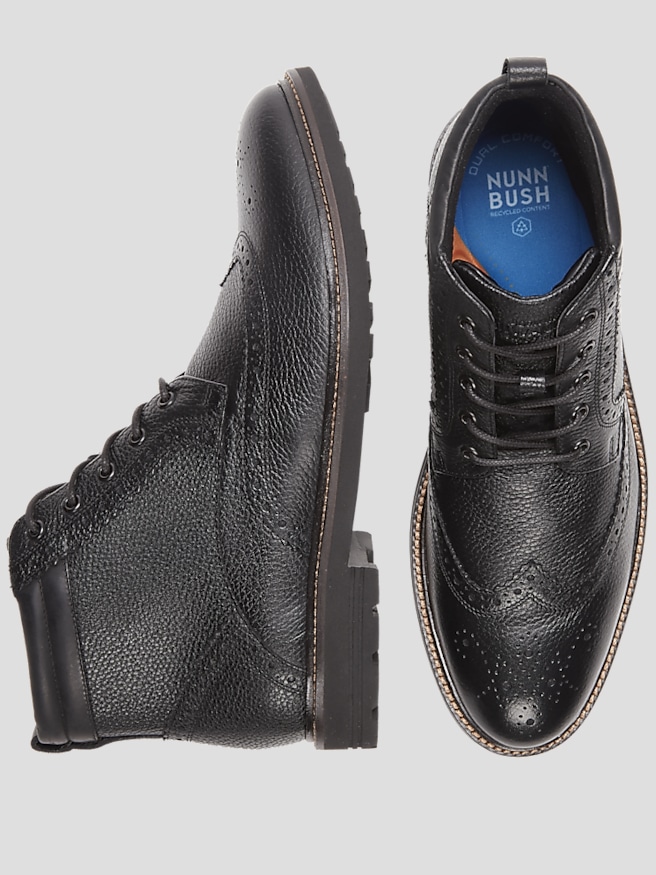
Leather fall boots combine the structure of everyday footwear with the texture and depth that make autumn clothing feel complete. Common silhouettes include lace-up boots, streamlined Chelsea boots, and rugged styles with moc-toe stitching or a raised outsole. Each creates a different impression: a smooth, narrow profile works naturally with tailored trousers, while a rounded toe and substantial sole complement denim, corduroy, and heavier cotton pants. Brown leather brings out the warmth in olive, camel, and navy clothing; black offers a sharper contrast with charcoal trousers or dark jeans. Rich burgundy and deep tan can add interest without making an outfit difficult to coordinate. Surface finish matters as much as color. Smooth leather looks more polished, pebbled leather has a pronounced texture, and suede gives casual outfits a softer appearance. A plain-toe boot beneath straight-leg jeans and a wool overshirt feels relaxed enough for a weekend lunch, while a sleek leather boot with pressed trousers and a sport coat can suit a business-casual dinner. Boots worn with tailoring generally look best when the shaft fits comfortably beneath the trouser opening rather than pushing the fabric outward. For a more adjustable closure and a traditional rugged appearance, Lace Up Fall Boots offer a useful point of comparison with pull-on silhouettes. Lacing can also help accommodate variations in foot volume, although the underlying shape of the boot still determines fit. Details such as eyelets, contrast stitching, pull tabs, and the edge of the sole influence whether a pair reads as refined or outdoorsy. Those distinctions make leather boots versatile for commuting, casual office settings, fall gatherings, and everyday outings. They are not interchangeable with formal dress shoes or specialized outdoor footwear, but the right shape can bridge the space between a sneaker and a dress shoe without looking out of place at either end of a busy day.
The character and performance of leather fall boots depend on more than their silhouette. Full-grain leather retains the hide’s natural surface and can develop a distinctive patina through wear, while top-grain leather has been worked to create a more consistent finish. Neither description alone determines the quality of a finished boot; leather thickness, stitching, lining, and construction also matter. Suede has a napped surface that gives color a soft, dimensional quality, though it usually needs more attention around moisture and stains. Leather can soften and crease with use, but a comfortable pair should not require enduring painful pressure before it becomes wearable. A secure heel, adequate space across the ball of the foot, and enough room for the toes to move are more useful indicators than assuming a familiar size will fit every shape. Trying boots with the socks intended for everyday wear helps account for thickness, particularly when switching between lightweight dress socks and cushioned wool-blend pairs. Some initial stiffness may ease, but toes pressing against the front or persistent pinching across the forefoot suggest a fit problem rather than ordinary break-in. Underfoot, the outsole affects traction, flexibility, and how substantial the boot feels. Rubber compounds and tread patterns vary, and a deep lug pattern does not guarantee grip on every wet or icy surface. A lower-profile sole may look more natural with office clothing, while a more pronounced tread can suit casual walking on uneven ground. Welted construction may allow resoling, depending on the design and the condition of the upper; other construction methods can offer flexibility or reduced weight. Neither approach guarantees comfort on its own. For someone walking from a train platform to an office or spending several hours standing at a gathering, balanced support, manageable weight, and a stable fit can matter more than dramatic styling. Leather uppers are not automatically waterproof, so a boot intended for sustained wet conditions needs protection specifically designed for that use.
Regular care helps leather boots retain their appearance through fall wear and into winter, especially where sidewalks expose footwear to rain, grit, and road salt. Surface dirt is easier to address before it becomes embedded in seams or dries along the edge of the sole. A soft brush or cloth can remove loose debris from smooth leather, followed by a suitable cleaner when needed. Conditioner should match the leather and its finish: too much product can leave a heavy residue, and some treatments can darken the surface. Suede needs its own brush and compatible care products rather than the creams intended for smooth leather. Any protective treatment is best tested on a discreet area, with the manufacturer’s directions taking priority. Damp boots should dry naturally away from radiators and other direct heat, which can damage leather. Giving a pair time to dry between wears also helps manage moisture inside the boot. Properly fitted boot trees can support the shape, while loosely packed, unprinted paper can absorb some dampness without transferring ink. Salt marks deserve prompt attention with a cleaner appropriate for the material, rather than vigorous scrubbing that may disturb the finish. Periodic attention to worn heel edges, separating soles, or damaged stitching can also keep a small issue from becoming a more involved repair. These practical details matter for boots that become part of a regular rotation, whether they are worn with dark denim for a casual dinner or with textured trousers for an office day. Leather fall boots can also make a thoughtful gift for someone who appreciates useful wardrobe staples, provided the recipient’s size, preferred fit, and usual clothing are understood. A familiar silhouette and a color that works with an existing belt or jacket are often more useful than an unfamiliar statement shape. The lasting appeal comes from that combination of personal style and everyday function: leather that gains character, a fit that supports regular wear, and a design suited to the places its wearer actually goes.