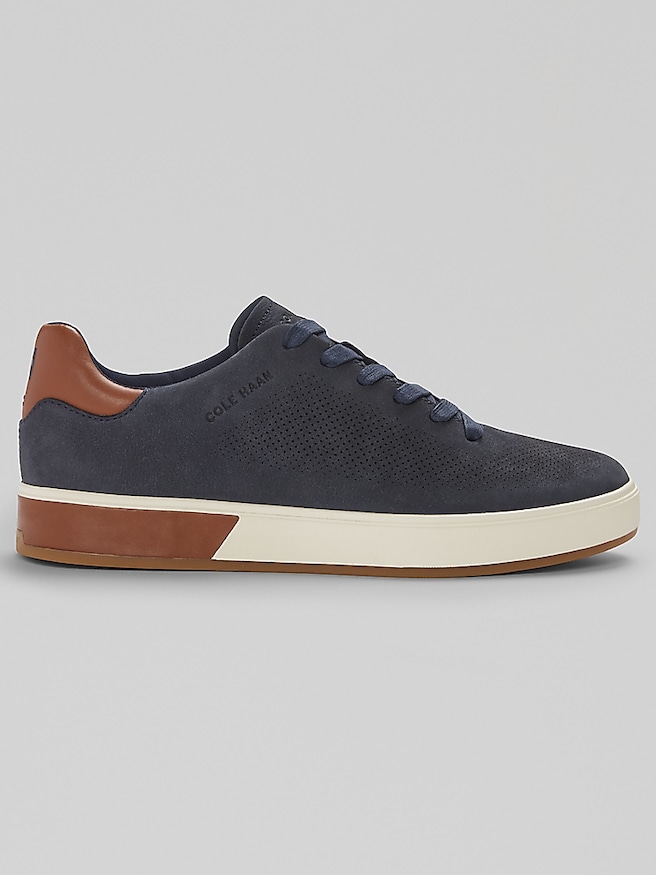
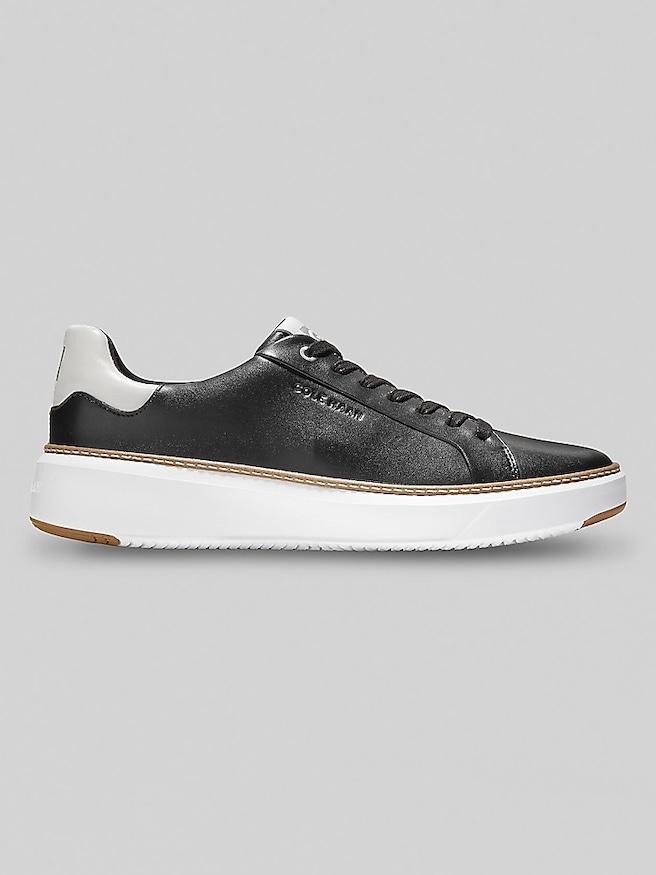
Leather embellished sneakers combine the familiar shape and casual comfort of sneakers with leather uppers and decorative details such as metallic studs, crystals, rhinestones, embossed patterns, or contrasting trim. The embellishment might be a small accent at the heel, a textured panel along the side, or a more noticeable arrangement across the upper. That range gives the category its character: some designs add just enough detail to distinguish an everyday outfit, while others make the shoes the main point of interest. Smooth leather provides a clean backdrop for polished hardware, while pebbled leather brings texture that can make decorative elements feel more integrated into the shoe. Raised stitching and layered leather panels offer another approach, adding dimension without relying on sparkle. For men who enjoy a personal touch in their wardrobe, these details can bring energy to familiar combinations of jeans, chinos, knitwear, and casual jackets. Dark denim with a neat hem lets an embellished heel or side panel remain visible; tapered chinos and a simple knit polo create a more composed look without making the footwear seem out of place. A softly structured blazer can work with restrained embellishment in a setting where sneakers are welcome, particularly when the rest of the outfit stays uncomplicated. More expressive designs benefit from that same balance: a solid shirt and clean trouser line give decorative footwear room to stand out without competing with several patterns. Color affects the overall impression, too. Tonal accents tend to read as texture from a distance, while contrasting metal or bright stones draw attention more immediately. These are primarily lifestyle shoes, suited to everyday outings, social plans, and workplaces with relaxed dress expectations rather than running, court sports, or technical training. Their appeal comes from combining a recognizable sneaker silhouette with details that feel considered, whether the intended effect is subtle, polished, or deliberately bold.
The leather and construction beneath the decoration matter just as much as the visible finish. Full-grain leather retains its natural surface character and can develop a patina with wear, while top-grain leather is often finished for a more uniform appearance. Neither description alone determines comfort or longevity; leather thickness, finishing, stitching, lining, and sole construction all contribute to how a pair feels and holds up. Suede brings a softer, matte texture but needs care suited to its nap, and coated or metallic leather may require a gentler approach than an uncoated smooth finish. Some sneakers combine leather panels with textile sections, so the entire upper may not respond to the same cleaning method. The same material considerations that matter for Premium Leather Sneakers apply here, with additional attention to the placement and attachment of decorative elements. Hardware near a natural flex point may feel less forgiving than trim positioned around the heel, and a substantial ornament can add weight that is not obvious from its appearance alone. Fit should accommodate the foot without depending on the leather to stretch significantly. Toes need room to move, the widest part of the foot should sit comfortably within the shoe, and the heel should feel secure without persistent rubbing. Leather may soften through ordinary wear, but a tight toe box or pressure from a rigid decorative panel is not something to dismiss as a normal break-in issue. Trying sneakers with the type of socks intended for everyday wear gives a more realistic sense of fit, especially when comparing a low-profile silhouette with a more padded design. Cushioning, arch shape, and flexibility also affect comfort over a full day. A plush collar can soften contact around the ankle, while a supportive footbed helps distinguish a shoe that simply looks comfortable from one that feels appropriate for extended wear. Rubber outsoles are common in lifestyle sneakers, although grip and flexibility vary with the compound and tread. Even stitching, neatly finished edges, and securely attached accents are useful signs of careful construction.
Keeping leather embellished sneakers looking sharp calls for attention to both the upper and its decorative finish. Loose dust is usually easier to remove before it settles around studs, seams, or stone settings, using a soft brush or dry cloth appropriate for the material. Smooth leather may tolerate a lightly dampened cloth and a compatible leather cleaner, but care directions should determine the method, particularly when several materials share the same upper. Saturating the shoe can affect leather, adhesives, and decorative attachments, so soaking and machine washing are generally poor choices unless the maker explicitly permits them. Conditioner may help certain smooth leathers remain supple, but it is not suitable for every finish and should not be spread over crystals, suede, or coated accents without confirmation that it is safe. A discreet test area can reveal unwanted darkening or a change in sheen before a treatment reaches a visible panel. Metallic trim and stones generally need gentle cleaning rather than vigorous scrubbing, and snagged or loose embellishments deserve attention before repeated wear makes the problem worse. Shoe trees appropriate to the sneaker’s shape, or clean paper placed loosely inside, can help maintain the upper’s form between wears. Air drying away from direct heat protects the material better than trying to speed the process with a heater. Storage also matters: keeping decorated surfaces from rubbing against other footwear helps reduce scratches and catches. With repeated use, leather can develop creases and subtle changes in color; those marks differ from cracked finishes, failing seams, or loose hardware that may need repair. As a gift, this category works best for someone whose footwear size, preferred fit, and appetite for decorative detail are already familiar. Understated accents suit a person who favors quiet texture, while more prominent embellishment makes sense for someone who regularly chooses statement accessories. A pair that fits the recipient’s actual wardrobe and daily routine is more likely to earn regular wear than one chosen for decoration alone. The strongest appeal is that balance: expressive detail supported by comfortable proportions, dependable construction, and leather that rewards thoughtful care.