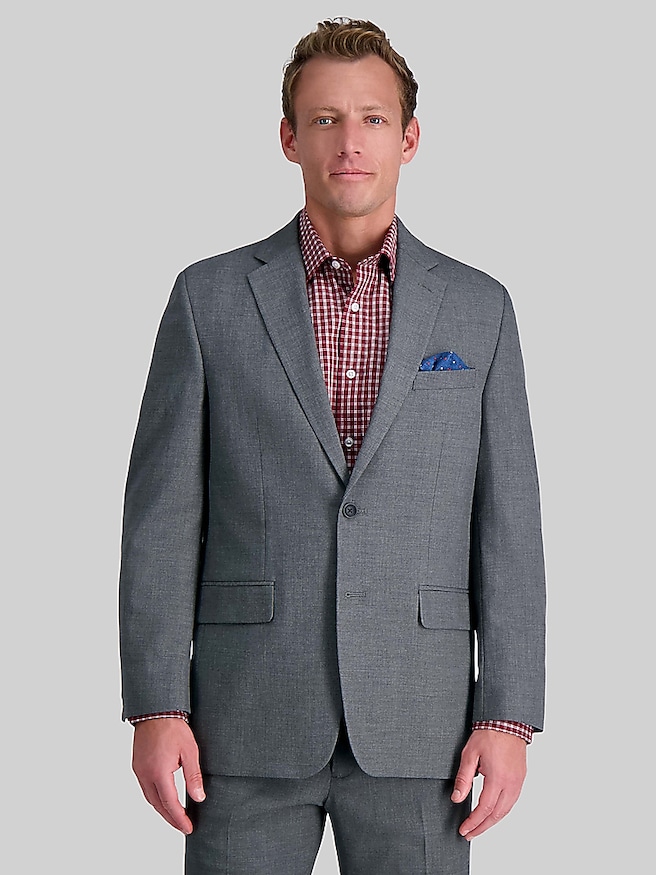
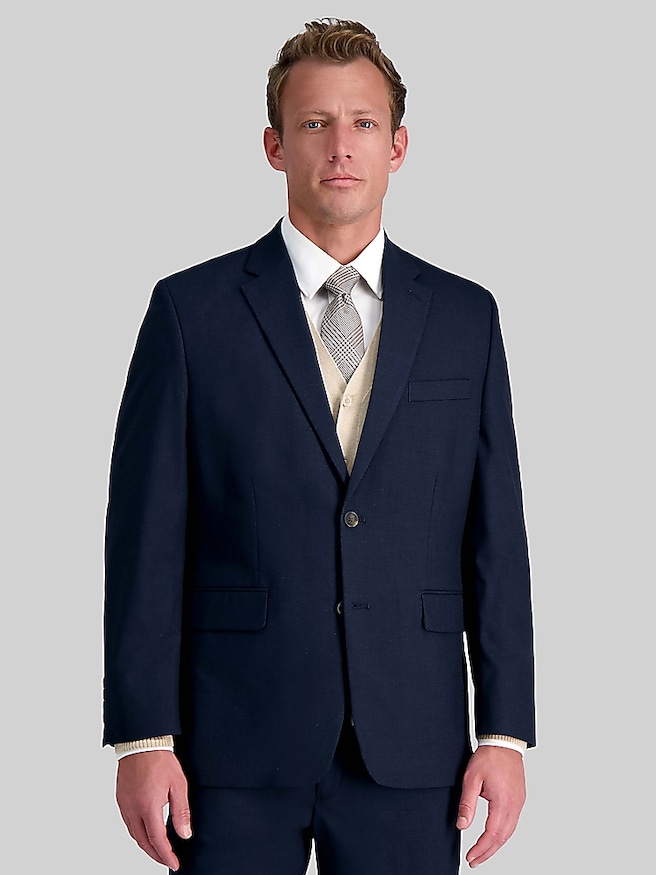
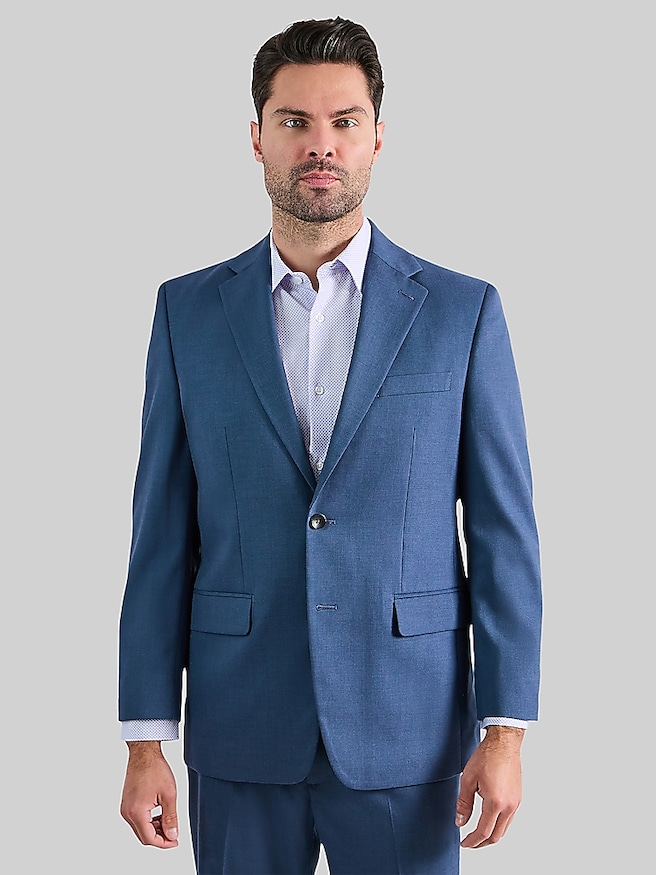
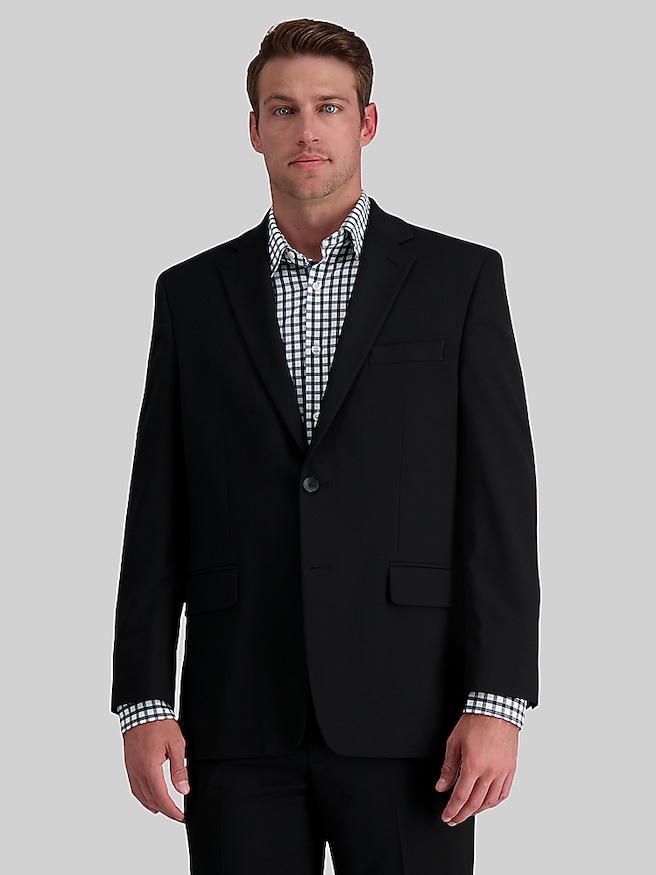
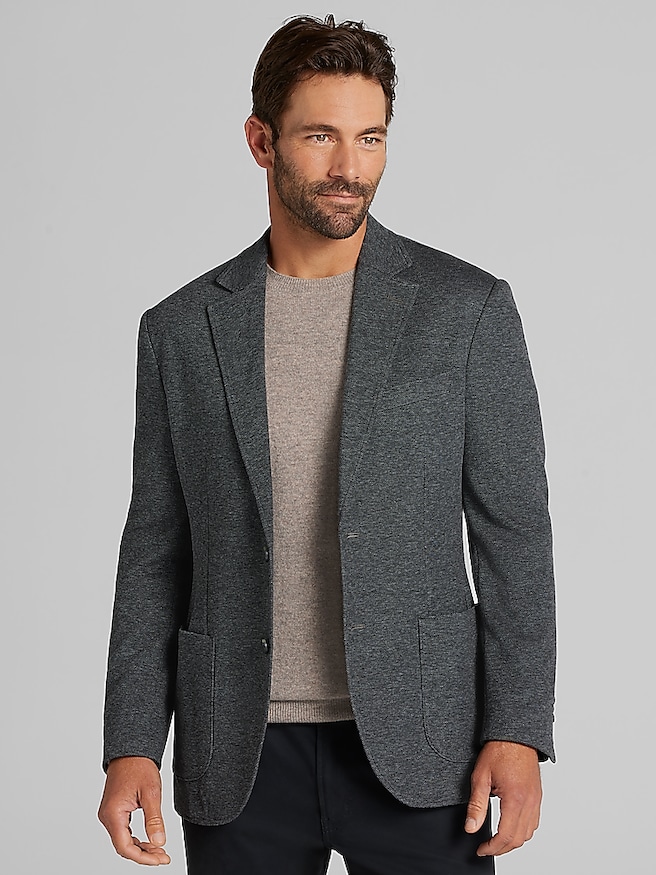
Knit suits bring the familiar shape of tailored clothing to fabrics made with interlocking loops rather than the crossed yarns of a traditional weave. That construction can give a jacket and matching trousers a softer feel and greater ease of movement, making men’s knit suits a practical choice for days that call for polish without stiffness. Picture a morning commute, several hours at a desk, and dinner afterward: a well-fitting knit suit can move through those settings without looking like workout clothing or feeling overly formal. The effect depends on the fabric and tailoring. A fine, compact jersey can have a smooth surface and clean drape, while a textured knit adds depth that becomes more noticeable up close. Some knit suiting uses wool for its temperature-regulating qualities, cotton for a soft hand, or synthetic fibers for strength and shape retention. Elastane may add stretch and help the fabric recover after movement, although the fiber blend alone does not tell the whole story. Knit density, fabric weight, lining, and internal construction all influence how a suit feels and holds its shape. Breathability and wrinkle resistance also vary; a knit fabric is not automatically cool, crease-free, or suitable for machine washing. For cooler months, a moderately substantial knit can pair comfortably with a fine-gauge sweater, while a lighter construction may feel more comfortable in heated offices and crowded reception rooms. The appeal is a balance of texture, mobility, and structure: enough definition through the shoulders and lapels to look dressed, with a less rigid feel through the body. For someone who regularly reaches for chinos and an unstructured jacket, knit tailoring offers a natural step toward a coordinated look. For someone accustomed to traditional suiting, it provides another way to dress for business-casual workplaces, daytime celebrations, and occasions where a full suit feels appropriate but a highly formal finish does not.
Fit matters just as much in a knit suit as it does in woven tailoring, even when the fabric stretches easily. The jacket shoulders should sit cleanly without hanging beyond the shoulder line, and the lapels should lie flat instead of bowing away from the chest. With the jacket buttoned, there should be enough room to breathe and move without deep pulling around the closure. Stretch is useful when reaching for a bag or settling into a chair; it should not compensate for a jacket that is too small. Trousers benefit from similar attention. A waistband that stays comfortable while seated, a smooth line through the seat, and enough room at the thigh help preserve the suit’s shape throughout a long day. Slim silhouettes create a close, streamlined outline, while roomier cuts can offer more space without sacrificing a tailored appearance. The right choice follows body proportions and comfort rather than relying on the fabric to stretch around every contour. Trying the full outfit with the intended shirt and shoes makes the balance easier to judge, especially at the jacket hem and trouser opening. Knit fabric can drape differently from crisp woven cloth, so alterations are best assessed by a tailor familiar with its stretch and recovery. Styling can reinforce either side of the suit’s character. A smooth dress shirt, restrained tie, and polished leather shoes bring it closer to traditional business attire. An open-collar shirt and loafers soften the effect for a restaurant dinner or an informal reception. A lightweight crewneck under the jacket offers warmth without the bulk of a heavy sweater, provided the sleeves and chest still sit comfortably. Navy, charcoal, and other understated tones make these combinations straightforward, while subtle surface texture keeps a coordinated outfit from feeling flat. The distinction between knit and stretch is also useful when comparing options: knit describes fabric construction, whereas Stretch Suits can include both knit and woven fabrics engineered for flexibility. Either may support comfortable movement, but the hand, drape, and degree of structure can be quite distinct.
Everyday durability comes from the relationship between fabric quality, construction, fit, and care—not simply from how far a material stretches. A knit that returns smoothly to shape after gentle movement is generally more reassuring than one that remains loose at the elbows or knees, though long-term performance also depends on wear and maintenance. Close contact with a rough bag strap, chair edge, or abrasive surface can cause friction, and some knits may develop pills in high-contact areas. A compact surface may be less prone to snagging than a loose, open structure, but any tailored knit benefits from thoughtful handling. Care instructions deserve attention before cleaning, since a suit may combine an easy-care outer fabric with lining, interfacing, or trim that requires a more specialized process. Follow the label rather than assuming that stretch or synthetic content makes the complete garment washable. Between wears, let the suit air in a ventilated space, empty the pockets, and support the jacket on a broad hanger to help maintain its shoulders. Follow any garment-specific storage directions, particularly for heavier knits that could lengthen under their own weight. Trousers should be stored without crowding or sharp folds that leave unwanted marks. If steaming is permitted, gentle treatment is preferable to prolonged heat, and pressing should follow the fabric’s care requirements. Travel adds another reason to consider knit tailoring, especially for a schedule that moves from a car or plane to a casual business meeting. Some fabrics release light wrinkles readily, but careful packing and time to hang remain worthwhile. A knit suit can also make a thoughtful gift for a graduate beginning office life, a partner refreshing a work wardrobe, or someone whose social calendar calls for more coordinated outfits. Accurate measurements and a clear sense of the recipient’s preferred fit are especially important for a gift with tailored proportions. For weddings and evening events, the invitation’s dress code remains the deciding factor; softer suiting does not replace attire specifically requested for a formal occasion. Its strength is looking composed through the ordinary movement of a full day, from sitting and walking to greeting friends across a dinner table.