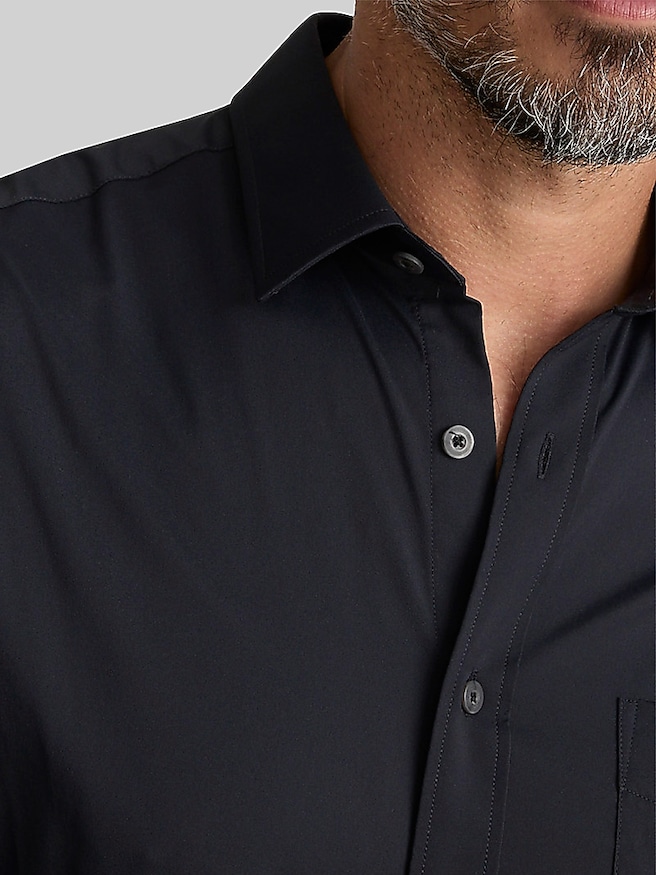
Knit button-up shirts pair a familiar button-front design with the soft feel and flexibility of knitted fabric. Their defining feature is the fabric construction: interlocking loops create a material that can move with the body, while the placket, collar, and cuffs give the shirt a more finished appearance than a basic tee. That combination makes knit button ups useful for men who want to look put together without feeling overly dressed. They suit a relaxed office, a dinner reservation, a family gathering, or an afternoon that moves from errands to meeting friends. The category includes smooth, fine-gauge fabrics as well as more noticeable ribs, open stitches, and raised patterns, so the overall effect can range from understated to distinctly textured. Fiber content helps shape that character. Cotton knits often feel soft and familiar against the skin, while blends containing modal or viscose can have a fluid drape. Polyester or nylon may contribute resilience, and a small amount of elastane can add stretch and help the fabric recover after movement. Construction matters alongside the fiber blend: a compact knit tends to look more substantial, while a looser stitch can feel more relaxed and may show an undershirt beneath it. A fine, even surface usually works well with tailored clothing, whereas a pronounced stitch brings more visual depth to simple outfits. Solid colors let the knit itself do much of the work, especially when light catches a subtle rib or a small geometric pattern. Stripes and contrasting trims create a stronger focal point without requiring additional accessories. Although the terms sometimes overlap in everyday conversation, button-up refers to the front fastening, while button-down technically describes a collar whose points fasten to the shirt. A knit button-up can have several collar styles, and that detail influences whether the finished look feels more tailored, sporty, or laid-back. The result is a shirt category with enough structure to anchor an outfit and enough ease to feel natural throughout an ordinary day.
Fit determines whether that balance comes through. A knit button-up should follow the body without gripping the chest, pulling across the stomach, or forming gaps between the buttons. The shoulder seams generally sit near the shoulder edges, and the sleeves need enough room for bending an elbow without dragging the shirt upward. Because knit fabric can stretch, a shirt that technically fastens may still be too close-fitting; a smooth placket and fabric that settles back into place are better signs of a comfortable fit. The shape of the hem also matters. A straight or gently curved hem can look intentional untucked when it finishes around the middle of the fly, while a longer shirt may sit more neatly inside trousers. Ribbed hems often create a blousier outline, especially when the body has a little ease. For a business-casual setting, a fine-knit button-up worn with tailored trousers and leather loafers offers polish without the sharper formality of a traditional dress shirt. A subtle collar that rests neatly beneath an unstructured jacket keeps the neckline clean, and a lightweight undershirt with a low neckline can add coverage without showing above an open top button. For dinner or a casual celebration, a darker knit shirt with straight-leg chinos creates a simple, cohesive outfit. With jeans, a softly textured style can feel relaxed while still looking more considered than a graphic tee. Wearing the shirt open over a plain crewneck changes the proportions and makes the button front part of a layered look rather than the main closure. When the knit has an obvious pattern, quieter pants and minimal accessories keep the outfit from feeling crowded. For another perspective on surface detail, Textured Button Ups offers a related category where fabric interest is central to the look. Texture does not have to mean a bold statement: a small stitch variation can be enough to distinguish a shirt at close range while remaining easy to coordinate across an everyday wardrobe.
Long-term wear depends on how the fabric, seams, and finishing hold up together. Even stitching along the shoulders and armholes helps the shirt retain its shape, while a stable placket supports the buttons and reduces twisting at the front. Buttons should be securely attached, and the buttonholes should feel neatly finished rather than stretched or ragged. At cuffs and hems, recovery matters: a knit that returns toward its original shape after gentle movement is less likely to develop a loose, tired-looking outline. Surface texture deserves some attention, too, since raised stitches can catch on rough chair arms, bag hardware, or hook-and-loop fasteners. Friction can cause pilling in many knits, particularly under the arms or where a shoulder strap rests, and careful handling helps preserve a cleaner surface. Care begins with the garment label because cotton, blended fibers, and more delicate yarns do not all respond to washing in the same way. When machine washing is permitted, turning the shirt inside out, using a gentle cycle, and keeping it away from abrasive garments can limit unnecessary wear. Excessive heat may cause shrinkage or affect stretch fibers, so the recommended drying method is especially important. Heavier knits often benefit from drying flat when the label allows it, and folding rather than hanging can help prevent stretched shoulders during storage. An iron or steamer should be used only at a setting appropriate for the fabric, with extra care around raised stitches and trims. These practical details make knit button ups especially appealing for someone building a wardrobe around repeat wear rather than single-occasion outfits. They can also make a thoughtful gift for a father, brother, partner, or friend whose style falls between dress shirts and tees. Familiar colors, a comfortable silhouette, and care requirements that match the recipient’s routine make the choice more personal. A well-chosen knit button-up earns its place through that combination of tactile comfort, considered detail, and everyday usefulness.