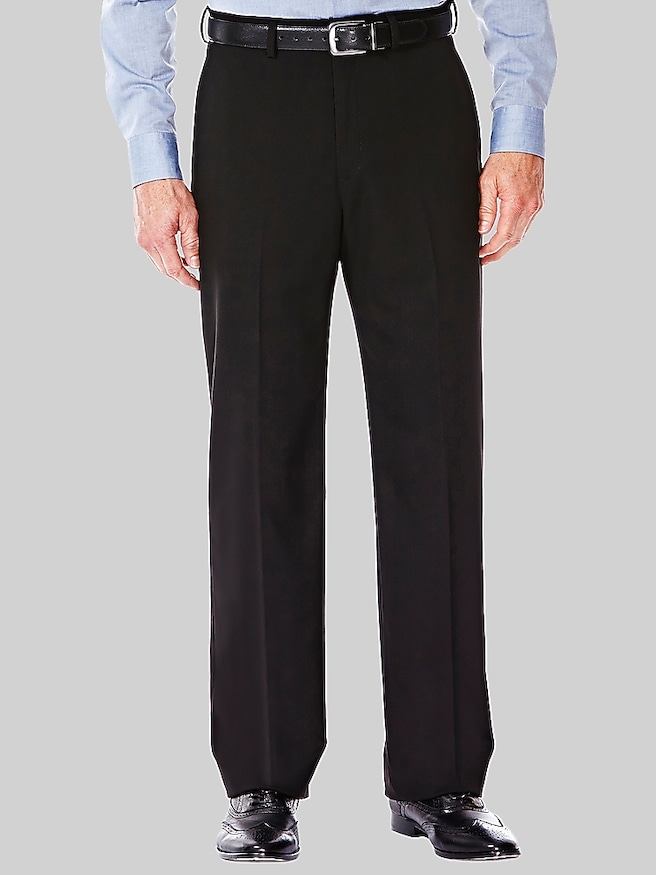
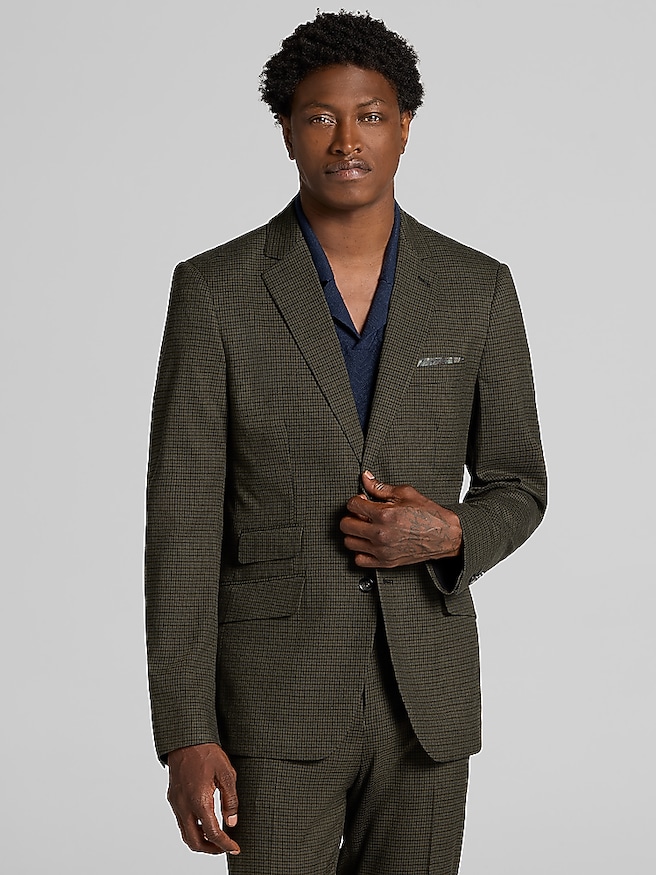
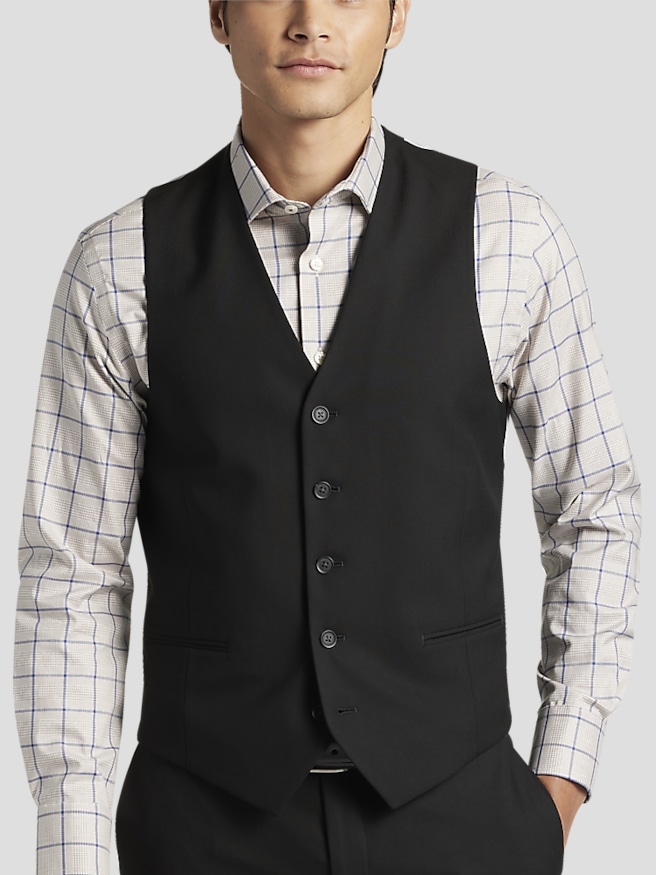
Hip suits combine classic tailoring with modern proportions, expressive colors, and styling that feels personal rather than prescribed. The look can be lean and streamlined, softly structured and relaxed, or deliberately bold, but the defining quality is balance: a recognizable suit silhouette with details that give it a fresh point of view. A clean two-piece suit in deep navy can feel contemporary with a fine-gauge knit and understated leather sneakers, while a burgundy suit with a crisp shirt brings more personality to a celebration. Neither approach depends on an exaggerated fit. Modern suits often get their character from a slightly softer shoulder, a thoughtfully shaped waist, an interesting fabric texture, or trousers that fall cleanly without excess bunching. Those details make hip suits relevant for creative workplaces, wedding receptions, gallery openings, date nights, and milestone dinners where looking polished matters but rigid formality does not. Color helps establish the mood. Charcoal, black, and midnight blue create a restrained foundation, while olive, muted brown, and deeper jewel tones offer distinction without needing a loud pattern. Checks and subtle woven designs introduce dimension, especially when the shirt and accessories stay simple. More expressive patterns can also work when their scale suits the wearer and the occasion. The most convincing modern tailoring looks intentional from a distance and reveals its character up close: a textured weave, a balanced lapel, a smooth trouser line, or a shirt collar that sits neatly inside the jacket. For someone building a wardrobe beyond standard office attire, a hip suit offers a useful middle ground between familiar business dressing and statement clothing. It can communicate confidence at a networking event, bring personality to an engagement celebration, or make an ordinary dinner reservation feel like an occasion. The overall effect comes less from following every trend than from choosing proportions and details that feel comfortable enough to wear naturally. That ease is part of what separates a distinctive suit from one that feels like a costume.
Fabric and construction influence that ease as much as appearance. Wool is a traditional suiting material valued for its drape, breathability, and ability to recover from light creasing, though its feel varies with the weave and weight. Worsted wool generally creates a smoother, sharper surface, while more textured weaves add visual depth that pairs well with simple shirts and knitwear. Wool blends can bring together several qualities, including structure, softness, or easier maintenance, depending on their composition. Fabrics containing stretch fibers may offer additional give through the seat, knees, and elbows, a useful consideration for long dinners, commuting, or events with plenty of movement. Stretch does not replace proper fit, however, and fabric pulled tightly across the body can distort an otherwise clean silhouette. A jacket should rest smoothly across the shoulders, with a collar that stays close to the shirt rather than lifting away from the neck. When fastened, the front should lie comfortably without strong pulling lines around the button. Slim-fit suits follow the body more closely, tailored fits offer shape with a little more room, and relaxed silhouettes use additional ease to create a fluid outline. These terms vary, so the actual cut matters more than the label. Trousers need enough room through the rise and thigh to allow sitting and walking without strain. A tapered leg can look sharp with a slight break or a clean hem, while a fuller leg benefits from a length that lets the fabric fall evenly over the shoe. Suit proportions also work together: an extremely narrow trouser can look disconnected from a generous jacket, just as a very short jacket can upset an otherwise balanced shape. Thoughtful alterations can refine sleeve length, trouser hems, and certain areas of the waist, but the shoulder and overall jacket length deserve particular attention from the start. For frequent wear, sound seams, secure buttons, smooth lining, and fabric that moves without excessive tension all contribute to a suit that keeps its shape and feels dependable.
Styling gives modern tailoring much of its range. A dress shirt and tie keep a hip suit appropriate for occasions that call for a more traditional finish, while an open collar makes the same silhouette feel less formal. A fine-knit polo or a plain, substantial crewneck can soften the effect further when the setting permits. Footwear changes the impression just as clearly: polished lace-ups emphasize precision, loafers introduce ease, and minimal sneakers create a casual contrast when the dress code welcomes them. Keeping shoes clean and coordinating their visual weight with the trousers helps the outfit feel resolved. Accessories work best when they add a point of interest rather than compete for attention. A textured tie, a restrained pocket square, or a simple watch can be enough, particularly when the suit already has a strong color or pattern. For celebrations that invite a more expressive look, Party Suits offer another direction for occasion dressing with personality. Practical care helps preserve the finish that makes any suit look sharp. Following the garment’s care label is essential because fibers, linings, and internal construction may need different treatment. Between professional cleanings, a suitable garment brush can lift surface dust, and time on a supportive hanger helps the jacket settle back into shape. Trousers should hang neatly rather than remain folded over a chair, and pockets should be emptied so keys and other objects do not pull at the fabric. Pressing or steaming should follow the care instructions, with particular caution around heat-sensitive blends. Rotating suits between wears also gives the fabric time to recover. For a graduate entering a creative field, a partner celebrating a milestone, or anyone refreshing a personal wardrobe, a modern suit can be a thoughtful gift when measurements and style preferences are known. Its lasting appeal lies in that combination of expression and usefulness: distinctive enough to feel considered, comfortable enough to move in, and adaptable enough to earn a place beyond a single event.