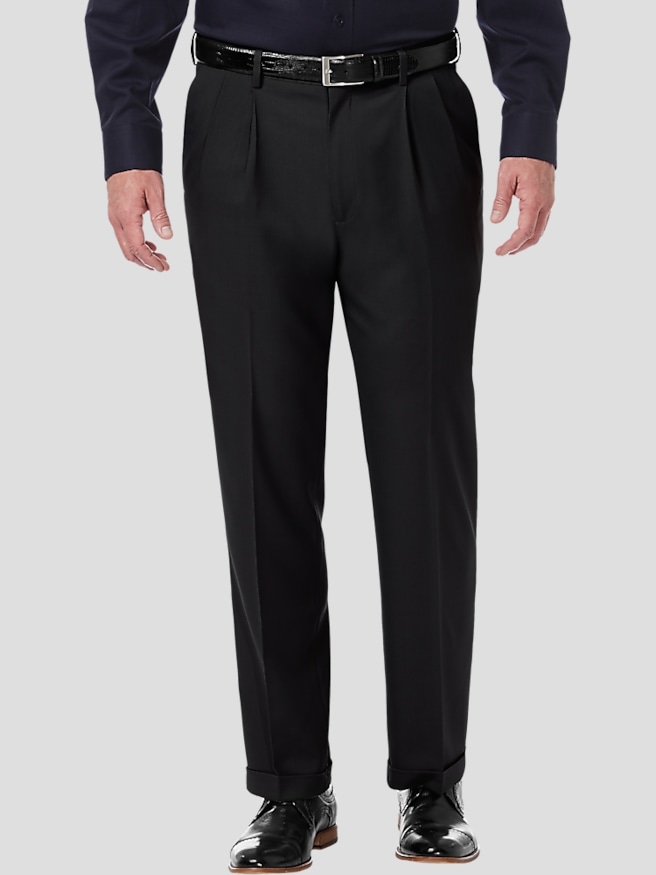
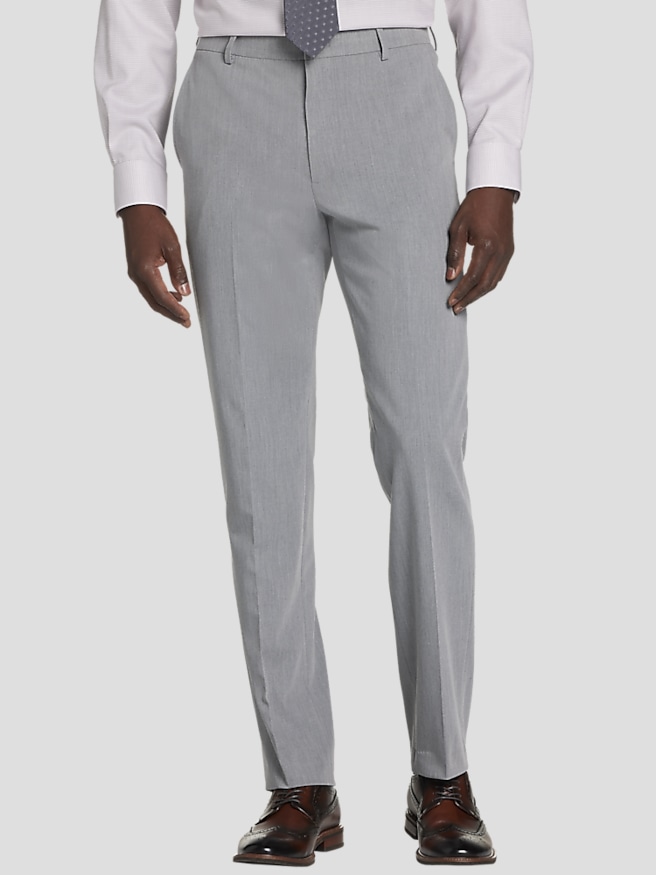
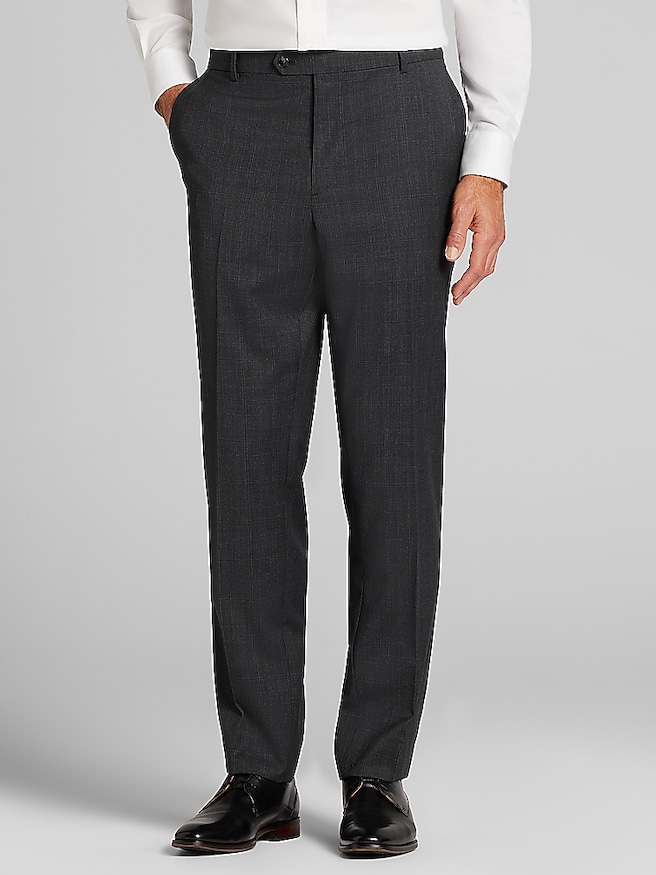
Grey stretch pants combine a versatile neutral color with fabric designed to give as the body moves. That flexibility can make everyday moments more comfortable, from settling into a desk chair to climbing stairs or taking a longer stride across a parking lot. Stretch is a fabric characteristic rather than a single style: it can appear in tailored dress pants, clean-lined chinos, and more relaxed casual designs. The finished look depends on the weave, surface texture, pocket construction, and cut. Smooth fabric with a pressed crease tends to feel more polished, while a matte finish and less structured shape lean casual. Grey also covers a useful spectrum. Pale grey creates a lighter visual contrast with navy and black, medium grey works easily with a wide range of shirt colors, and charcoal provides a deeper foundation for business and evening outfits. Subtle heathering can add depth without the stronger visual presence of a pattern. Within the broader category of grey men's pants, stretch styles offer another way to balance a neat appearance with freedom of movement. A white button-down and dark leather shoes create a straightforward office combination; a knit polo and minimal sneakers give the same color family a more relaxed direction. Burgundy, forest green, and soft blue also sit comfortably against grey, making it easy to bring personality into an outfit without competing colors. For workplaces with flexible dress expectations, these pants can bridge the gap between structured trousers and casual denim. They can also suit dinners, presentations, family gatherings, and travel days when a composed appearance matters. The degree of formality still comes from the whole outfit, not the color alone. A matching suit jacket requires a true fabric match, while a separate navy blazer can create an intentional contrast with grey trousers.
The feel of grey stretch pants starts with the base fabric and how the stretch component is incorporated. Cotton blends often have a familiar, soft hand and can work well in chino-style construction. Polyester blends may contribute shape retention and easier care, depending on the fabric and finish. Wool blends can offer a refined drape suited to dressier settings, while a small amount of elastane or spandex introduces give. The fiber percentage tells only part of the story: yarn structure, weave, fabric weight, and finishing all affect how much a pair stretches and how it feels after several hours of wear. Two-way stretch generally provides give in one direction, while four-way stretch allows movement both across and along the fabric; terminology can vary, so the individual description matters. Recovery is equally important. Fabric that returns toward its original shape helps maintain a cleaner silhouette at the knees and seat after sitting. Stretch should support a good fit rather than compensate for a waistband or thigh that is too tight. A slim cut follows the leg more closely, a straight cut maintains a more consistent line, and a tapered cut narrows toward the ankle. Those shapes can feel quite distinct even in the same labeled waist size. Rise affects where the waistband rests, and room through the seat and thighs influences comfort when sitting, bending, or stepping up. A waistband that stays level, pockets that lie relatively flat, and a fly that closes without pulling are useful signs of balanced proportions. Length changes the overall impression, too: a slight break at the shoe reads more traditional, while a shorter, clean hem emphasizes the ankle and footwear. Neither requires excess fabric pooling above the shoe. Stretch fabric can still need alterations, and a tailor can assess hem length and leg shape without assuming that flexibility alone will create the intended fit.
Daily use and care play a large part in how well stretch pants retain their appearance. Areas around pocket openings, the seat, inner thighs, and hems receive repeated friction, so sound seams and a fabric suited to the intended use matter alongside softness. A lightweight dress fabric and a more substantial casual weave serve distinct purposes; neither should be judged by stretch alone. For commuting or frequent sitting, comfortable recovery and enough room through the hips may matter more than an especially narrow leg. For travel, wrinkle resistance can be helpful when it is identified in the fabric details, but stretch by itself does not guarantee a wrinkle-free finish. The same distinction applies to moisture management: flexible trousers are not automatically workout clothing, and moisture-wicking performance should be confirmed rather than assumed. Care instructions remain the best starting point because grey stretch pants can include washable blends, wool-rich fabrics, and constructions that require professional cleaning. When machine washing is permitted, turning pants inside out and washing with similar colors can help limit surface abrasion and color transfer. Excessive dryer heat can affect elastic fibers, so the labeled drying method is especially important. Pressing also calls for attention to the fabric setting; too much heat or direct pressure can leave shine on some darker materials. Hanging pants neatly after wear helps preserve their shape, while keeping hems clear of the ground reduces unnecessary wear. These practical details make stretch trousers a useful consideration for someone building a work wardrobe, refreshing everyday outfits, or seeking a comfortable alternative to rigid pants. They can also make a thoughtful gift for a partner, parent, or recent graduate when waist size, inseam, preferred rise, and usual leg shape are known. Familiar measurements and an understanding of the recipient’s routine are more useful than guessing from height alone. The strongest choice is one that fits the wearer’s actual day: comfortable at the desk, balanced with favorite shoes, and polished enough for plans beyond the workday.