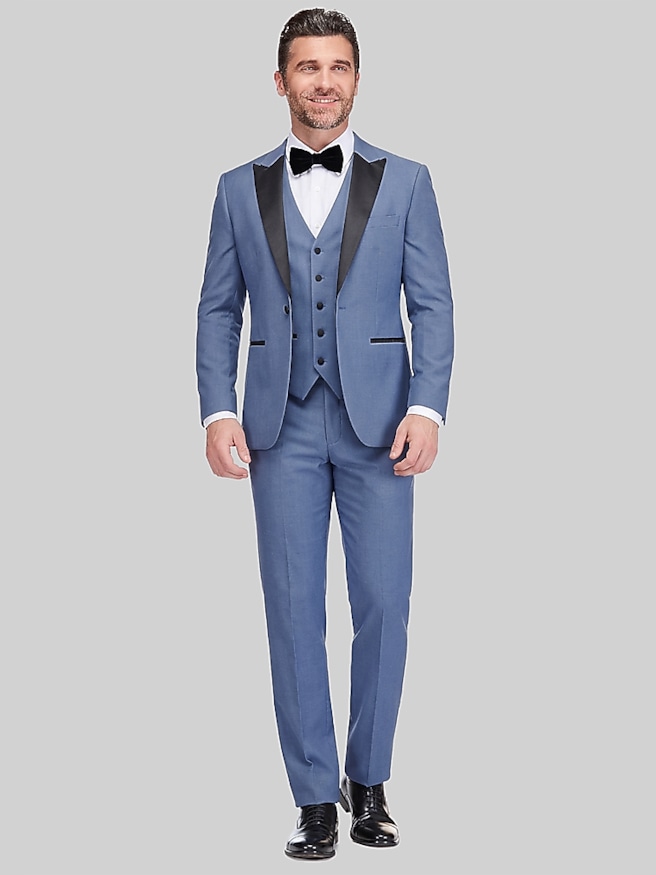
Gray and purple wedding outfits combine the versatility of gray tailoring with the depth and character of purple, creating combinations that range from understated to expressive. A light gray suit with a lavender tie feels soft and refined, while a charcoal suit with a plum tie creates stronger contrast. Medium gray sits comfortably between those options, pairing with lilac, mauve, violet, or aubergine without allowing either color to overwhelm the outfit. The effect depends as much on proportion as on shade: a purple pocket square adds a small point of interest, while a purple vest makes the color a more prominent part of the look. For a groom, a gray suit with a textured purple tie can establish the wedding palette without competing with the rest of the ceremony. Groomsmen can repeat the same purple accent against matching gray tailoring, or coordinate through related shades when an exact match is not part of the wedding plan. Guests can use the same combination more subtly, choosing a muted tie or a discreet pattern that acknowledges the occasion without resembling the wedding party. A white shirt keeps the contrast crisp, especially beside charcoal, while a pale lavender shirt creates a softer transition beneath a gray jacket. For a purple-led alternative, Shades Of Purple Wedding Suits explores a palette that can be balanced with gray accents. The invitation’s dress code still sets the level of formality; a coordinated color scheme does not make an ordinary suit a substitute for required black-tie attire. Within that framework, gray and purple offer room for personal expression through subtle texture, restrained patterns, and carefully chosen accessories. The most cohesive combinations usually give one shade the larger role and let the other provide definition, whether that means a charcoal foundation with a lilac accent or a deep purple jacket paired with tailored gray trousers for an occasion that welcomes separates.
Fabric and fit give these color combinations their character beyond the first impression. Wool suiting can offer a clean drape, breathability, and natural resilience, making it well suited to a wedding day that includes standing for photographs, sitting through a ceremony, and moving around a reception. Wool blends vary in feel and performance according to their composition, while fabrics with a small amount of stretch can allow easier movement without replacing the need for a proper fit. A smooth, finely woven gray fabric creates a clean backdrop for a purple tie with visible texture; a more textured suit often looks balanced with a simpler accessory. Matte finishes keep the overall effect restrained, whereas a little sheen in a silk tie can add dimension under reception lighting. Purple also changes noticeably with its surroundings. Lavender may look especially pale against a white shirt, and a deep plum can appear almost black in dim lighting. Checking the complete outfit together helps reveal those relationships more clearly than judging each piece separately. Good tailoring makes an equally visible difference. Jacket shoulders should lie cleanly without extending beyond the natural shoulder line, and the buttoned front should sit comfortably rather than pull into pronounced creases. The collar should rest close to the shirt collar, with sleeves allowing a modest glimpse of shirt cuff. Trousers need enough room through the seat and thighs for sitting and walking, with a hem that complements the shoe rather than gathering heavily over it. Slim, tailored, and roomier silhouettes can all look polished when their proportions suit the wearer. A vest should lie smoothly beneath the jacket without exposing a strip of shirt above the trouser waistband. For the groom greeting guests or a wedding party gathering for portraits, these details help the outfit look composed in motion as well as in photographs. Comfortable tailoring also leaves less need for repeated adjustments throughout the celebration.
Finishing details bring gray and purple wedding attire together without requiring every accessory to match. A plum tie and a white pocket square with a subtle purple border can look more considered than repeating the same fabric everywhere. If the tie has a small floral, paisley, or geometric design, keeping the shirt quiet gives that pattern room to register. Conversely, a lightly patterned shirt often works best with a solid tie that picks up one of its colors. Similar purple shades can have very different undertones, so a reddish plum and a blue-leaning violet may not read as a coordinated pair even when both are dark. For wedding parties, viewing fabrics together helps maintain consistency while still allowing a groom’s accessories to stand apart. Shoes provide another point of balance: black leather creates a crisp finish with charcoal, while an appropriate brown leather can complement medium or light gray when the dress code allows. A belt, when worn, should relate closely to the shoes, and socks can either continue the trouser color or introduce a discreet purple detail. Accessories such as a tie or cuff links can also make thoughtful wedding-party gifts when chosen around the outfit’s established palette and each recipient’s style. Care matters after the photographs are finished. Following each garment’s care label, treating marks promptly according to the fabric’s requirements, and avoiding unnecessary cleaning can help preserve color, texture, and shape. A suit benefits from a supportive hanger, space to air after wear, and gentle brushing when appropriate for the fabric. Ties should be untied carefully rather than pulled loose, and shoes should be cleaned using methods suited to their material. A versatile gray suit can continue into other dressy occasions with a change of shirt and accessories, while purple accents can remain part of a personal wardrobe rather than serving only one event. That balance of occasion-ready detail and lasting usefulness gives the combination appeal well beyond the wedding day.