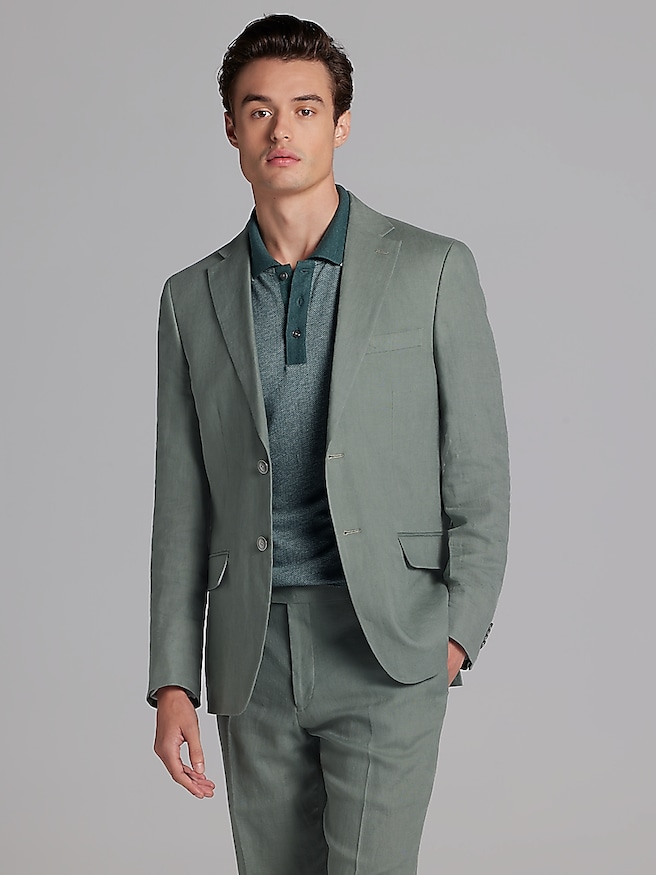
Green groomsmen suits bring depth and character to a wedding party without losing the polished look expected for the occasion. The color can feel grounded and understated in olive, crisp and expressive in a medium green, or rich and formal in forest tones. Against white shirts, green creates a clean contrast that reads clearly in group portraits; beside ivory, taupe, or warm brown, it takes on a softer quality. That versatility makes green a natural fit for celebrations in gardens, historic buildings, rustic venues, and contemporary event spaces alike. A line of groomsmen in deep green suits can look especially striking against pale stone, wood paneling, or the muted landscape of the cooler months. The shade matters as much as the setting: yellow-toned greens have an earthy warmth, while blue-toned greens often feel more reserved. Fabric texture also changes the impression, with a smooth surface creating a sharper appearance and a subtle weave adding dimension without relying on a bold pattern. For a cohesive wedding party, matching the green shade and fabric is generally more important than putting every person in precisely the same cut. Each groomsman can have a comfortable, proportional fit while the group still looks connected. The groom may wear the same color with distinct accessories or choose a deeper shade that provides quiet separation in photographs. A Dark Green Suit For Groom offers a useful point of comparison when considering how the groom’s attire will relate to the rest of the party. Green also works well with restrained floral accents, including cream blossoms, textured greenery, and muted burgundy details. The result can be coordinated without making every element identical, leaving room for the venue, flowers, and personal details to shape the overall mood. Even small choices, such as a consistent shirt color or similar shoe finish, help tie the group together.
Materials and construction influence how green groomsmen suits look through a full day of photographs, greetings, dinner, and dancing. Wool is a traditional suiting choice because it combines breathability with a pleasing drape and can recover from light creasing between wears. Wool blends may bring additional qualities, depending on their fiber content, while fabrics with a modest amount of stretch can provide ease during seated moments and movement. A brushed or visibly textured cloth often complements cooler-weather settings, although fabric weight still deserves attention when much of the celebration takes place in a heated room. A substantial fabric does not need to feel stiff, and a lightweight fabric is not necessarily the most comfortable option for every venue. The lining, weave, and overall construction all contribute to the experience. For an outdoor ceremony followed by an indoor reception, a breathable suit paired with suitable outerwear can be more practical than choosing a heavy suit solely for the time spent outside. Fit is equally important, particularly when several groomsmen have distinct builds. A jacket should sit cleanly across the shoulders, close without pronounced pulling, and allow comfortable movement through the chest and upper arms. Sleeves that reveal a small amount of shirt cuff help keep the proportions tidy. Trousers should feel secure at the waist without relying on an overly tightened belt, with enough room through the seat and thighs for sitting and walking naturally. Slim cuts create a closer outline, while more relaxed cuts offer additional space; neither should restrict an easy stride or make a seated dinner uncomfortable. A clean trouser hem finishes the look, whether the preference is a slight break over the shoe or a shorter, neater line. Trying the full outfit while seated and with the intended shoes helps reveal details that are easy to miss when standing still. Thoughtful alterations can bring consistency to a group without forcing identical proportions, allowing each groomsman to look at ease from the first portrait to the last dance.
Styling green groomsmen suits is often most successful when the supporting pieces give the color room to stand out. White dress shirts provide a dependable foundation, while soft ivory can complement warm floral palettes when it aligns with the rest of the wedding attire. Brown leather shoes emphasize the earthy side of olive and moss tones; black shoes can give deeper greens a more formal finish. Keeping shoes clean and well maintained matters more than adding elaborate details. Ties in navy, burgundy, charcoal, or muted gold can introduce contrast, and a small-scale pattern adds interest without competing with a boutonniere. Pocket squares do not need to duplicate the tie exactly: a simple white fold can be enough to make the jacket feel complete. A vest adds another layer of coverage and can help maintain a dressed-up appearance when jackets come off, though it also adds warmth. The invitation and venue should set expectations, since a green suit suits many cocktail and formal wedding settings but does not automatically replace attire required by a black-tie dress code. Beyond the wedding, a well-fitted green suit can remain useful for anniversary dinners, evening receptions, and other dressed-up gatherings. Depending on the cloth and construction, the jacket may also work separately with neutral trousers for a less formal occasion. That longer-term usefulness makes care worth considering from the start. Following the garment’s care label, addressing marks promptly with an appropriate method, and avoiding unnecessary cleaning can help preserve the fabric and finish. After wearing, the jacket benefits from time to air out on a broad, supportive hanger, while trousers should be hung neatly to limit creasing. A breathable garment bag provides protection during storage and travel without trapping moisture against the cloth. Durability also depends on fit: fabric under constant strain at the seat, knees, or seams is more vulnerable to wear. With comfortable proportions, considered accessories, and attentive care, green groomsmen suits can serve the wedding party beautifully while remaining a distinctive part of a dress wardrobe.