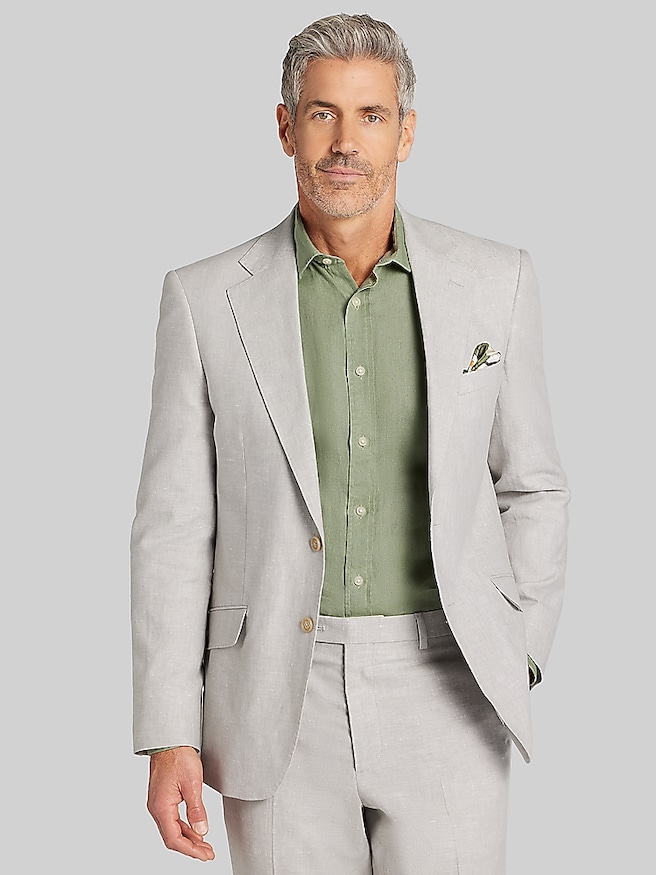
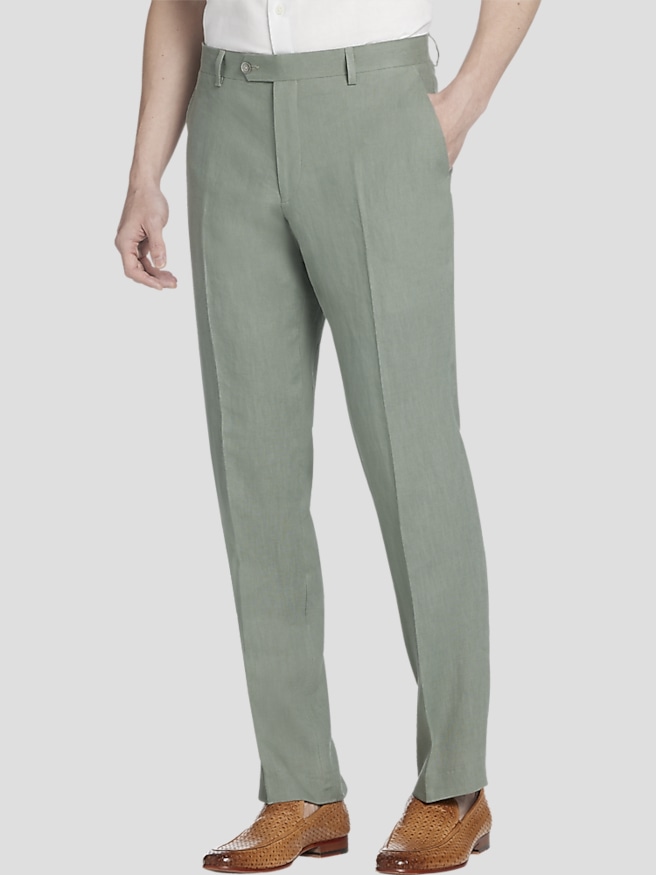
Men’s green suits bring depth and personality to tailored dressing without losing the structure that makes a suit feel polished. The color covers a broad range of moods: olive has an earthy, understated character, forest green feels rich and composed, and sage creates a softer impression. A more saturated green makes a stronger entrance, particularly when the rest of the outfit stays simple. That range gives green a place at weddings, milestone celebrations, professional gatherings, and dinners where the occasion calls for something more considered than everyday clothing. For a wedding guest, a muted green suit with a white shirt and a restrained tie can feel distinctive without competing with the wedding party. For a groom, a deeper shade can establish a clear visual identity while coordinating with attendants in complementary neutrals. In a workplace where tailored clothing is customary, a dark green with a smooth finish generally reads as more reserved than a bright shade or a visibly textured fabric, though the setting’s expectations still matter. Green also works well for someone who already wears navy and charcoal and wants another option with a similarly grounded feel. Color combinations make a noticeable difference: a crisp white shirt sharpens the contrast, pale blue adds softness, and cream creates a gentler transition against earthy shades. Brown leather shoes often complement olive and forest tones, while black shoes can give darker greens a more formal edge. A burgundy tie introduces warmth, a navy tie keeps the palette subdued, and a small patterned pocket square can connect those colors without matching every detail. Under indoor lighting, some greens appear darker or more gray than they do in daylight, so the full outfit benefits from being considered as a whole rather than as separate pieces. The strongest combinations let the suit’s color lead, with accessories adding definition rather than competing for attention.
Fabric and construction shape the character of a green suit just as much as the shade. Wool is a familiar choice for tailored clothing because it can drape cleanly, recover from light creasing, and maintain a refined surface with appropriate care. Finer, smoother weaves tend to look more formal, while a visible twill, subtle basket weave, or textured finish gives the color additional dimension. Wool blends can balance structure with other fabric characteristics, but the fiber content and care label provide a better picture of what to expect than the color alone. Linen has a more relaxed expression, with a recognizable slub and natural creasing that become part of its appearance. For a look built around that texture, men’s green linen suits offer a distinct take on the same color family. Cotton can create a matte, less formal impression, while fabrics containing stretch may provide additional ease of movement; neither replaces the importance of a well-proportioned cut. Jacket structure also changes the result. Defined shoulders and a shaped chest create a firmer silhouette, while lighter internal construction can feel less rigid and allow more of the fabric’s natural drape to show. Fit gives all of these details their purpose. A jacket should sit cleanly across the shoulders, with a collar that rests against the shirt rather than pulling away from it. When the jacket is buttoned, pronounced wrinkles radiating from the closure can suggest that the waist is too snug. Trousers need enough room through the seat and thighs for sitting comfortably, with a waistband that stays in place without depending on a tightly cinched belt. A tapered leg creates a clean line, but excessive narrowness can cause the fabric to catch at the calves or bunch above the shoes. Sleeve length, jacket length, and trouser break bring the proportions together. These are especially noticeable in a solid-colored suit, where the eye follows the silhouette without a bold pattern to distract it.
The lasting appeal of a green suit depends on how comfortably it fits into the wearer’s routine. A restrained shade and a balanced cut can accommodate repeated use simply by changing the shirt, shoes, and accessories. A white shirt and dark tie may suit a ceremony, while an open-collar shirt can relax the same silhouette for a dinner when the dress code allows it. Separates can extend that usefulness, provided the fabric and construction look intentional apart: a textured green jacket may pair naturally with neutral trousers, whereas a smooth, highly structured suit jacket can be harder to separate from its matching pants. Durability is also a matter of how the garment is worn and maintained. Fabric weight alone does not determine longevity; the weave, fiber quality, construction, and amount of friction at the elbows, seat, and inner thighs all contribute. Tightness can place unnecessary strain on seams, while an appropriate fit gives the fabric room to move. Between wears, a broad, shaped hanger supports the jacket’s shoulders, and hanging trousers neatly helps preserve their line. A gentle brush suited to the fabric can lift surface dust, while airing the suit before enclosing it helps keep it fresh. Care should follow the garment label, with professional cleaning or pressing used as needed rather than assuming every wear requires a full cleaning. A stain is best addressed promptly and cautiously, since vigorous rubbing or an unsuitable cleaning product can affect both the fabric and its green dye. For travel, a garment bag and careful folding can reduce crushing, although some creasing is normal, especially with linen. As a gift for a graduate, a partner, or someone celebrating a professional milestone, a green suit can feel personal and purposeful when the recipient’s measurements, preferred silhouette, and likely occasions are known. The most useful choice reflects the person wearing it: comfortable through a long reception, composed in a group photograph, and familiar enough in fit to let the color feel natural rather than like a costume.