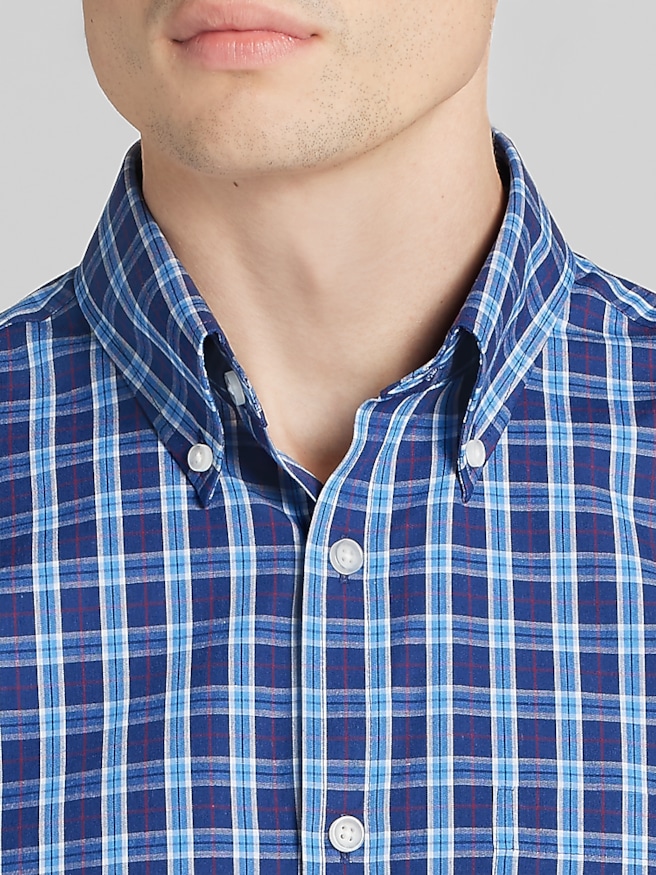
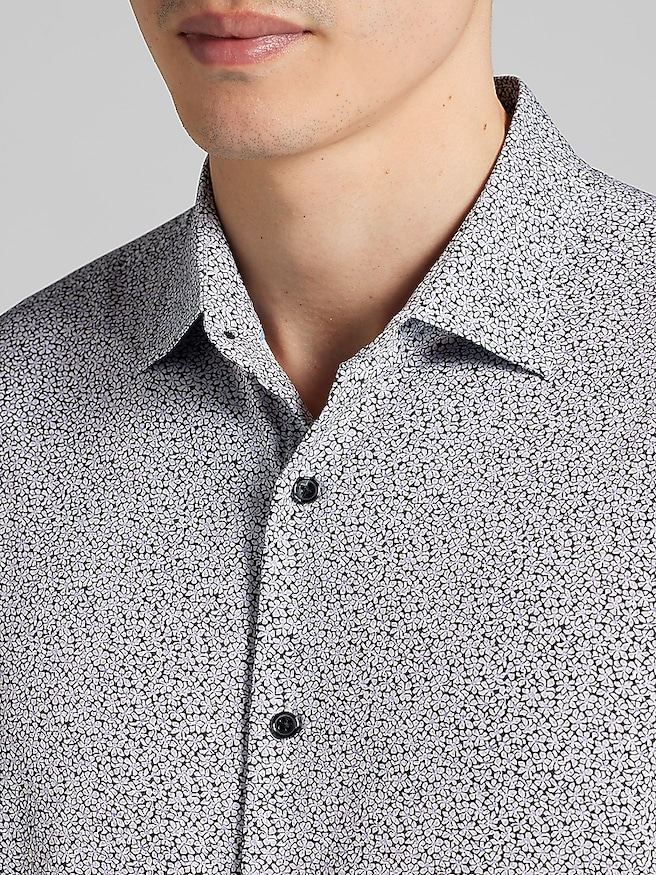
Green button-up shirts for men offer a versatile alternative to white and blue, with shades that range from soft sage and muted olive to rich forest green. A button-up shirt fastens down the front; a button-down shirt also has collar points that secure with small buttons. Both can work in everyday wardrobes, although the fabric, collar shape, and overall construction help determine how dressed up a shirt feels. Olive green has an earthy character that pairs naturally with khaki chinos, dark denim, and brown leather shoes. Sage creates a lighter contrast against navy trousers, while forest green brings depth to gray dress pants or a charcoal suit. The shade matters as much as the silhouette: muted greens tend to blend easily with familiar neutrals, while brighter greens make the shirt a more noticeable part of the outfit. For a business-casual office, a solid green shirt tucked into tailored trousers creates a considered look without requiring a tie. For dinner or a casual gathering, an open collar and dark jeans keep the same color approachable. Small checks, subtle stripes, and textured weaves introduce another layer of interest, especially when the rest of the outfit stays simple. A green shirt does not need matching accessories to look coordinated. A brown belt and shoes, a navy jacket, or gray trousers give the color a clear setting without competing with it. When combining patterns, vary their scale so a finely checked shirt does not compete with an equally fine jacket pattern. For occasions that call for a tie, navy, burgundy, and restrained neutral patterns can complement green, depending on the shirt’s exact shade. Dress codes still take priority: a green button-up can suit many offices, dinners, and celebrations, but events with strict formal requirements may call for a more traditional shirt color. That range of uses makes green a practical choice for men who want variety while keeping their outfits easy to coordinate.
Fabric and fit shape how a green button-up shirt looks after several hours of wear, not just when it first comes off the hanger. Cotton is a familiar choice for its breathability and comfortable feel, but its weave changes the result. Poplin typically has a smooth, relatively crisp surface that works well with tailored clothing. Oxford cloth has a more visible basket-weave texture and often feels at home with chinos or jeans. Twill features a diagonal weave that can give the fabric a substantial feel and an appealing drape. Linen brings visible texture and natural creasing, making it better suited to a relaxed appearance than a sharply pressed finish. Blended fabrics may offer stretch, easier care, or improved wrinkle resistance, though the fiber percentages and care label provide more useful information than a broad fabric description alone. A small amount of stretch can make reaching across a desk or sitting through a long dinner more comfortable, but it should not compensate for a shirt that is too tight. On a conventionally cut shirt, the shoulder seams should sit near the edges of the shoulders, and the front placket should lie flat without gaps between buttons. The chest and upper back need enough room for natural movement. A trim fit follows the body more closely, while a roomier cut leaves additional space through the torso; neither should restrict movement or create excess bunching under a jacket. When the collar is fastened, it should feel secure without pressing into the neck. Sleeves should reach the wrist without swallowing the hands, and cuffs should accommodate a watch comfortably if one is worn. Length also matters. A shirt intended for tucking needs enough fabric to stay anchored when sitting or reaching, while an untucked style should finish neatly rather than hanging like an oversized dress shirt. Even stitching, secure buttons, and cleanly finished seams are useful details to examine when considering how a shirt may stand up to repeated wear.
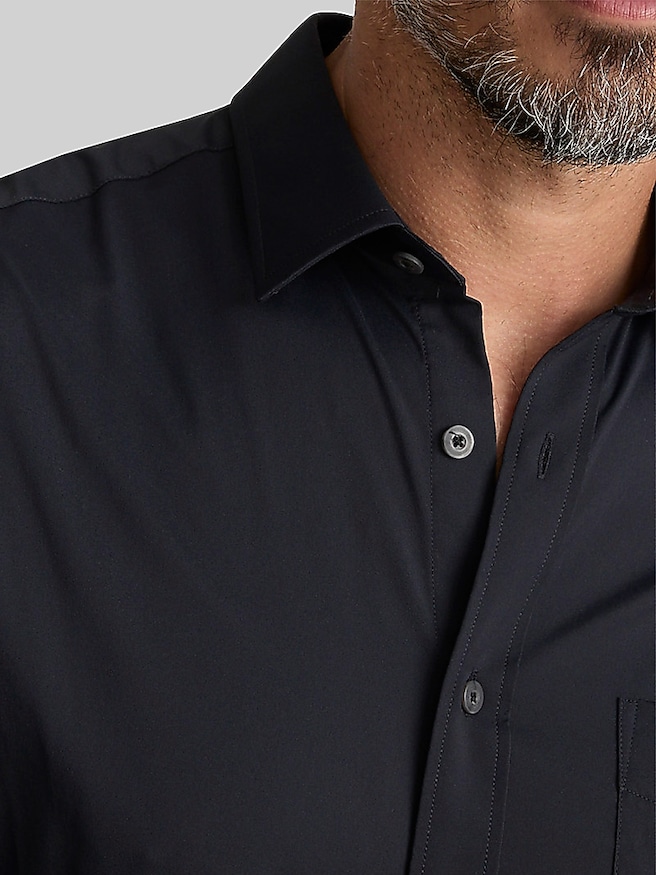
The most useful green button-up shirts earn their place through repeatable outfits and manageable care. For a workday that ends with dinner plans, an olive or forest green shirt can move from tailored pants and a jacket to a more relaxed open-collar look without needing a complete change. A sage shirt with stone-colored chinos creates a softer contrast, while deeper green against dark denim feels more defined. Shoes can reinforce the intended use: loafers make the combination look polished, clean sneakers keep it casual, and lace-up dress shoes work with more tailored trousers. For men building a small collection of dependable shirt colors, green adds an earthy option alongside neutrals; Black Button Down Shirts for Men offer another direction for outfits built around a deeper, more uniform color. Keeping each shirt looking good starts with its care label, since fiber content, dyes, and finishes can require distinct treatment. When machine washing is permitted, washing with similar colors and turning the shirt inside out can help reduce visible abrasion. Pretreat marks with a fabric-appropriate method rather than scrubbing aggressively, and avoid bleach unless the label specifically allows it. Follow the stated drying instructions, remove the shirt promptly, and smooth the collar, cuffs, and front placket before hanging. Iron or steam only as directed, paying attention to heat limits for blended fabrics. Linen’s natural wrinkles and an Oxford shirt’s textured surface do not need to be treated like flaws; the goal is a clean, cared-for appearance that suits the fabric. Checking loose buttons and small seam issues before they worsen can also extend useful wear. As a gift for a father, brother, partner, or recent graduate, a green button-up is easiest to choose when the recipient’s usual collar size, sleeve length, fit preference, and clothing routine are known. A favorite shade and a familiar fabric are often more useful than an unfamiliar cut, particularly for someone who wants a shirt that fits naturally into an established wardrobe.