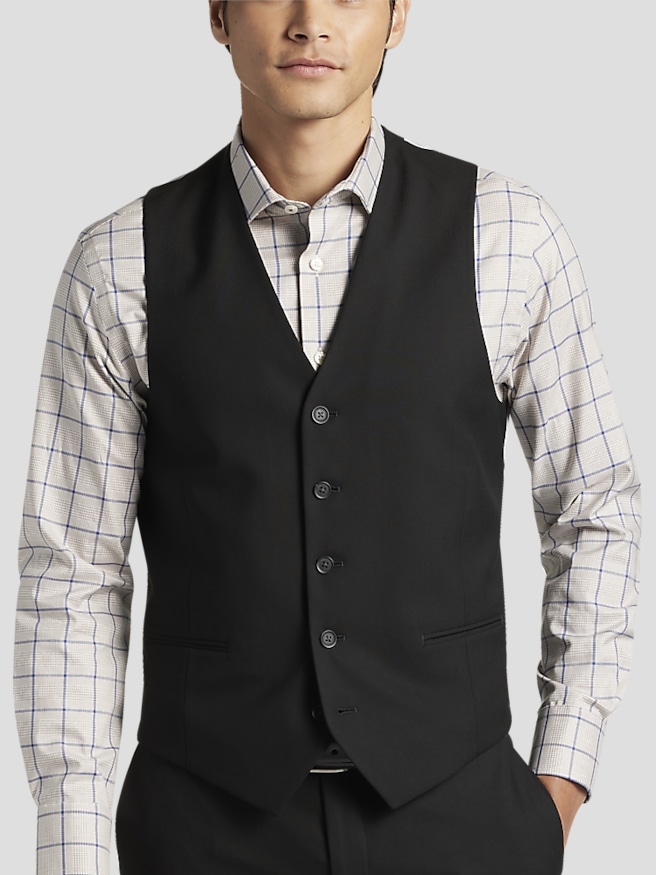
Green and burgundy complete suits bring distinctive color to coordinated tailoring without relying on a loud pattern or an elaborate combination of separates. A complete suit generally centers on a jacket and matching trousers, while a three-piece suit adds a vest for another layer of structure. Choosing green or burgundy gives that familiar silhouette a more expressive character: deep forest and hunter greens can feel restrained and grounded, while wine and oxblood shades bring richness without the brightness of a primary red. The undertone matters as much as the color name. A green with a gray cast creates a quieter impression than a saturated emerald, and a brown-leaning burgundy looks different from one with a pronounced purple cast. Matching fabric helps keep the jacket and trousers visually consistent, especially under the mixed lighting of a reception hall or event space. These colors suit wedding guests, prom attendees, graduates, and anyone whose workplace or social calendar makes room for tailoring beyond navy and charcoal. A groom or wedding party can also use a deeper color to establish a cohesive look, with accessories providing subtle distinctions between roles. The invitation still sets the level of formality; a colorful business suit does not replace a tuxedo when black tie is required. For less restrictive dress codes, a white shirt creates a crisp boundary at the collar and cuffs, allowing the suit color to remain the focus. A pale blue shirt can soften the contrast, while a lightly textured tie adds dimension without competing for attention. Solid fabrics tend to emphasize silhouette and color, whereas a subtle weave reveals more detail at close range. In photographs, restrained accessories help keep that distinction clear. The result can feel personal rather than theatrical, whether the setting is a courthouse ceremony, a milestone dinner, or a professional celebration where a conventional dark suit would otherwise be the default.
Fabric and fit determine how comfortable a green or burgundy suit feels long after the first impression. Wool is valued in tailoring for its resilience, breathability, and ability to drape cleanly, while wool blends can combine those qualities with other performance characteristics. Polyester blends may offer wrinkle resistance and durability, and rayon can contribute softness and fluidity; the finished result depends on the weave, fabric weight, and construction rather than the fiber name alone. A small amount of stretch may make sitting, walking, or reaching more comfortable, but it cannot compensate for a jacket that is too narrow across the back or trousers that pull through the seat. Smooth worsted-style fabrics give deeper colors a clean, defined appearance, while more visible texture can make the same shade feel less formal. Lining and internal structure also affect the experience: a firmly shaped jacket presents a sharper outline, while lighter construction can feel less restrictive. Fit labels provide a starting point, not a guarantee. Slim fits generally follow the body more closely, modern fits often allow a little more room, and classic fits typically offer a fuller silhouette, though measurements vary. Shoulders deserve particular attention because they are harder to alter than sleeve or trouser length. A well-balanced jacket lies cleanly across the upper back, closes without pronounced pulling, and leaves enough room to sit comfortably. Trousers should stay at the intended waist position without relying on a tightly cinched belt, with sufficient room through the hips and thighs for a natural stride. A slight break at the shoe creates a traditional finish, while a shorter hem gives a cleaner, more contemporary line. For a vest, a close but comfortable fit keeps the front smooth and helps cover the trouser waistband. Small adjustments to sleeve length, trouser hems, or waist shaping can make coordinated pieces feel much more considered. Someone who spends most of an event seated may value room through the waist and thighs more than an especially narrow outline, while an active reception makes ease through the shoulders equally important.
Styling green and burgundy suits works best when the supporting pieces have a clear relationship to the fabric rather than matching every detail exactly. Dark brown leather can emphasize the earthy character of forest green, while black shoes give either color a sharper, more formal edge. Burgundy tailoring also pairs naturally with dark brown footwear, particularly when the shirt and tie remain restrained. A white pocket square provides a clean accent without requiring a duplicate of the tie fabric. Small-scale patterns can work well against a solid suit, but several competing patterns may distract from its color and cut. For repeat wear, changing the shirt, tie, and shoes can shift the same coordinated silhouette from a celebratory setting to a polished dinner or an expressive office look. For additional coordinated occasion dressing, explore Complete Formal Suits Under $500. Keeping the jacket and trousers together between wears also helps preserve the set as a unified outfit. Trousers often experience more friction at the seat, knees, and inner thighs, so rotating complete suits when possible can help distribute wear. Care should always follow the garment label, including any instructions for professional cleaning. Surface dust can often be lifted with a suitable clothing brush, and prompt attention to spills helps prevent a small mark from becoming a lasting stain. Excessive heat or direct pressure can leave unwanted shine on some fabrics, making appropriate pressing methods important. A broad, supportive hanger helps maintain the jacket’s shoulders, while trousers benefit from hanging smoothly rather than remaining folded over a chair. Clean, dry storage away from prolonged direct sunlight helps protect the color that makes these suits distinctive. As a gift, a complete suit is most successful when the recipient’s measurements and preferred silhouette are known, with room in the plan for alterations. Whether chosen for a first major formal occasion or an established wardrobe, a comfortable fit and thoughtful care make distinctive color easier to wear repeatedly.