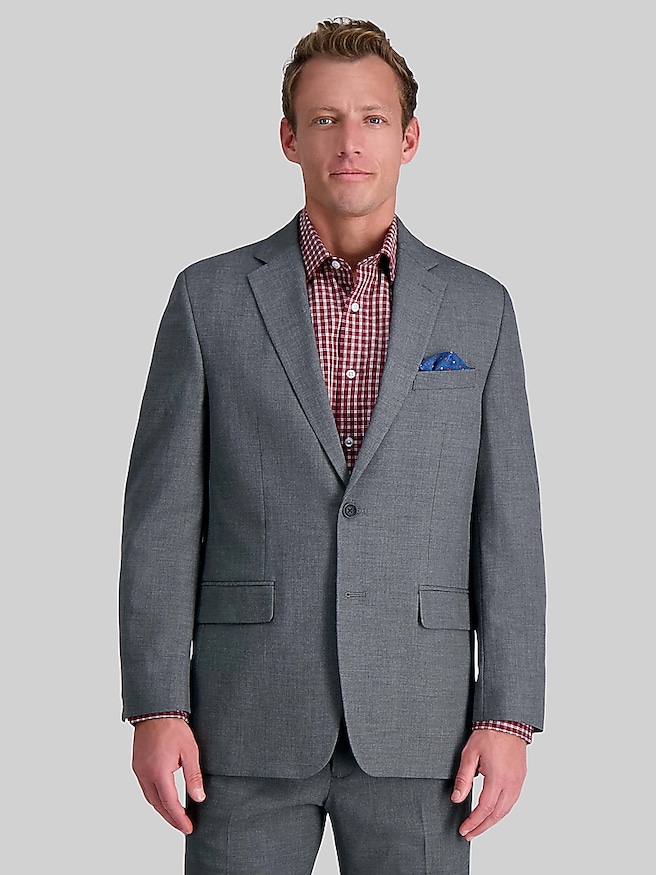
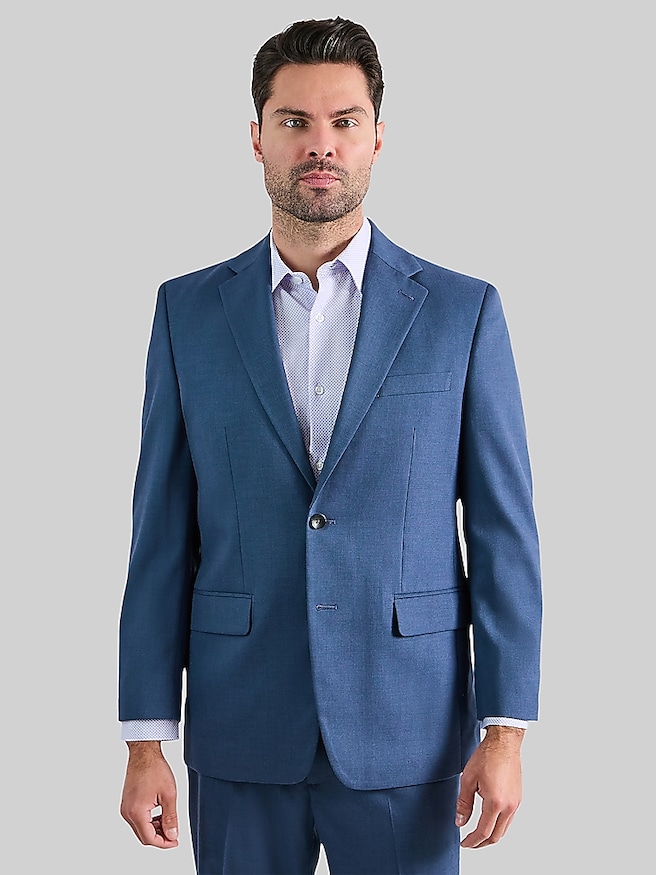
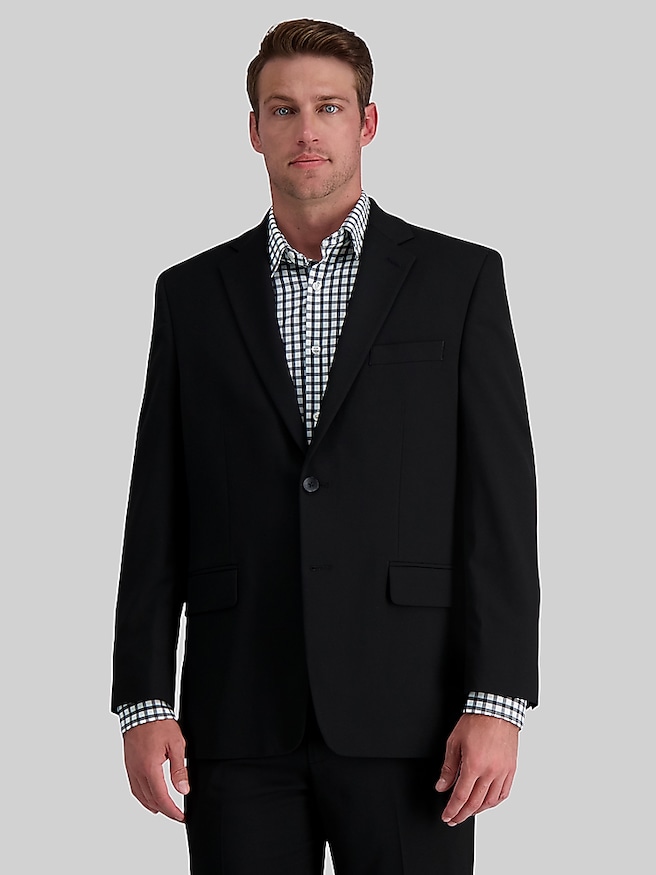
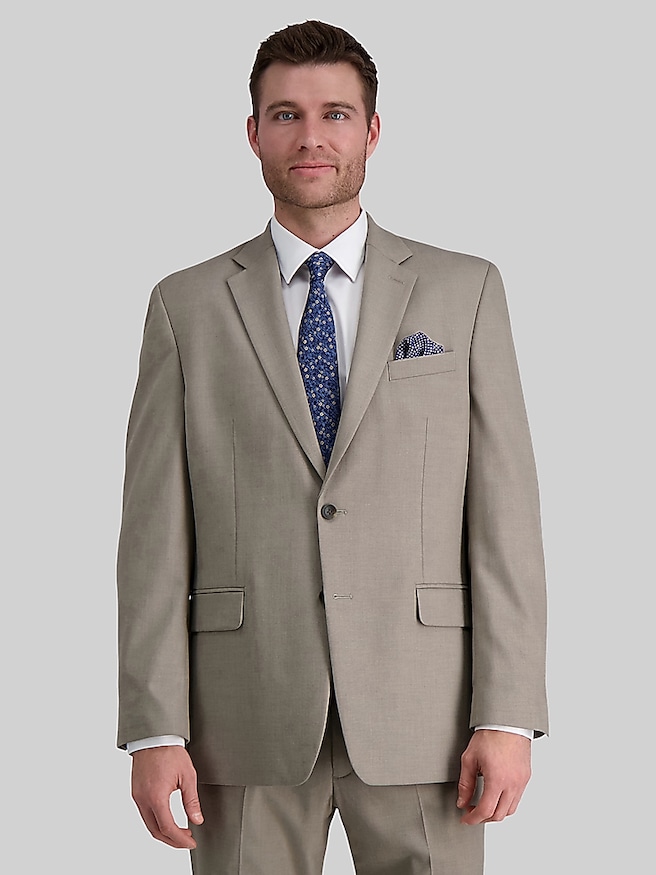
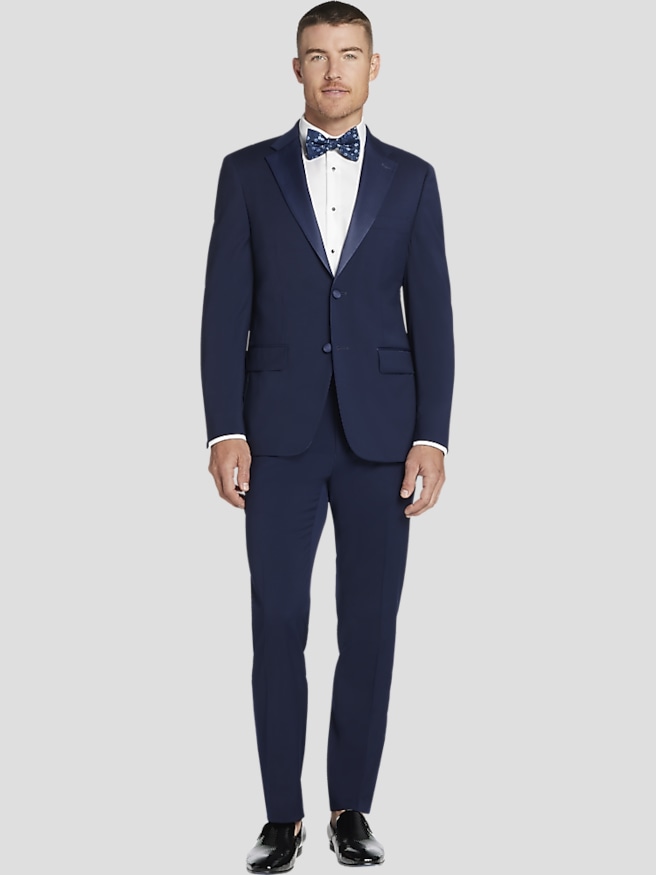
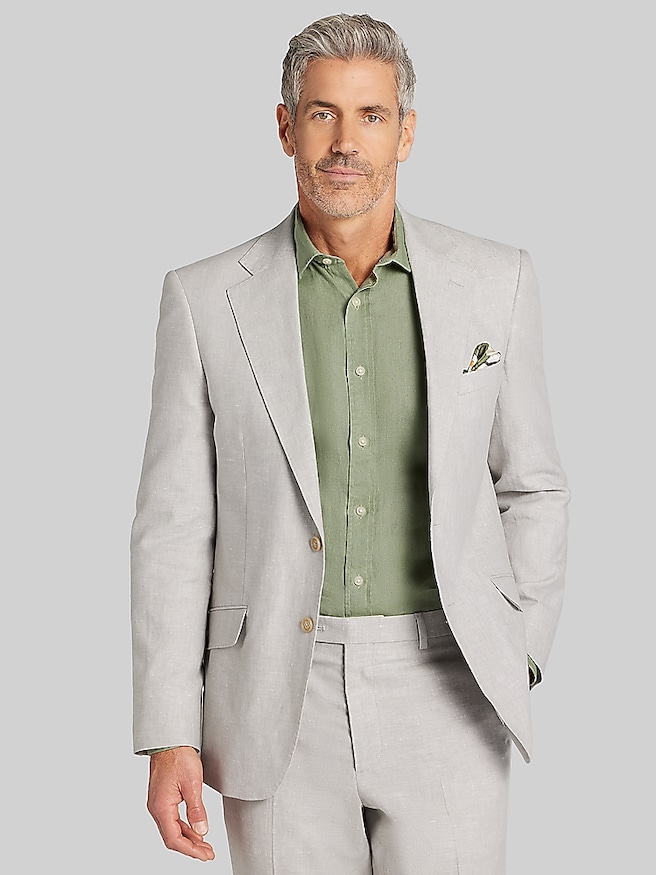
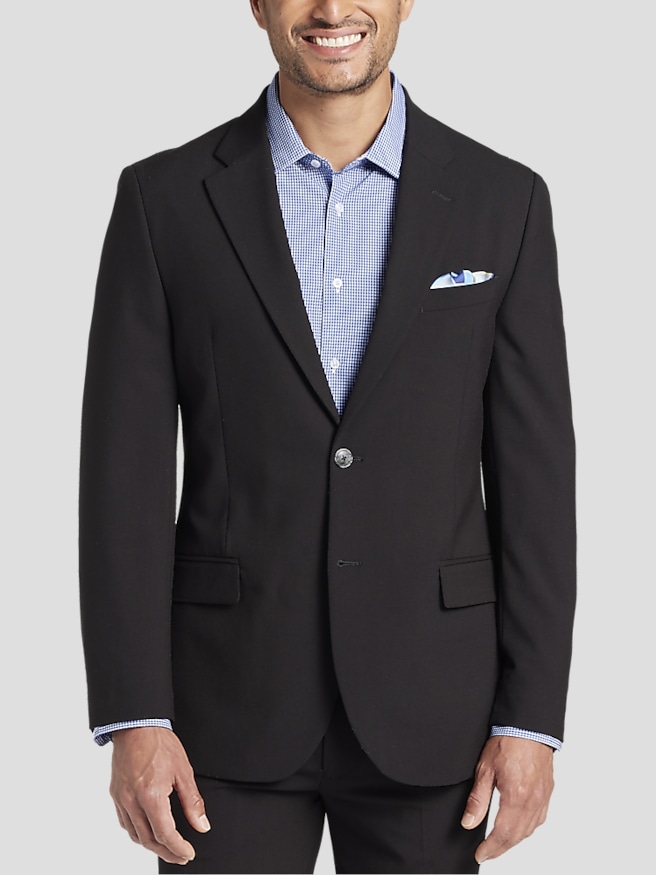
Complete formal suits bring a coordinated jacket and trousers together in matching fabric, creating a polished foundation for weddings, important meetings, graduation ceremonies, and dressier celebrations. A two-piece suit consists of the jacket and trousers, while a three-piece suit adds a matching vest for a more layered appearance. Shirts, ties, shoes, and accessories finish the outfit but are not what defines the suit itself. That distinction matters when planning a full look: the suit establishes the silhouette, and the accompanying pieces set its tone. A dark suit with a crisp white shirt and a restrained silk tie feels appropriate for a business-formal presentation; the same tailoring with a textured tie and a carefully folded pocket square can feel more personal at a wedding reception. Navy and charcoal are versatile foundations, while black has a particularly sharp, understated character for dressy evening settings. Solid fabrics make coordination straightforward, and subtle stripes, small checks, or tonal weaves add visual depth without overwhelming the outfit. Lapels and jacket fronts also shape the impression. A two-button jacket with notch lapels has a familiar, balanced appearance, while peak lapels create a more pronounced line across the chest. A matching vest keeps the outfit looking composed when the jacket comes off, although the event’s expectations should still guide how the suit is worn. For many wedding guests, professionals, graduates, and hosts, coordinated tailoring provides a dependable starting point rather than a collection of separate pieces that must be matched by eye. Dress-code language remains important: business formal and many semiformal occasions can accommodate a dark suit, but a black-tie invitation generally calls for a tuxedo. The most convincing finished look suits both the setting and the wearer, with proportions that feel comfortable during a seated dinner, a receiving line, or a presentation in front of colleagues.
Fabric and fit determine much of how a formal suit feels throughout an event. Wool is valued for its breathability, natural resilience, and ability to drape cleanly, while wool blends combine those qualities with characteristics contributed by other fibers. Polyester can add durability and help reduce wrinkling; viscose can lend softness and fluidity; a small amount of stretch fiber can make movement easier. The exact performance depends on the weave, fabric weight, construction, and care, not simply the fiber name. A smooth worsted surface gives tailoring a crisp appearance, while a subtle sharkskin weave creates a fine, two-tone effect that reads as texture from a distance. Linings help a jacket slide over a dress shirt, and the structure inside the chest and lapels helps maintain its shape. More structure can produce a defined outline, but a jacket should still move naturally when the wearer reaches forward or sits down. Slim, modern, and classic fit descriptions indicate general differences in shape, though measurements vary by maker and style. A slim fit usually sits closer through the torso and legs, a modern fit balances definition with some room, and a classic fit generally allows a fuller cut. None should require pulling across the chest or leave the trouser pockets standing open. Well-positioned shoulder seams, a smooth jacket collar, and a waistband that stays comfortably in place matter more than the name on the fit label. Jacket length should balance the torso and legs, while sleeve length typically allows a small amount of shirt cuff to show. Trousers can finish with little or no break for a cleaner line or a modest break for a more traditional appearance. Hemming and other measured adjustments help refine those proportions. Someone who spends much of an event seated may appreciate extra ease through the thighs, while someone moving between a ceremony, photographs, and a reception will notice whether the jacket allows comfortable movement.
A well-considered suit also earns its place through repeat wear. Changing the shirt, tie, pocket square, and shoes can move the same coordinated foundation between professional and celebratory settings without making the outfit feel identical each time. A pale blue shirt softens the contrast of dark tailoring for daytime business occasions, while a white shirt creates a sharper frame around the face. Small-scale tie patterns work well against solid fabric; with a patterned suit, quieter accessories help keep the overall look balanced. Leather dress shoes and a coordinating belt provide a consistent finish when the trousers have belt loops, and socks that relate to the trousers maintain a continuous line when seated. For another coordinated tailoring collection, explore Complete Suits Under $300. Beyond styling, thoughtful care helps preserve the suit’s shape and appearance. Following the care label is essential because the outer fabric, lining, and internal construction may respond differently to moisture and heat. After wear, a broad, shaped hanger supports the jacket’s shoulders, while properly hung trousers are less likely to develop unwanted folds. Allowing the suit to air out before placing it in a breathable garment bag helps keep it fresh between occasions. A soft clothing brush can remove surface dust, and prompt attention to spills can prevent a small mark from becoming harder to address. Pressing and professional cleaning should follow the garment’s instructions rather than an automatic schedule after every outing. Repeated friction at the seat, knees, and elbows can affect appearance over time, so comfort and adequate room also contribute to durability. When a complete suit is a gift for a graduate, a partner, or someone beginning a professional role, accurate measurements and room for appropriate alterations matter more than guessing a familiar casual-clothing size. The lasting value is a coordinated outfit that feels natural to wear, photographs cleanly, and remains ready for meaningful occasions with attentive care.