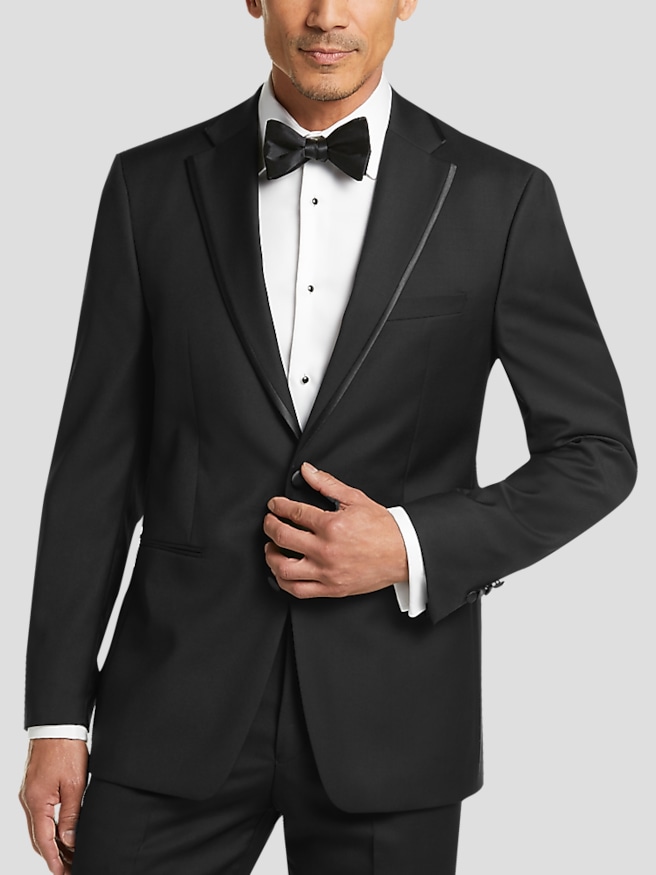
A complete tuxedo brings a coordinated jacket and trousers together as the foundation of a formal outfit, with a dress shirt, neckwear, shoes, and finishing details completing the look. The distinction from an everyday suit comes largely from the detailing: tuxedo jackets traditionally feature satin or grosgrain lapel facings, and the trousers often have a coordinating stripe along the outer seam. Those details catch the light subtly, giving the outfit its characteristic polish in a ballroom, at a wedding ceremony, or across a candlelit dinner table. Black remains a classic choice for black-tie occasions, while midnight blue offers another traditional direction with a deep, rich appearance. A peak lapel creates a defined, angular frame across the chest; a shawl collar produces a smooth, continuous curve. Both can feel equally appropriate at a formal celebration, with the choice depending on the proportions and overall character of the outfit. A complete look does not necessarily mean that every accessory comes with the jacket and trousers, so the pieces included in a tuxedo set deserve a careful read. A formal shirt and bow tie may still be separate parts of the ensemble. For wedding celebrations, the dress code and wedding party’s shared styling direction help establish how closely each outfit should coordinate. Matching lapel treatments, shirt colors, and neckwear can create cohesion without requiring every person to have the same build or wear the same cut. The Budget Friendly Wedding Tuxedos page offers a related starting point for wedding-focused looks. Beyond weddings, complete tuxedos suit charity galas, formal award ceremonies, proms, and other occasions where the invitation calls for black tie. Their appeal is straightforward: the jacket and trousers are designed to work together, leaving the finishing pieces to express the occasion and the wearer’s personal style. That coordination also gives the outfit a consistent appearance in photographs, where differences in fabric shade or surface texture can become more noticeable.
Fabric and construction influence how a tuxedo looks after several hours of standing, sitting, greeting guests, and moving across a dance floor. Wool is valued for its drape, breathability, and ability to recover from modest creasing, while wool blends can combine those qualities with other performance characteristics. Polyester and other synthetic fibers can contribute durability and wrinkle resistance, though the finished fabric’s weight, weave, and construction matter as much as its fiber label. Stretch can add ease of movement, but it should support a good fit rather than compensate for a jacket or waistband that is too tight. Smooth fabric with a controlled finish generally creates a crisp formal impression; lapel facings provide contrast without requiring shine throughout the entire garment. Lining also affects the experience of wearing a tuxedo, helping the jacket move over a shirt and contributing to its internal structure. Fit is especially noticeable at the shoulders, collar, and front closure. The shoulder line should follow the body without extending conspicuously beyond it, and the collar should sit against the shirt collar rather than leaving a gap. With the jacket fastened as intended, the front should lie cleanly instead of pulling into an X around the button. Sleeves usually look balanced when a small amount of shirt cuff remains visible. Trousers should sit securely at their intended position, with enough room through the seat and thighs to sit comfortably. A clean hem keeps excess fabric from gathering over the shoes. Slim, tailored, and classic fits describe different silhouettes, not different levels of formality; the most convincing choice is the one that follows the wearer’s proportions without restricting movement. Trying the outfit while seated, reaching forward, and taking a few full steps can reveal issues that a still pose misses. Alterations to sleeve length, trouser length, or the waist can refine the result, while major shoulder corrections are more involved. For that reason, a sound fit through the shoulders and chest is a useful foundation for any finishing adjustments.
The finishing pieces should reinforce the tuxedo rather than compete with it. A white formal shirt provides a crisp backdrop for dark lapels, and its collar should work comfortably with the chosen bow tie. Pleated fronts, textured bibs, and simpler shirt fronts create different effects, so consistency with the event’s formality matters more than adding every possible detail. A black bow tie is the traditional companion to black tie, while a neatly folded white pocket square adds contrast without overwhelming the jacket. A cummerbund or formal vest can cover the waistband when the outfit calls for it; these are alternatives rather than pieces that need to be layered together. Polished formal footwear, dark dress socks, and understated cuff links keep the line of the outfit clean. For a prom attendee wearing a tuxedo for the first time, a full try-on with the shirt and shoes makes the finished proportions easier to judge. For a groom expecting a ceremony, portraits, dinner, and dancing, comfortable movement is just as important as a sharp photograph. A tuxedo can also be a thoughtful gift for someone with recurring formal occasions, provided measurements and fit preferences are part of the decision. After the event, good care helps preserve the fabric, lapel finish, and shape. The garment’s care label should determine cleaning and pressing methods, especially when the shell, lining, and decorative facings use different materials. A broad, shaped hanger supports the jacket’s shoulders, while properly hung trousers are less likely to develop unwanted folds. Letting the pieces air before storing them and using a breathable garment bag helps protect the outfit between occasions. Prompt attention to marks, professional cleaning when needed, and avoiding unnecessary cleaning cycles can help extend its useful life. With coordinated details, comfortable proportions, and thoughtful care, a complete tuxedo can remain a dependable part of a formal wardrobe through many invitations.