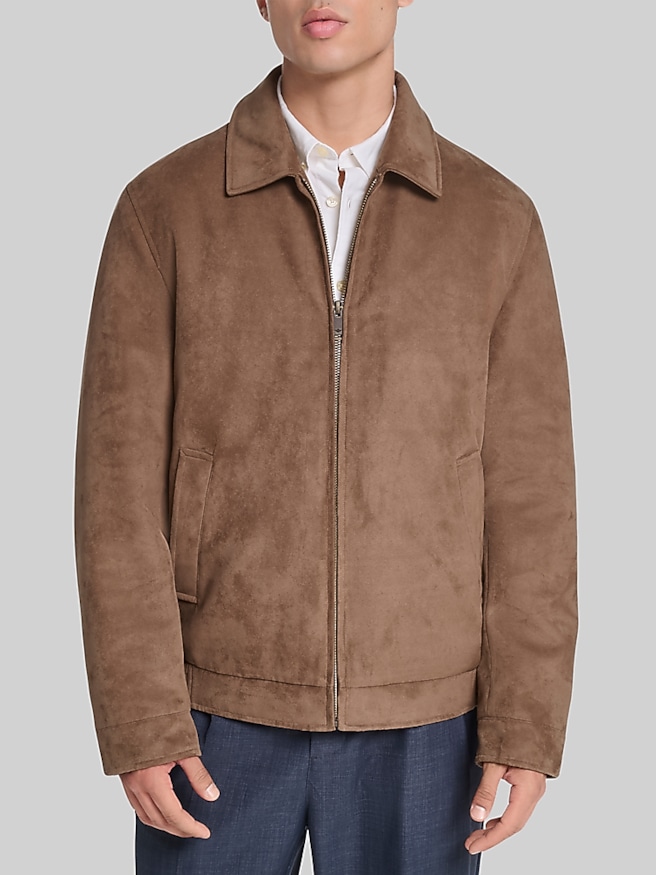
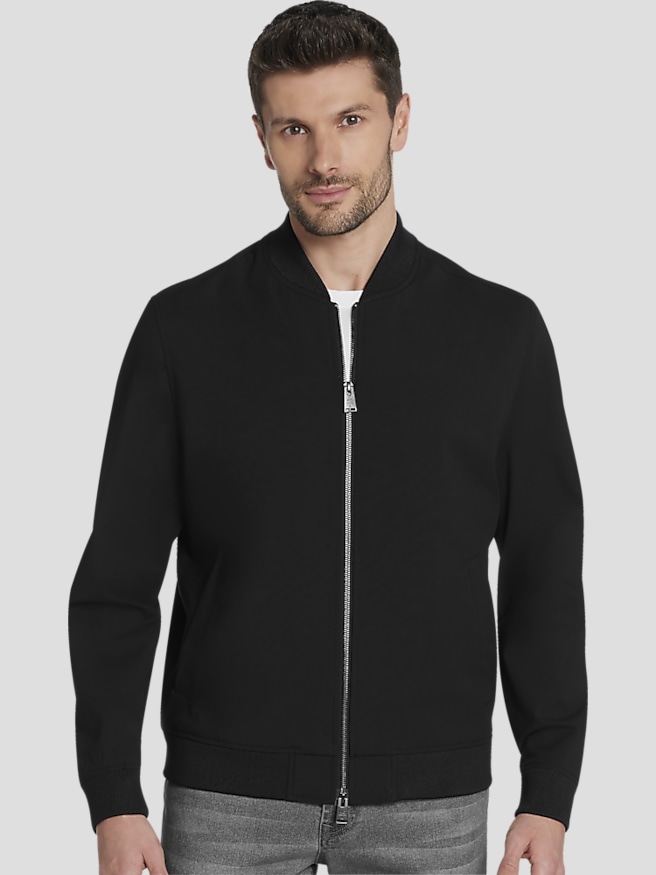
Green bomber jackets for men bring a grounded color and a recognizable silhouette to everyday dressing. With roots in aviation clothing, the bomber is known for its waist-length body, front closure, and close-fitting cuffs and hem, though the exact collar, pocket layout, and finish vary by design. That compact shape gives an outfit definition without the formality of a tailored jacket. Green adds another layer of character: olive has an understated, utilitarian feel, deep forest green looks rich beside charcoal and indigo, and softer sage shades create a quieter contrast with dark trousers. The color is versatile without disappearing into the background. An olive bomber over a white T-shirt and straight-leg blue jeans makes an easy combination for lunch, errands, or a casual evening out. With a fine-gauge knit, flat-front chinos, and clean leather sneakers, the same general silhouette feels more considered without looking dressed up for the sake of it. Texture matters as much as shade when putting those combinations together. A matte green surface sits comfortably alongside denim and cotton, while a subtle sheen adds contrast to brushed fabrics and textured knits. Earth tones such as tan, brown, cream, and navy give green a familiar setting, but a restrained palette helps the jacket remain the focal point. A darker green bomber can also work with gray trousers and a simple collared shirt in an office where relaxed separates are appropriate. Because the hem usually sits near the waist or upper hip, the proportions tend to look balanced with mid-rise pants rather than an unusually long shirt extending well below the jacket. A small amount of visible layering can look intentional; several competing hemlines can make the outfit feel less settled. The appeal is a balance of recognizable design, useful coverage, and enough personality to make familiar basics feel thoughtfully put together.
Material and fit shape how a green bomber jacket looks and feels in regular use. Nylon and polyester shells can give the silhouette a smooth, lightweight appearance, with finishes ranging from dry and matte to softly lustrous. Cotton twill brings a more tactile, workwear-influenced character, while leather gives the familiar shape greater structure and a surface that can develop individual marks over time. Suede offers a softer, more textured look but calls for particular care around spills and abrasion. Fiber content alone does not tell the whole story: fabric weight, weave, lining, and construction all affect the way a jacket hangs. A fluid shell may fall close to the body, while a firmer fabric holds a more defined outline through the shoulders and sleeves. The most useful fit leaves room for the clothing normally worn underneath without creating excess volume around the middle. For someone who favors T-shirts, that may mean a relatively trim profile; for someone who regularly wears substantial knits, a little more space through the chest and upper arms makes movement easier. Shoulder seams should sit comfortably rather than pulling across the back, and the sleeves should allow reaching forward without making the entire jacket ride up sharply. Ribbed cuffs usually finish near the wrist, while the waistband should rest securely without gripping so tightly that the body balloons above it. Trying the jacket both open and closed gives a better sense of its proportions, especially when sitting or reaching for a bag. Practical details deserve equal attention. Pocket placement affects where the hands rest, interior pockets can keep small essentials separate, and a smooth lining helps sleeves move over a shirt. Even stitching, neatly finished pocket openings, secure snaps, and a zipper that travels smoothly are useful signs of careful construction. Reinforcement at frequently handled areas matters because cuffs, pocket edges, and the front closure see repeated use. These details help distinguish a jacket that simply looks right on a hanger from one that feels comfortable throughout an ordinary day.
A green bomber jacket earns its place through repeat wear, so care requirements should suit the owner's routine as well as the fabric. The sewn-in care label is the starting point, particularly when the shell, lining, and ribbed trim use distinct materials. Some fabric jackets allow machine washing, while others need professional cleaning or a more limited cleaning method. Closing fasteners before washing, when washing is permitted, can help reduce snagging; following the specified water temperature and drying method helps protect the shape and finish. Leather and suede need material-appropriate treatment rather than ordinary laundry products, and an inconspicuous test area is sensible before applying a cleaner or protector. Small marks are often easier to address promptly, using the method recommended for the fabric, than after they have settled into the surface. Between wears, a supportive hanger helps preserve the shoulders, and emptying the pockets prevents unnecessary strain or distortion. Letting the jacket dry fully before storing it also protects the materials. Durability depends partly on construction and partly on these everyday habits; an overfilled pocket or a forcefully pulled zipper can put avoidable stress on otherwise sound details. For someone comparing colors within this familiar shape, men's black bomber jackets offer a more monochromatic direction, while green brings an earthy alternative that still pairs easily with wardrobe staples. As a gift for a father, brother, partner, or friend, a green bomber can feel personal without requiring an elaborate outfit to go with it. The recipient's usual jacket measurements, preferred fit, and willingness to follow specialty care instructions are more useful clues than size labels alone. A person who wears mostly denim may appreciate a matte olive finish, while someone drawn to tailored casual clothing may favor a deeper green and a cleaner surface. When the color, proportions, and upkeep fit the wearer, a bomber becomes a familiar finishing layer rather than something saved for a particular occasion.