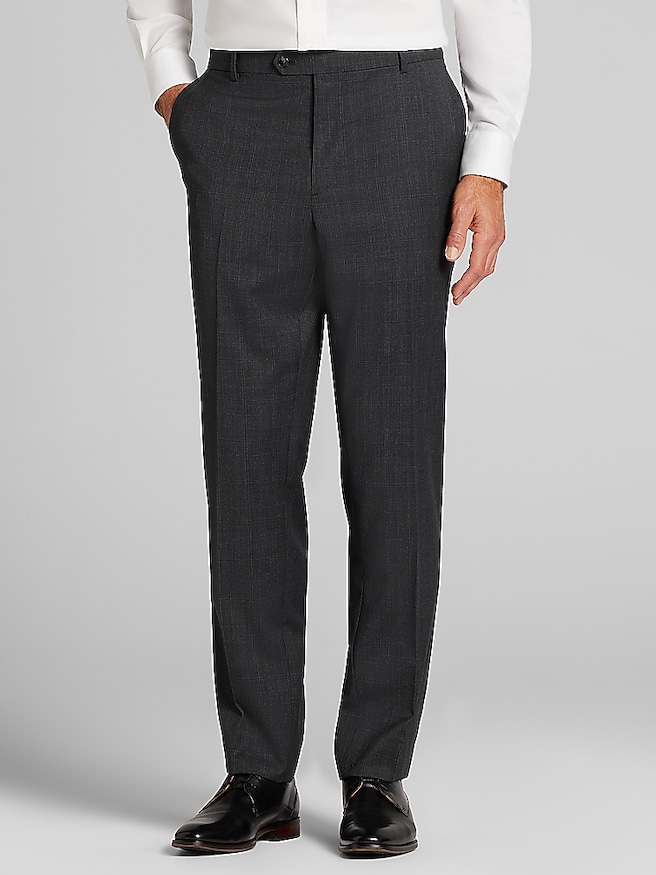
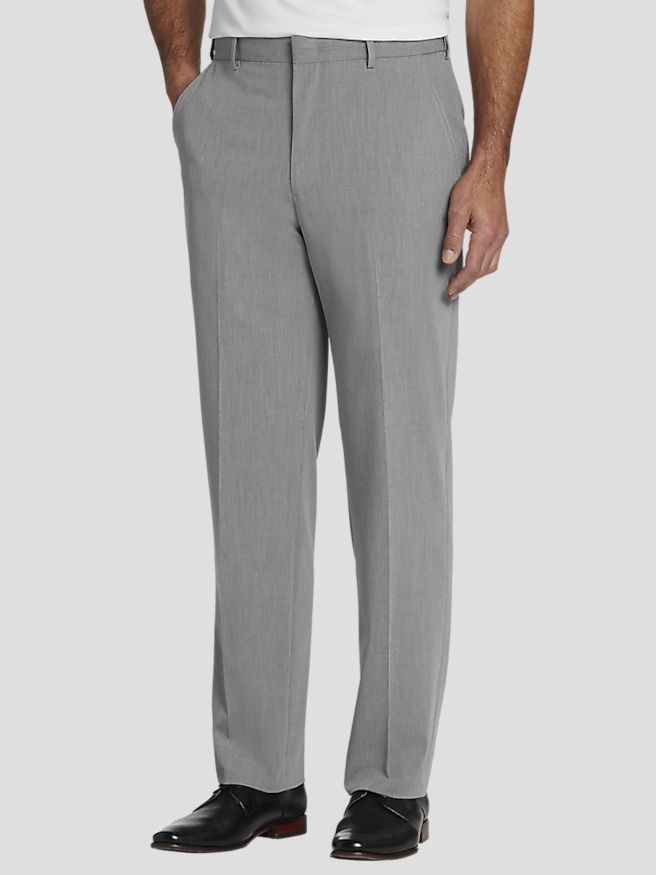
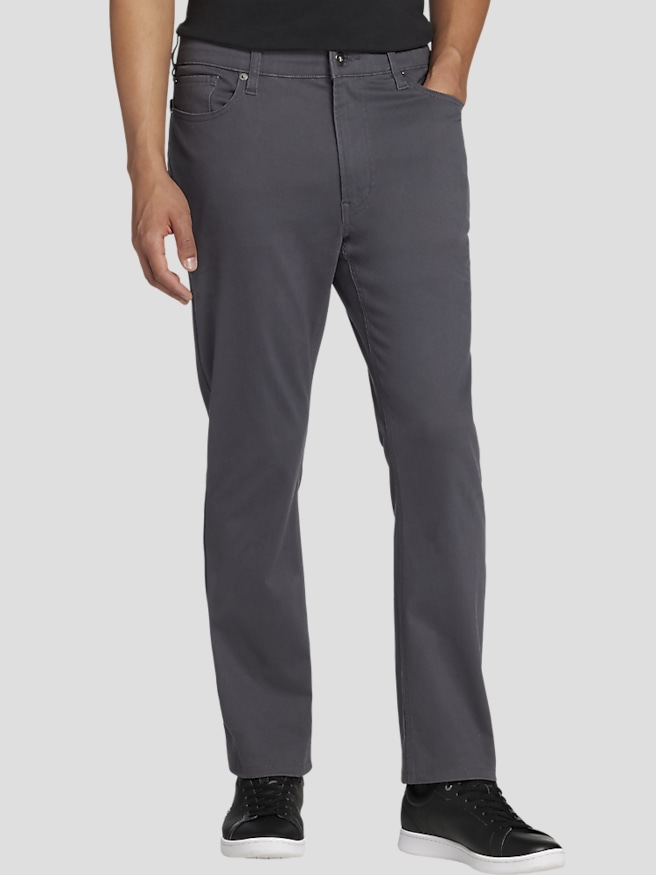
Gray corduroy pants are men’s trousers defined by a raised, ribbed fabric and a neutral color that works with both relaxed and more polished clothing. The parallel ribs, called wales, give corduroy its distinctive texture and create subtle variations in shading as the fabric catches the light. Fine-wale corduroy has narrow, closely spaced ribs for a quieter look, while wide-wale corduroy has broader ribs that make the texture more noticeable. In gray, either construction offers an alternative to denim or smooth chinos without requiring a completely new approach to getting dressed. Light gray has a softer, more casual appearance, medium gray provides an easy balance with light and dark tops, and charcoal brings greater visual depth. The undertone matters, too: some grays lean blue, while others have a slightly brown cast that pairs naturally with earth tones. Cotton is a common foundation for corduroy, valued for its soft feel and the way the raised pile develops character with wear. Some fabrics incorporate a small amount of elastane for stretch, while others include polyester or additional fibers to influence shape retention, weight, or care requirements. Fiber content alone does not tell the whole story; fabric weight, weave, and finishing also affect how the pants feel and hang. A substantial corduroy can hold a defined silhouette, while a lighter construction may move more freely and feel less structured. These distinctions make gray corduroy trousers useful for everyday office settings with a relaxed dress code, dinners, museum visits, and weekends spent moving between errands and social plans. They bring visible texture to a simple outfit while keeping the overall color palette understated. For someone who usually reaches for jeans, the familiar ease of a five-pocket design can make corduroy a straightforward addition. A trouser-style waistband, slanted front pockets, and welt back pockets create a dressier impression, particularly when paired with a tucked-in shirt. Neither construction makes corduroy formalwear, but each gives the fabric a distinct place in an everyday wardrobe.
Fit has as much influence on the appearance of gray corduroy pants as the width of the ribs. Slim fits typically follow the leg more closely, straight fits maintain a more consistent line, and relaxed fits provide additional room through the seat and thigh. A tapered leg combines space higher up with a narrower opening near the ankle, making it useful for someone who wants mobility without a broad hem. The best match depends on body proportions, comfort preferences, and the shoes that will be worn most often. A waistband should sit securely without digging in, and the seat should allow sitting and bending without pulling across the pockets. Stretch can make movement easier, but it should complement a comfortable cut rather than compensate for pants that are too tight. Corduroy’s texture makes excess fabric noticeable, especially where a long hem gathers over a shoe, so length deserves attention. A slight break can look natural with loafers or lace-up shoes; a cleaner hem can give sneakers a more defined outline. Rise also changes the balance of an outfit. A mid-rise silhouette offers a familiar everyday proportion, while a higher rise can create a longer leg line with a tucked shirt. For a straightforward office combination, medium gray corduroys work well with a light blue Oxford shirt and brown leather loafers. A navy knit polo creates a more relaxed version of the same restrained palette. Charcoal corduroy with a cream crewneck sweater gives the ribbed fabric room to stand out, while light gray pairs neatly with an olive overshirt and simple white sneakers. Texture is most effective when it has some contrast around it: smooth shirting or a fine knit can balance the ribs without making an outfit feel busy. A softly structured jacket can add polish for dinner or a business-casual gathering, provided the setting does not call for a suit. Belts and footwear can stay simple, with brown adding a softer contrast and black creating a sharper finish. The result is clothing that feels considered without looking overly coordinated.
Care and construction help determine how gray corduroy pants hold up to repeated wear. Close, even stitching, secure pocket openings, and a waistband that lies flat are useful details to consider alongside the fabric itself. Corduroy’s raised surface can show friction at the knees, seat, and pocket edges, so a little room in high-movement areas helps reduce unnecessary strain. With wear, the pile may develop subtle variations that give the pants character, although heavy abrasion can flatten the ribs. Care instructions should always follow the garment label, especially when the fabric contains stretch fibers or the pants have structured internal details. For machine-washable corduroy, washing inside out can help protect the surface; a gentle cycle and cool water may be appropriate when the label permits them. Keeping the fabric away from lint-producing laundry helps preserve its appearance, since the channels between the ribs can collect loose fibers. Drying methods matter as well: excessive heat can affect fit and finish, while prompt removal and careful reshaping can limit stubborn creases. A soft clothing brush can lift surface lint, and pressing, when permitted, is best approached from the reverse with light pressure to avoid crushing the pile. Hanging the pants neatly between wears helps maintain their line without leaving them compressed in a crowded drawer. For anyone comparing textures, Gray Polyester Pants provide another direction to consider; the smoother appearance of many polyester trouser fabrics creates a contrast with corduroy’s visible ribs, though performance and care depend on the construction. As a gift, gray corduroys can suit someone who appreciates practical clothing with a tactile detail, particularly when their preferred waist, inseam, rise, and leg shape are known. Matching those preferences matters more than choosing a fit solely by its name. The lasting appeal is the combination of a versatile gray palette, recognizable texture, and a silhouette that can feel equally at home with a button-down shirt or a favorite knit.