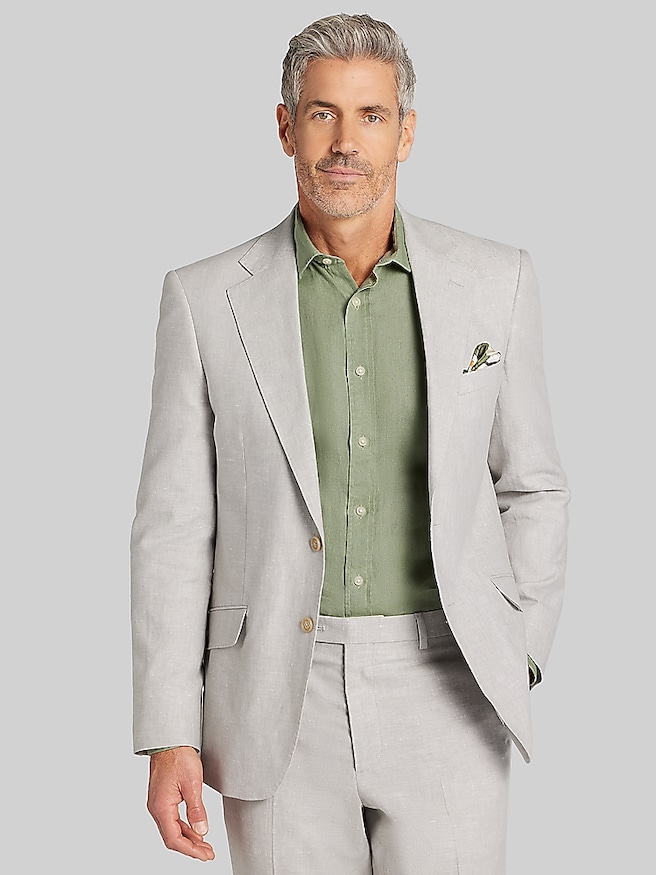
Getting a tailored suit is about finding a balanced silhouette and refining the details so the jacket and trousers feel comfortable in everyday movement. A suit should frame the shoulders, lie smoothly across the chest, and hang cleanly through the seat and legs without looking strained or oversized. For a suit fitting, bring the dress shirt, shoes, and belt or suspenders intended for the outfit. These pieces help establish sleeve length, trouser position, and the amount of fabric resting above the shoes, known as the trouser break. Carrying the wallet or phone normally kept in a pocket can also reveal bulk that affects the finished shape. Tailoring an off-the-rack suit generally means adjusting an existing garment; made-to-measure involves producing a suit from an established pattern modified to a person's measurements. Neither term automatically guarantees a particular fit, and a tailored-fit label describes a silhouette rather than confirming that individual alterations have been completed. The starting point matters, especially at the shoulders and through the jacket's overall proportions. On a conventional suit jacket, the shoulder seam generally sits near the natural shoulder edge, although structured designs may extend slightly beyond it. Noticeable dents, collapsing fabric, or a collar that stands away from the neck deserve attention before smaller adjustments are considered. Shoulder reconstruction and substantial changes to jacket length are more complex than routine sleeve or trouser alterations, and some changes are limited by the garment's construction. A useful fitting includes standing naturally, sitting, and reaching forward gently, rather than holding an unusually rigid posture. The finished suit needs to work at a desk, across a dinner table, and while greeting guests. For someone preparing for a first professional role, an important presentation, or a wedding, those practical details can make formal clothing feel familiar rather than restrictive. The strongest result is not necessarily the narrowest outline; it is a suit whose proportions suit the wearer and the occasion.
Fabric and construction influence both how a suit feels and how well it responds to tailoring. Wool is valued for its resilience, breathability, and ability to drape smoothly, making it a versatile choice for business and occasion dressing. A finer, softer cloth can feel especially refined, while a more substantial weave may better tolerate frequent wear. Fiber content alone does not determine durability: yarn quality, weave, finishing, and the way the garment is used all contribute. Wool blends can introduce additional wrinkle resistance or stretch, depending on their composition, but stretch should support movement rather than compensate for a fit that is too tight. Cotton tends to create a more relaxed impression and can develop visible creasing, while linen's characteristic wrinkles are part of its texture. Smooth worsted fabrics often provide the crisp, understated appearance associated with professional suiting. Linings affect how easily a jacket moves over a shirt, and internal structure helps shape the chest and lapels. A more structured jacket can create a defined outline, while softer construction offers a less rigid feel. Neither approach is universally better; the right balance depends on personal preference, build, and intended use. For regular office wear, Tailored Business Suits offer a relevant starting point for considering polished proportions and workday comfort. Understated colors and restrained patterns can accommodate repeated wear with a variety of shirts and ties, while a more pronounced texture or pattern may suit occasions where personal expression takes a larger role. Fit preferences should also reflect how the suit will be worn. A close-fitting jacket might look sharp while standing but pull across the button when seated, and overly narrow trousers can catch at the calves instead of falling cleanly. At a fitting, the jacket should button comfortably without pronounced X-shaped pulling across the front. The chest and lapels should remain smooth, with enough room through the upper back for ordinary movement. A suit intended for long meetings or frequent travel benefits from that balance of clean lines and usable ease, not simply a trim appearance in a mirror.
The smaller adjustments are often what make a suit look settled on the body. Jacket sleeves commonly finish with about a quarter to a half inch of shirt cuff visible, although personal preference and shirt fit affect the final result. The shirt sleeve itself should be properly positioned before the jacket sleeve is marked. Sleeve construction, particularly working buttonholes, can limit how much length can be changed without disturbing the design. Through the torso, a tailor may refine the waist and sides to reduce excess fabric while preserving comfortable buttoning and a smooth line over the hips. Trousers should sit securely at their intended rise, with the waistband comfortable and the pockets lying relatively flat. Pulling across the seat, pockets that flare open, or folds collecting beneath the seat can indicate that more than a hem adjustment is needed. Trouser length is best assessed with the intended shoes because shoe shape and trouser width influence the finished break. A no-break hem creates a clean line with little or no fabric resting on the shoe; a slight break introduces a small crease at the front; a fuller break leaves more fabric over the shoe. The choice should work with the leg opening and the overall proportions rather than follow a rule in isolation. After alterations, another fitting helps confirm that the jacket and trousers work together and still allow comfortable sitting and walking. Maintaining that result depends on sensible care. A broad, supportive hanger helps preserve the jacket's shoulders, while properly hanging the trousers reduces unnecessary creasing. Emptying pockets after wear prevents lingering bulges, and allowing the suit to air between uses helps it recover. Follow the care label, brush away surface dust gently when appropriate, and use professional cleaning when needed rather than automatically after every wear. Pressing should respect the fabric and construction to avoid shine or flattened texture. With thoughtful fit adjustments and consistent care, a tailored suit can remain a dependable choice for interviews, celebrations, client meetings, and other occasions that call for a considered appearance.