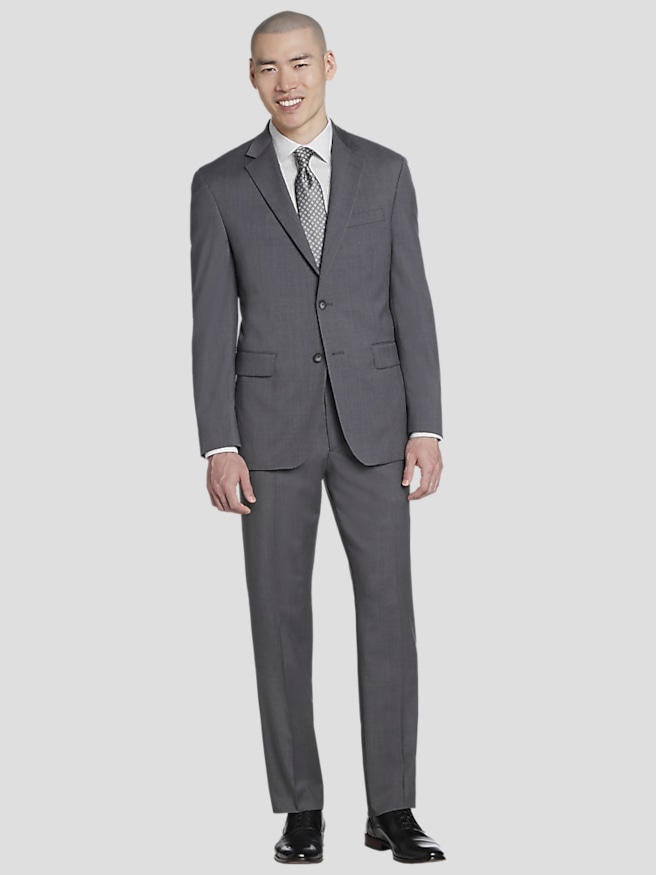
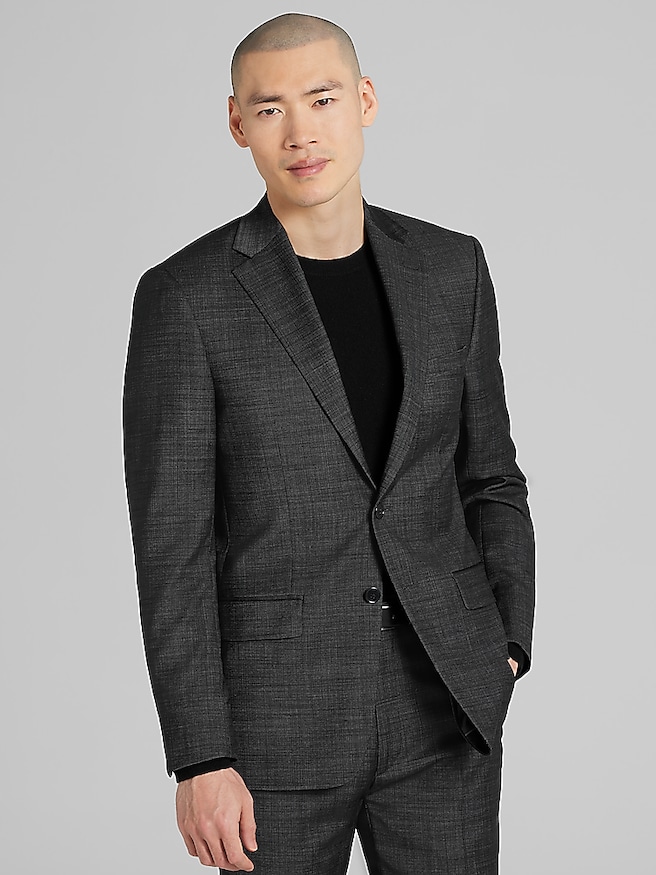
Gen Z prom party suits bring personal style into an occasion with its own traditions: the group photo on the front steps, the carefully planned entrance, and the jacket that stays on long enough to make it into every picture. The appeal is in looking dressed for the event without feeling disguised. A sharp silhouette can feel understated and classic, expressive and colorful, or somewhere between the two, depending on the fabric, proportions, and finishing details. Black, navy, and charcoal create a grounded foundation, while deep green, burgundy, and softer shades introduce color without requiring a complicated outfit. A subtle woven texture can add dimension to a solid suit, especially in close-up photos, while a smooth finish gives the overall look a cleaner, more streamlined character. Patterns bring another layer of personality, with their scale making a noticeable difference: a fine check reads quietly from across the room, while a bolder pattern becomes a defining part of the outfit. Lapels also help set the tone. Notch lapels have an easy familiarity, while peak lapels give the chest and shoulders a more pronounced frame. The strongest prom looks usually have a clear point of focus rather than several competing statements. A colorful suit can carry the outfit with a simple shirt and restrained accessories; a neutral suit leaves more room for an expressive tie, pocket square, or shirt color. For students building a complete formal look, a High School Prom Suit provides a foundation that can reflect individual taste while respecting the event’s dress expectations. Coordinating with a date or a group of friends does not have to mean matching every detail. A shared accent color or similar level of formality often looks more natural in photographs, especially when each person’s outfit still feels like their own. The result is a dressed-up look with personality, not a uniform that disappears into the crowd.
Fabric and fit make the difference between a suit that looks good in a fitting-room mirror and one that feels right through dinner, portraits, and hours on the dance floor. Wool is valued for its drape, breathability, and ability to recover from some everyday creasing, although the weave and weight influence how the finished garment behaves. Blended fabrics can combine a structured appearance with practical qualities such as wrinkle resistance or added flexibility. A small amount of stretch may make sitting and moving more comfortable, but it does not replace the need for enough room through the shoulders, chest, seat, and thighs. Lining matters, too: its construction and coverage affect how easily a jacket slides over a shirt and how it feels during extended wear. For prom party suits, comfort is especially noticeable in ordinary movements that a standing pose does not reveal. Reaching across a table, settling into a car, or lifting both arms for a group photo can expose a jacket that pulls or trousers that fit too closely. A well-proportioned shoulder follows the wearer’s frame without hanging far beyond it, and the jacket front should lie smoothly when fastened rather than forming pronounced tension lines around the button. Slim fits create a closer outline, while more relaxed cuts allow additional ease; neither should depend on tightness to look intentional. Trouser length changes the impression of the entire outfit. A clean hem with little break emphasizes the shoe and creates a sharper line, while a slight break gives a more traditional finish. Excess fabric pooling at the ankle can interrupt either effect. Sleeve length deserves similar attention, with a small amount of shirt cuff adding definition at the wrist. For someone still growing or wearing a suit for the first time, the most useful fit is one that feels secure and polished without restricting natural movement. Thoughtful alterations can refine those proportions while preserving the shape the suit was designed to have.
The pieces worn with a prom suit help determine whether the finished outfit feels formal, playful, or quietly confident. A crisp dress shirt supplies a clean backdrop, and its collar should sit comfortably when fastened rather than feeling restrictive before the evening has even started. A necktie draws a vertical line down the front of the outfit, while a bow tie concentrates attention near the face and gives the look a distinctly celebratory character. An open collar creates a less formal impression and works best when it suits the event’s expectations. Accessories have more impact when they relate to one another without repeating exactly. A pocket square can pick up a secondary color from a tie, and metal details tend to look cohesive when their finishes are similar. Shoes deserve as much consideration as the jacket because prom involves more than standing still for pictures. A secure fit, a comfortable interior, and soles that feel stable while walking can matter as much as a polished finish. Socks that complement the trousers create a continuous line, while a deliberate contrast adds personality when seated. Beyond prom night, a versatile suit can serve at graduation celebrations, ceremonies, and other dressed-up gatherings, making fabric resilience and straightforward care useful considerations. The care label remains the best reference for cleaning and pressing, since fiber blends, linings, and decorative finishes can require distinct treatment. After wear, empty pockets and a supportive jacket hanger help preserve the garment’s shape; letting the suit air before storing it also keeps it from going straight from a busy evening into a crowded closet. Cleaning when needed, rather than automatically after every brief wear, can help limit unnecessary treatment. For a family member giving a suit as a milestone gift, leaving room for the wearer’s preferences and a proper fitting makes the gesture more personal. The lasting value is a suit that feels comfortable, photographs well, and carries a little of the wearer’s personality into every occasion that follows.