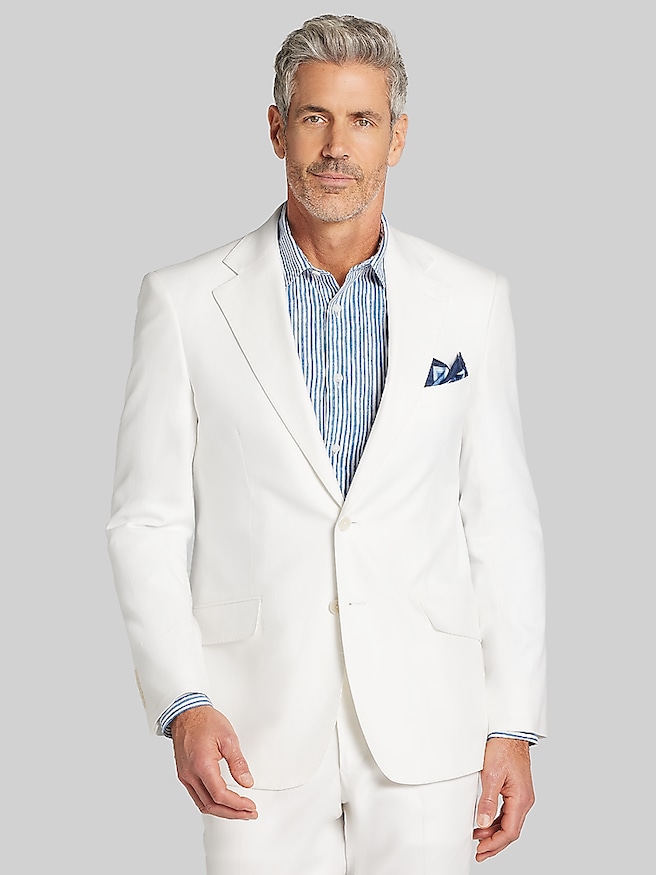
Four-season men’s suits are designed to work across a broad range of everyday conditions, with fabric and construction that balance breathability, coverage, and a clean, tailored drape. The term generally describes versatile, medium-weight suiting rather than a promise of equal comfort in every climate. A four-season suit can move comfortably between an air-conditioned office, a mild afternoon outdoors, and a cool evening reception, while extreme heat or prolonged winter exposure may call for more specialized clothing. Wool is a traditional choice because its fibers help manage moisture and provide insulation without requiring a thick, bulky cloth. Wool blends can bring other qualities to the fabric, including added stretch or resistance to creasing, depending on their composition. Weight alone does not tell the whole story: the openness of the weave, the yarn structure, the finish, and the amount of lining all influence how a suit feels after several hours of wear. A high-twist wool fabric, for example, can have a crisp hand and recover well from the wrinkles created by sitting through a meeting or traveling to an event. A smoother worsted cloth creates a polished surface that works naturally in professional settings and at dressy celebrations. Fine-fiber designations such as Super 130s describe wool fineness, not a fabric’s weight, breathability, or guaranteed durability. A higher number is not automatically the better choice for a suit worn several days a week. For regular use, a balanced cloth with enough body to hold its shape can matter more than exceptional softness alone. The appeal of all-season suiting lies in that balance: fabric substantial enough to hang neatly through the chest and trousers, yet comfortable enough for an ordinary day that includes walking, sitting, and moving between indoor and outdoor spaces. It is an adaptable foundation for a wardrobe, not a substitute for an overcoat in freezing conditions or an especially lightweight suit in intense heat.
Fit gives a four-season suit its practical value as much as fabric does. A jacket that rests cleanly across the shoulders, closes without pulling, and allows comfortable movement is easier to wear through a full workday than one chosen only for its appearance while standing still. The collar should sit close to the shirt collar without a pronounced gap, and the lapels should lie smoothly rather than bowing away from the chest. Slim, tailored, and classic fits describe different silhouettes, but those labels do not replace attention to individual proportions. A slim profile can still allow room to sit comfortably, while a classic cut can look sharp without excess fabric gathering around the waist. Jacket length, sleeve length, and trouser rise all affect the finished silhouette. Shirt cuffs showing slightly beneath the sleeves provide a neat frame, while trousers that fall cleanly over dress shoes keep the lower half from looking crowded. For someone who spends hours at a desk or drives between appointments, comfort through the seat and thighs deserves particular attention. Stretch can support movement, but it cannot correct a garment that is too tight. Construction also contributes to the experience. Lining helps a jacket slide over a shirt and gives the interior a finished feel; lighter or partial lining can reduce bulk and allow more airflow. Internal structure helps shape the chest and lapels, although the quality of the finished fit matters more than any single construction term. These details make year-round suits useful for people whose schedules include presentations, interviews, client dinners, and weddings. A restrained silhouette can accommodate each setting with a change of shirt, tie, and shoes. Navy and charcoal are especially adaptable foundations, while subtle texture or a quiet pattern adds depth without making the suit difficult to coordinate. A white shirt and dark tie create a more formal impression; a pale blue shirt and a textured tie soften the same tailoring for everyday business wear.
The strongest reason to consider four-season suits is the ability to dress consistently without building a separate tailored wardrobe for every change in conditions. A dependable suit can serve a graduate preparing for interviews, a professional returning to regular office meetings, or someone who wants appropriate clothing ready for invitations that arrive with little notice. As a gift for a milestone birthday, graduation, or career achievement, a suit is most successful when the recipient’s measurements, preferred silhouette, and opportunities for alterations are part of the decision. Its usefulness comes from how well it fits the wearer’s actual routine. Layering extends that usefulness: a fine-gauge sweater or sweater vest can add warmth beneath a jacket with sufficient room, and an overcoat handles outdoor exposure without asking the suit fabric to do everything. At the other end of the range, a breathable shirt and lighter lining can make a meaningful difference, though specialized lightweight tailoring may be more comfortable for extended outdoor events in high heat. For wardrobes that also need those more focused options, Seasonal Suits provides a related way to explore tailoring for particular conditions. Consistent care helps preserve the versatility of a four-season suit. Following the garment’s care label, allowing it to air after wear, and resting it between outings can help it maintain its appearance. A broad, shaped hanger supports the jacket’s shoulders, while trousers benefit from being hung neatly rather than left folded over a chair. Gentle brushing can remove surface dust before it settles into the cloth. Professional cleaning is appropriate when the care instructions and the garment’s condition call for it, rather than automatically after every outing. Stains need prompt attention using methods suited to the fabric, and pressing requires care to avoid unwanted shine. Rotating suits, keeping pockets from becoming overfilled, and addressing small repairs early all support longer wear. With sound fabric, a comfortable fit, and thoughtful maintenance, four-season tailoring earns its place through repeated use across workdays, celebrations, and important occasions.