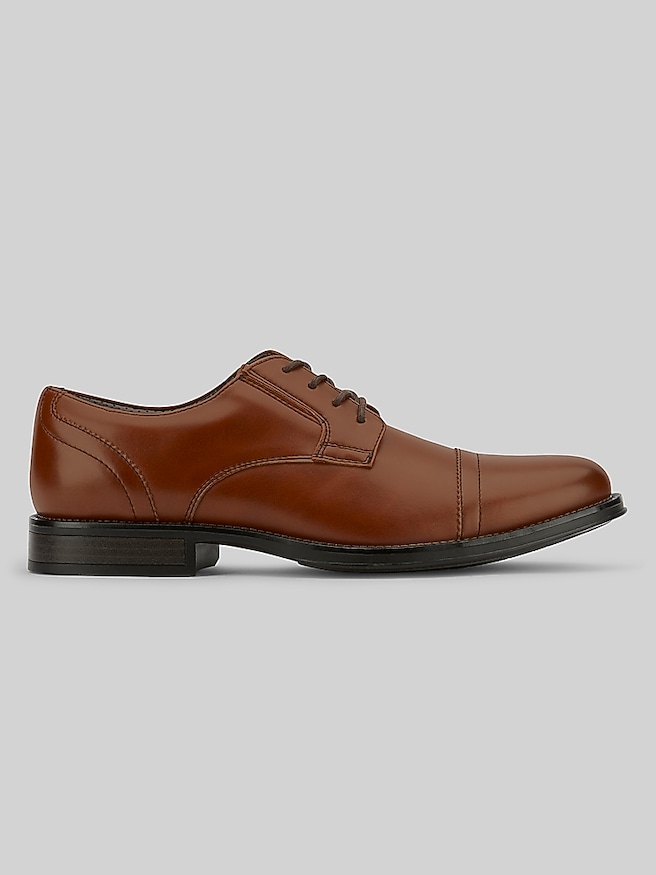
Cap-toe oxfords are lace-up dress shoes distinguished by a stitched panel across the toe and a clean, structured profile. That simple seam gives the shoe definition without the decorative perforations of a brogue or the hardware of a buckle style. The result is a dependable foundation for tailored clothing: polished enough for a job interview, understated enough for the office, and easy to coordinate with a suit for a wedding. Smooth leather uppers give these shoes their familiar dressy appearance, while cushioned footbeds and flexible outsoles can make them more accommodating for everyday wear. Full-grain leather preserves the hide’s natural surface character and can develop subtle creasing and patina with use. Waxed leather has a more relaxed appearance, with tonal variation that can look especially appealing alongside textured trousers. Black leather creates a crisp finish with charcoal or dark navy tailoring, while brown and cognac shades add warmth to blue suits, gray dress pants, and combinations built around a sport coat. The shape of the toe also affects the overall impression. A gently rounded or almond-shaped toe tends to work across a broad range of outfits, particularly when the shoe’s proportions balance the width of the trouser leg. A narrow hem looks clean above a streamlined shoe, while a fuller trouser cut can accommodate a slightly more substantial profile. For someone who moves between client meetings, presentations, and dinner afterward, cap-toe oxfords offer continuity without requiring a change of footwear. Their restrained design also makes them useful for a first professional wardrobe, where each pair needs to coordinate with several outfits. The most versatile choice is not necessarily the most elaborate one; it is often the shape, leather finish, and color that feel natural with the clothing already worn most often. Even small details, such as a discreet sole edge and matching laces, can keep the finished outfit looking cohesive rather than overly coordinated.
Comfort depends on more than a soft first impression. A well-matched fit allows the heel to sit securely, the ball of the foot to align with the shoe’s widest point, and the toes to rest without pressure against the front or sides. Width matters as much as length, especially for someone whose forefoot feels crowded in a standard-width dress shoe. Moving up in length to gain width can leave excess space at the toe and allow the heel to shift, so a suitable width is usually a better starting point than an oversized fit. Leather can soften and adapt with wear, but that natural adjustment should not be expected to correct pinching or a toe box that is too shallow. Dress socks also affect how the shoe feels; the thin pair worn with a suit may take up less space than a heavier everyday sock. Underfoot construction makes another meaningful difference during a long day. High-rebound foam cushioning can soften repeated steps, while a removable footbed may provide flexibility for someone who uses a compatible insert. Any replacement needs to fit within the shoe without lifting the heel too high or crowding the upper. Soft linings help reduce friction, and moisture-wicking materials can help manage the dampness that builds during extended wear. Flexible rubber outsoles often appeal to people who walk between offices or spend time standing at receptions, offering a more forgiving feel than a rigid sole. Tread design and surface conditions still affect traction, so rubber alone does not guarantee grip on every floor. A lightweight construction can make repeated trips through a large workplace less tiring, but cushioning, support, and fit remain individual preferences. The goal is a dress shoe that feels secure while walking, comfortable while seated, and balanced underfoot when standing through a conversation or presentation. Even the best materials work better when the shoe’s shape suits the foot wearing it.
Regular care helps leather cap-toe oxfords keep the smooth appearance that makes them useful with tailored clothing. Dust and grit can settle along the cap seam, around the lace openings, and where the upper meets the sole, so a soft brush or cloth is useful for routine cleaning. Leather conditioner can help maintain suppleness when used sparingly and according to the material’s care directions. Cream polish can refresh color and soften the appearance of minor scuffs, while a small amount of wax polish can add shine to a smooth leather toe. Waxed or deliberately distressed finishes need their own care approach; a high-shine routine may change the character that made the leather appealing in the first place. Cleaners and conditioners are best tested on an inconspicuous area before broader application. After wear, allowing the shoes to air out helps the lining dry naturally, and shoe trees can support the shape between uses. Direct heat can dry leather too quickly, so a gentle, unheated drying environment is preferable. Rotating footwear also gives cushioning and interior materials a break, particularly when dress shoes are part of the daily routine. Over time, attention to worn heel edges, thinning tread, and damaged laces can keep a small issue from becoming a larger distraction. These practical habits make cap-toe oxfords a thoughtful gift for someone starting a new role, graduating into a professional setting, or preparing for an occasion that calls for a suit. Fit remains personal, so knowledge of the recipient’s usual size, width, and preferred feel is more useful than choosing by appearance alone. For a wardrobe that also benefits from a slip-on option, Florsheim Loafers provide a contrasting silhouette to lace-up footwear. Cap-toe oxfords retain their place through a straightforward combination of clean design, adaptable styling, and construction details that can support frequent wear. With suitable fit and consistent care, they can become the pair reached for whenever an outfit needs a polished finish.