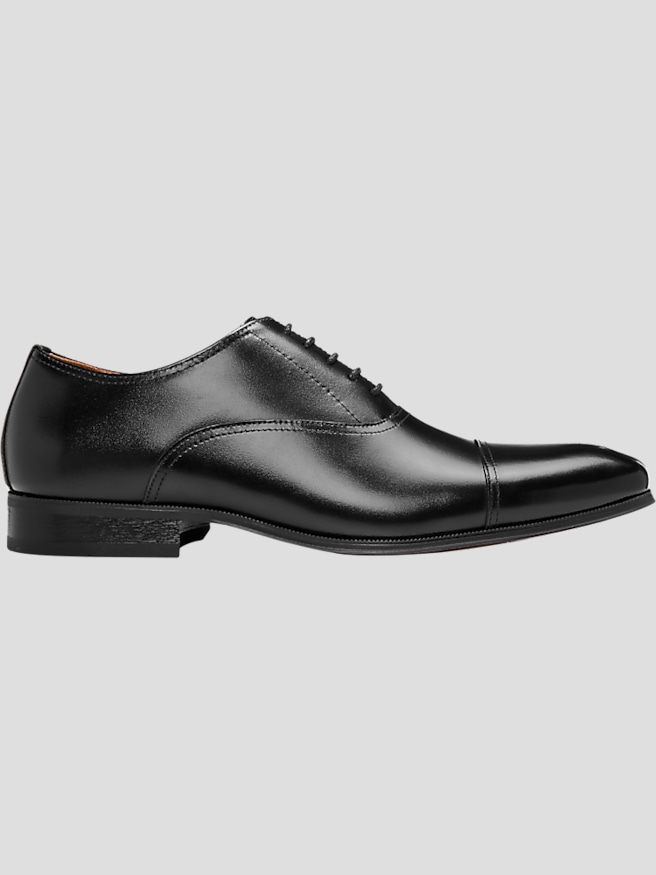
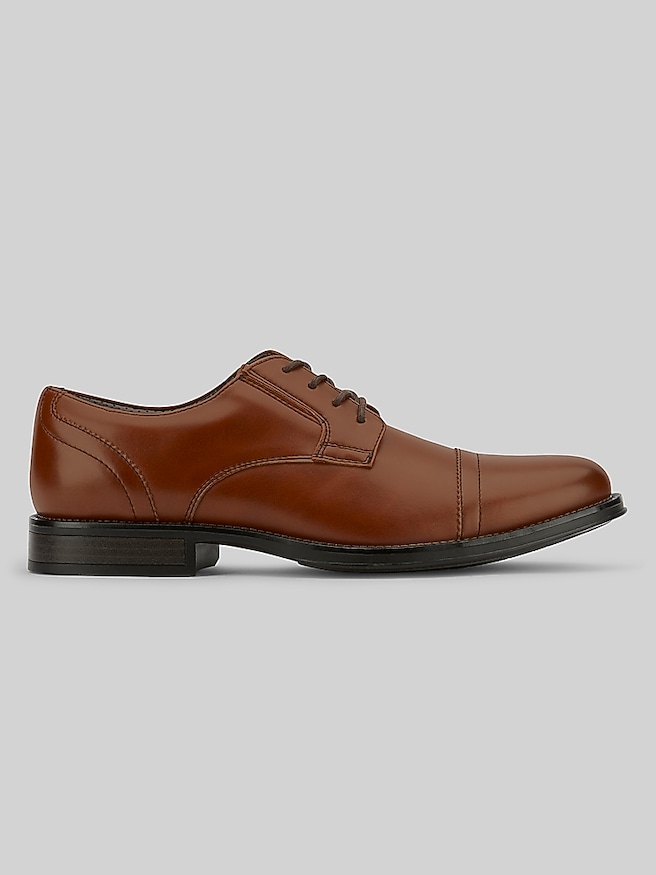
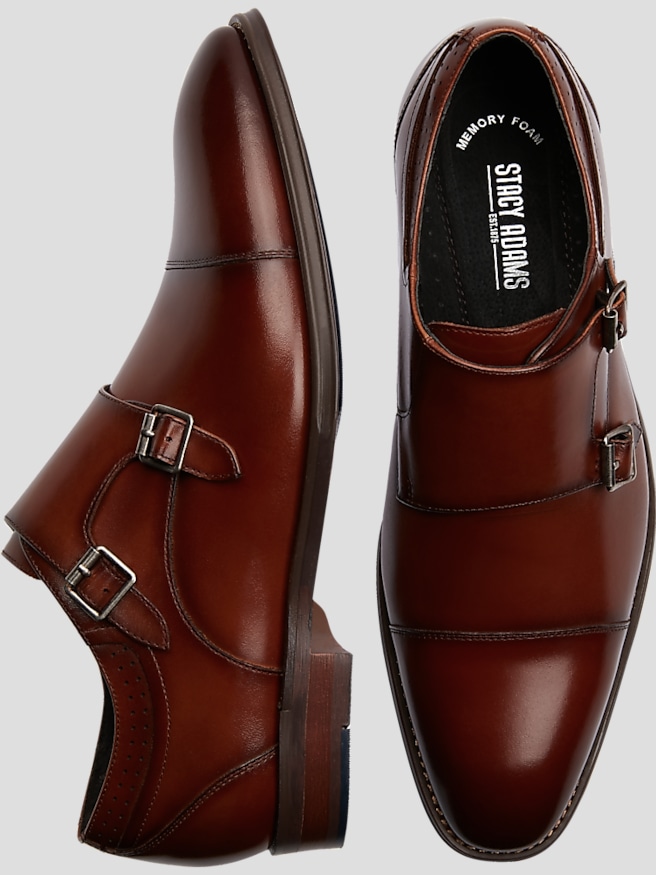
Traditional leather dress shoes draw much of their character from the shape of the toe, the placement of the seams, and the amount of detail in the leather. Longwing brogues are a hallmark of heritage footwear. Like other wingtips, they have a W-shaped toe overlay, but the wings extend along both sides of the shoe and meet at the heel. Decorative perforations, known as broguing, trace those edges and make the pattern visible even beneath the hem of a full-length trouser. That detail suits a textured wool suit or a sport coat and pressed trousers, where a plain shoe might look more formal than the rest of the outfit. A cap-toe Oxford, by contrast, has a straight seam across the toe and closed lacing, with the eyelet tabs sewn beneath the front section of the upper. In smooth black leather, it makes a quiet partner for a dark suit at a ceremony or an important meeting. Open-laced shoes have eyelet tabs that sit on top of the upper. They can open wider and usually look a little more relaxed, especially in brown leather with a rounded toe. Loafers take that ease a step further by leaving out the laces altogether. A smooth leather loafer with a slim sole can sit neatly under tailored trousers, while a fuller toe and a more pronounced sole hold their own with chinos or heavier fabrics. Florsheim Loafers carry that understated slip-on look from the office to a dinner that calls for a sport coat but not a tie. The scale of the shoe matters as much as its decoration: a broad longwing can balance a generous trouser leg, while a lower-profile shoe leaves a cleaner line under a narrow hem. Neither effect depends on a high shine. Even a softly polished finish can pick up the texture of a suit and make the outfit look put together.
The leather and the structure beneath it help determine how a dress shoe feels over a full day. Smooth calfskin is prized for its fine grain and ability to take an even polish. Supple sheepskin can give a slip-on a softer feel across the foot, while a leather lining offers a smooth surface against a dress sock. The sole makes a noticeable difference, too. Leather soles have a traditional profile and can become more flexible with wear, while rubber outsoles or rubber inserts can provide extra grip on slick indoor floors. In a Goodyear-welted shoe, a strip of material called a welt is stitched to the upper and the insole assembly, and the outsole is stitched to that strip. That construction can make resoling practical when the upper and the rest of the shoe are still in good condition. It may feel firmer underfoot at first than a more flexible construction, but firmness is distinct from a poor fit. A dress shoe should hold the heel securely, leave space for the toes to move, and bend where the foot bends. The ball of the foot should sit at the widest part of the shoe rather than being squeezed behind it. A pinched toe or sharp pressure across the instep is not something to count on leather stretching to fix. Laces offer some control over how firmly the upper sits across the foot; a loafer relies more on the shape of the heel and the fit over the instep. Concealed elastic panels, sometimes called hidden goring, let the opening give a little as the foot slides in without interrupting the shoe’s clean lines. The cut of the shoe matters as much as the size on the box. A slightly tapered toe can feel roomy if the ball of the foot sits in the right place, while a rounder shoe can still feel tight if the upper is too shallow. The socks worn with a suit or dress trousers also make a useful reference point, since a thicker sock changes how much room there is across the forefoot and instep.
Regular care helps leather dress shoes keep their shape and finish, especially when they spend as much time under a desk as they do at weddings or dinners. A soft brush lifts dust from the perforations and seams of a brogue, where residue tends to collect. On smooth leather, a light coat of compatible cream polish can revive the color of a scuffed toe. Wax polish can add shine to the toe and heel, but a heavy layer across the part of the shoe that flexes can build up in the creases. Shoe trees support the uppers between wears, and a shoehorn protects the back of the heel from being folded down as the foot slips in. For pairs worn on consecutive workdays, rotating them gives the lining time to air out. Scuffed leather and shallow creases are normal signs of wear; thin soles and uneven heel edges are more useful signals that a pair may need attention. A cobbler can assess whether a worn heel needs a simple replacement or whether the sole needs more extensive work. Those details matter for someone who spends much of the day on foot, but they also matter for a pair brought out mainly for celebrations. A well-maintained dark lace-up can serve at one wedding after another without looking out of place, while a softly structured loafer can see steady use with office trousers and weekend tailoring. Classic dress shoes can also make a thoughtful graduation gift or mark a first job that calls for tailored clothes. Fit is personal enough that knowing the recipient’s preferred width and a shoe shape that already works is more useful than knowing a size alone. A pair that feels comfortable from the first try-on and suits the clothes already in the closet is the one most likely to be worn long after the occasion that called for it.