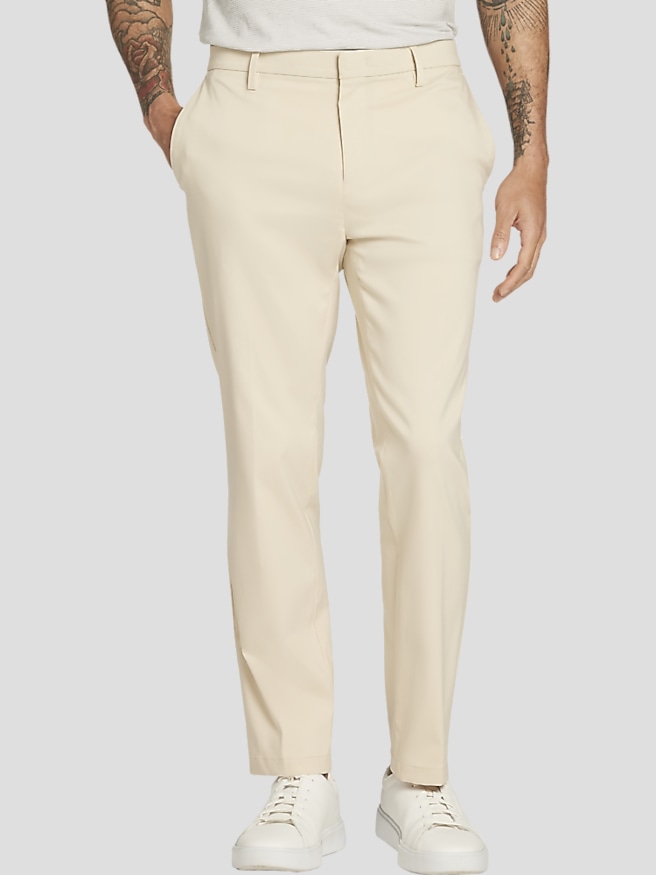
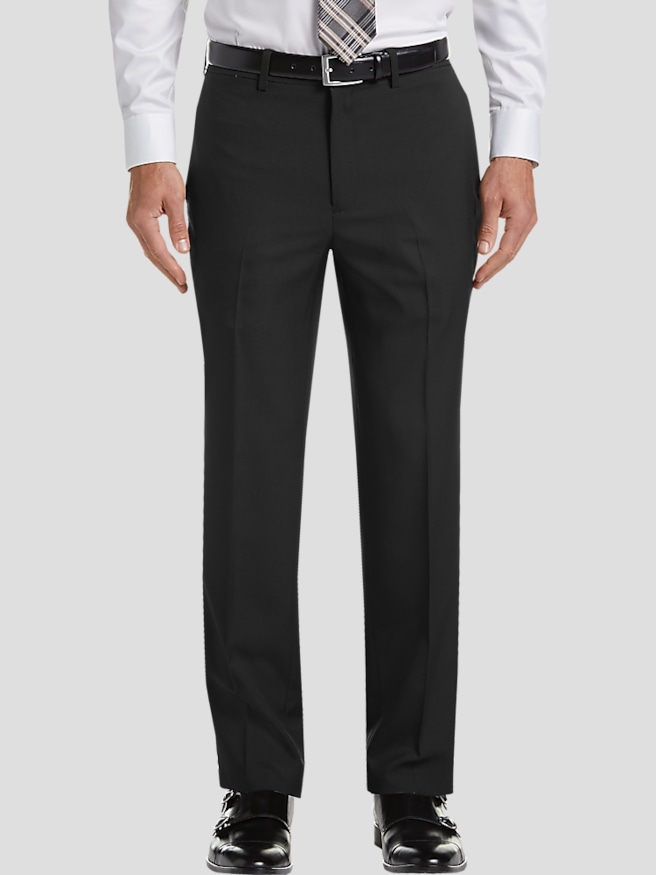
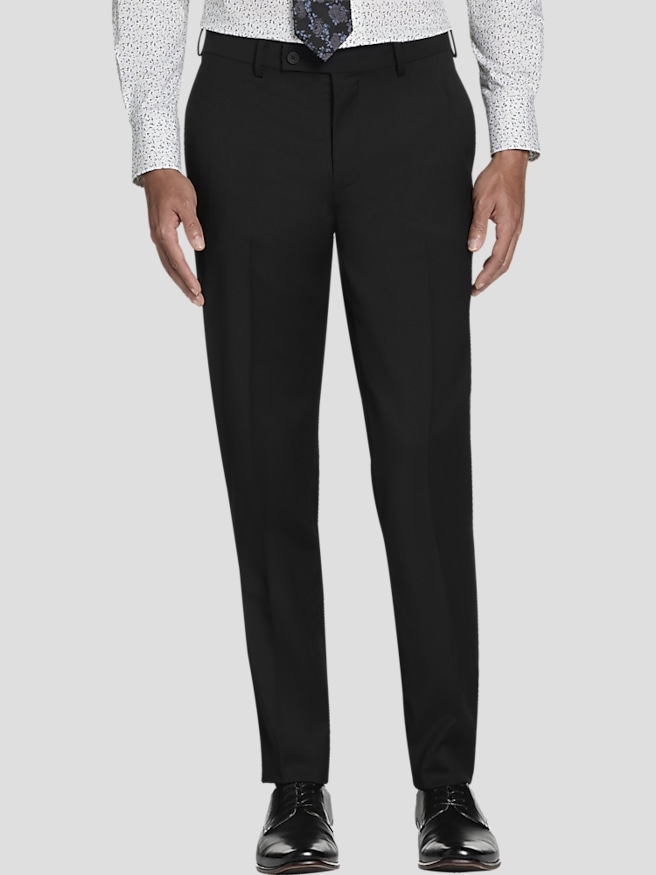
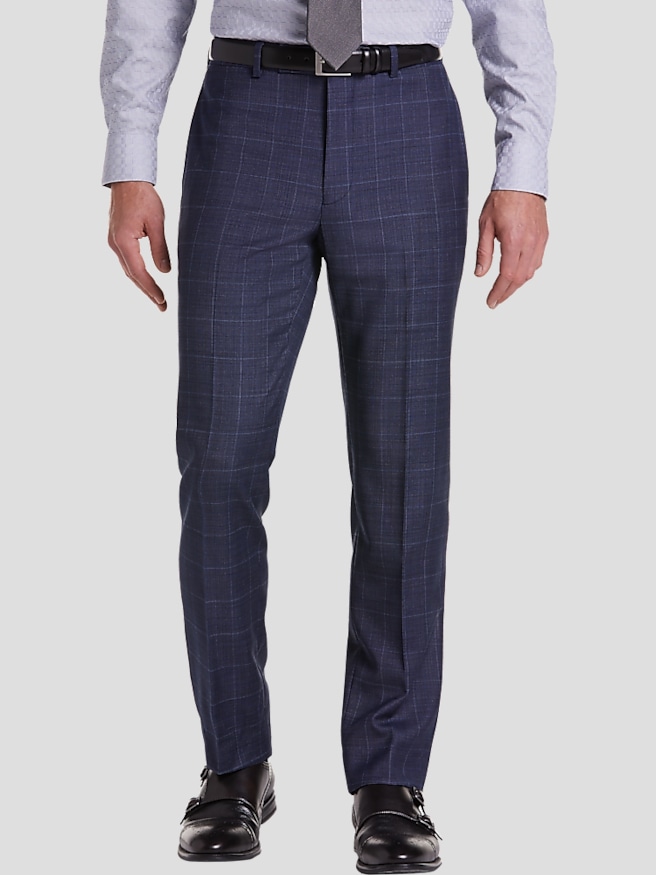
Fitted pants are trousers cut to follow the natural shape of the waist, hips, and thighs, creating a streamlined silhouette without the excess fabric of a relaxed fit. They can have a slim, straight, or tapered leg, and a close fit does not have to mean a tight one. Well-proportioned fitted pants leave enough room to sit through a meeting, climb stairs, and bend comfortably while keeping a clean line from the waistband to the hem. For men who prefer a defined shape, the important distinction is where the fabric sits close and where it allows movement. A slim leg stays narrow through much of its length, while a tapered leg gradually narrows toward the ankle and may offer more space through the thigh. That difference matters for an athletic build, where a close waistband and narrow lower leg may work best with additional room through the seat. Rise also influences the result: a waistband that sits comfortably at the intended point on the body helps the pockets lie flat and keeps the front from pulling. Strong horizontal creases across the hips, pocket openings that flare outward, or a waistband that digs in when seated can signal that the cut needs more room. A fitted silhouette should look deliberate, not strained. Length completes the proportions. A hem that barely touches the shoe creates a crisp finish, while a slight break adds a more traditional touch without bunching around the ankle. The width of the leg opening affects how that hem rests over loafers, lace-up dress shoes, or low-profile sneakers. Accurate waist and inseam measurements are useful, but the shape through the seat and thigh is just as important as the numbers on a label. Even two pairs with the same labeled size can sit differently because of their rise and cut. The most successful fit looks smooth while standing and remains comfortable once the wearer settles into a chair.
Fabric gives fitted pants much of their character, influencing how closely they drape, how easily they move, and how polished they look throughout the day. Wool trousers can provide a refined surface and a fluid line that works naturally with a dress shirt and sport coat. Wool blends may balance that appearance with other qualities, depending on their fiber content and construction. Cotton twill has a more casual texture and enough structure to give chinos a defined shape, making it a useful choice for an office with a relaxed dress code, a dinner reservation, or a weekend gathering. Fabrics containing elastane or another stretch fiber can add flexibility across the seat and knees, although stretch is not a substitute for sufficient room. Recovery matters as much as flexibility: fabric that returns toward its original shape helps limit bagging after hours of sitting. The distinction between a crisp, structured cloth and a softer, more fluid one also changes the overall impression, even when the measurements are similar. For a dressier interpretation of a close, considered silhouette, Tailored Pants offer a related direction. Color and texture help determine how fitted trousers work within an existing wardrobe. Charcoal and navy pair easily with white or pale blue shirts, while tan and olive bring a more casual note to polos, knitwear, and button-downs. A subtle weave can add depth without competing with a patterned shirt or jacket. At a client presentation, a smooth trouser front and a neat hem support a polished outfit; at a restaurant, the same streamlined proportions can feel less formal with an open collar and loafers. For a wedding guest, the invitation and venue help establish whether separate trousers are appropriate or a suit is expected. Fitted pants are useful across these settings because their shape provides definition without requiring every outfit to be highly dressed up. The balance comes from pairing a close lower half with tops and jackets that have enough ease to move naturally.
Lasting comfort and appearance depend on construction, care, and how the pants are worn. Even stitching, neatly finished seams, secure pocket openings, and a waistband that lies smoothly are useful signs of thoughtful construction. Areas exposed to repeated movement, including the seat, crotch seams, and knees, benefit from a fit that does not keep the fabric under constant tension. A phone or bulky wallet can distort the line of a close-fitting pocket, so keeping pocket contents light helps preserve the silhouette. Care requirements vary by fabric, lining, and finishing details, making the garment’s care label more reliable than a rule based only on fiber content. Some cotton and blended trousers are washable, while other constructions call for professional cleaning. Excessive heat can affect dimensions, finishes, and stretch fibers, so washing, drying, and pressing methods should match the label. Prompt attention to small spots can prevent a stain from becoming harder to address, but cleaning methods should be suitable for the material. Between wears, airing pants and storing them neatly can help keep them fresh and reduce unnecessary cleaning. A proper trouser hanger supports the shape, and enough space in the closet keeps fabric from being compressed into unwanted folds. When pressing is appropriate, following the existing crease rather than creating a competing line preserves a tidy finish. Alternating pairs also gives fabric time to relax after a full day of wear. These practical details make fitted pants a useful part of a working wardrobe for office professionals, frequent event guests, and men who simply prefer a cleaner everyday outline. They can also be a thoughtful gift for someone starting a new job or building a more polished wardrobe, especially when the recipient’s measurements and preferred rise are known. Beyond an appealing color or a narrow leg, the strongest choice is a pair that suits the wearer’s routine: comfortable at a desk, neat after standing up, and easy to coordinate with familiar shirts and shoes.