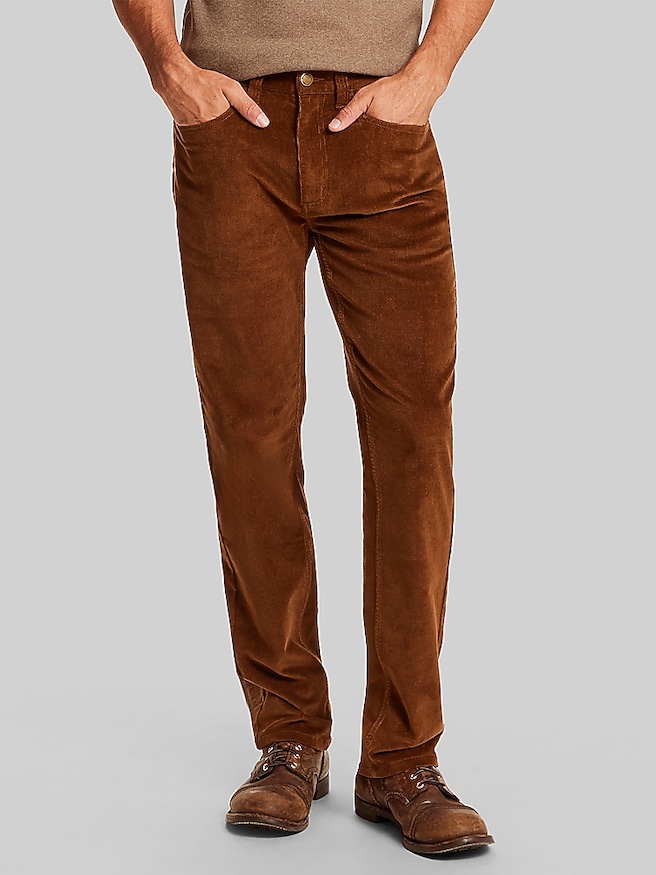
Men’s fitted trousers have a close, shaped silhouette that follows the body through the seat and thighs, usually narrowing toward the ankle. The defining feature is controlled proportion rather than a tight fit: fabric should hang smoothly, pockets should lie flat, and the legs should leave enough room for walking, sitting, and taking the stairs. Compared with a straight cut, a fitted shape generally has less fullness through the leg and a narrower opening at the hem. Slim, tailored, and skinny cuts can all describe closer silhouettes, but those labels are not interchangeable, and their measurements can vary. A tailored cut may allow more room through the thighs than a skinny cut while still creating a crisp outline below the knee. That balance makes fitted trousers useful for office days, client presentations, dinner reservations, and celebrations where polished clothing feels appropriate. A pressed pair with a tucked-in dress shirt creates a composed business look; the same silhouette with a fine-gauge knit and loafers feels more relaxed without losing its structure. Flat-front designs keep the front clean, while subtle pleats can add room through the upper leg without making the overall shape look full. Mid-rise trousers often sit comfortably between the hips and natural waist, though the most comfortable rise depends on torso length, build, and personal preference. A waistband should stay in place without digging in when seated or needing a tightly cinched belt to prevent slipping. For someone with muscular thighs, a little extra room through the seat and upper leg, followed by a gradual taper, can look more fitted than a smaller size that pulls across the front. The strongest sign of a good fit is an uninterrupted line from the hip to the hem, not the size printed on the label. Men’s fitted dress pants work best when their shape supports everyday movement as naturally as it supports a polished appearance.
Fabric gives fitted trousers much of their character, affecting how they drape, feel, and hold their shape through repeated wear. Wool can provide a smooth, fluid line with natural resilience, making it a familiar choice for dressier trousers. Wool blends combine that character with other fibers, with the resulting texture, care requirements, and performance depending on the full composition and construction. Cotton twill has a more visible diagonal weave and a grounded, less formal feel that works well with an oxford shirt, a knit polo, or an unstructured jacket. Polyester and viscose blends can produce a smooth surface and soft drape, while a small amount of elastane or spandex may add useful flexibility. Stretch fitted trousers can feel more accommodating during a commute or a long afternoon at a desk, but stretch is not a substitute for enough room through the hips and thighs. Fabric that remains under tension may pull at the seams or cause the pockets to flare, even when it feels flexible. Wrinkle resistance, breathability, and shape retention also vary by weave and finishing, so the fiber label alone does not tell the entire story. A tightly woven cloth can have a crisp outline, while a softer construction may move more freely and show less pronounced creasing. Details such as secure stitching, neatly finished seams, reinforced pocket openings, and a stable waistband contribute to durability. Pocket design matters in daily use, too: bulky keys or an overfilled wallet can interrupt a narrow silhouette and place strain on the fabric. Color and pattern change the impression just as noticeably as texture. Charcoal and navy support understated business dressing, medium gray pairs easily with both light and dark shirts, and tan brings a more casual note. Fine checks or subtle woven patterns add depth without necessarily becoming the focal point of an outfit. For a cohesive wardrobe, fitted trousers in a restrained color palette can connect dress shirts, knitwear, jackets, and shoes already in regular rotation.
The finishing proportions of men’s fitted trousers are especially noticeable at the waist and ankle. Rise affects where a tucked-in shirt meets the waistband and how comfortably the trousers sit when bending or reaching. Leg opening and hem length work together: a narrow opening often looks clean with no break or a slight break, while a somewhat wider opening can accommodate a modest fold where the fabric meets the shoe. Excess length can bunch around the ankle and obscure the taper, but a very short hem may expose more sock than intended when seated. Trying trousers with the shoes intended for regular wear gives a clearer sense of the finished line. Sleek lace-ups complement a pressed crease, loafers suit a slightly shorter hem, and understated leather sneakers can work with less formal fabrics when the setting permits. Alterations may refine the waist, taper, or length, although the amount of adjustment depends on seam allowances and construction; a comfortable seat and rise are important starting points. Care helps preserve those proportions over time. The sewn-in care label should determine whether trousers are machine washable, hand washable, or dry-clean only. For washable fabrics, the recommended cycle and drying method help limit shrinkage and unnecessary wear. Excessive heat can affect some stretch fibers, while pressing at an unsuitable temperature may leave shine or damage the surface. A suitable hanger helps maintain the line between wears, and allowing worn trousers to air before returning them to the closet can keep them fresher. Rotating pairs reduces repeated stress on the same seams and contact points. For graduates beginning office work, frequent business travelers, or anyone refining an everyday wardrobe, fitted trousers offer a practical bridge between formal clothing and casual staples. They can also make a thoughtful gift when the recipient’s measurements, preferred rise, and usual silhouette are known. Related wardrobe options include Mens Fall Trousers, with fit, fabric, and intended use remaining useful points of comparison. Whether worn for a presentation or an evening out, a well-proportioned pair should look deliberate without requiring constant adjustment.