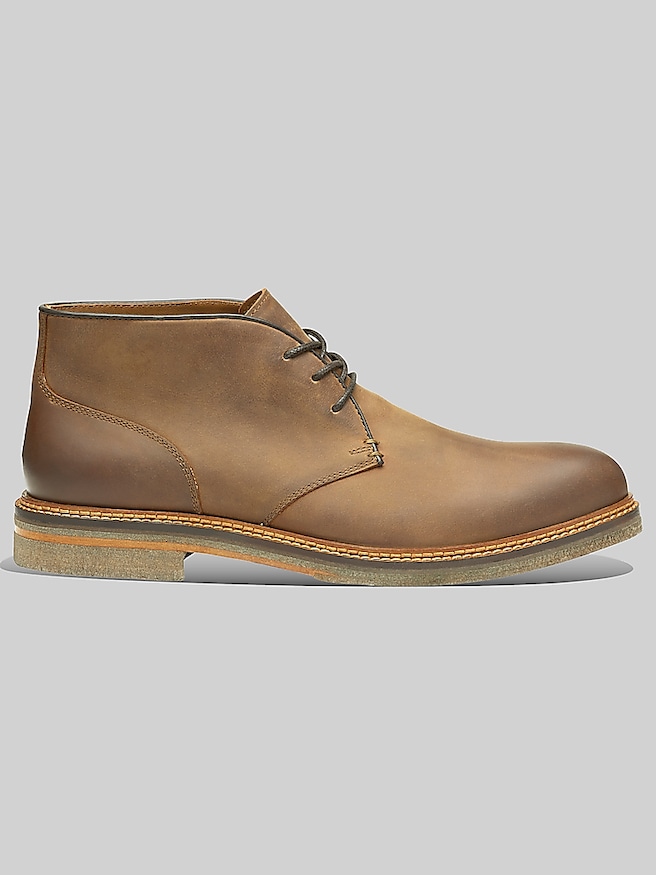
Men's Fall Casual Boots bring substance to everyday outfits without the formality of dress shoes or the athletic feel of sneakers. Their appeal lies in that middle ground: substantial enough for a leaf-strewn sidewalk, relaxed enough for a weekend coffee stop, and polished enough for a casual office. Chelsea boots, chukka boots, lace-up ankle boots, and moc-toe styles each approach that balance a little differently. Chelsea boots have elastic side panels and a relatively clean profile, making them a natural companion to tapered chinos, dark denim, and an unstructured jacket. Chukkas typically have two or three pairs of eyelets and a shorter shaft, giving them an easygoing shape that works with corduroys and a textured sweater. Lace-up boots offer more adjustment across the instep, while moc-toe stitching creates a distinctive outline that complements straight-leg jeans and casual overshirts. The sole changes the impression, too. A low-profile sole keeps an outfit streamlined; a deeper lug sole adds visual weight and a more rugged character. Brown leather pairs comfortably with indigo, olive, charcoal, and cream, while black boots lend a sharper edge to gray denim and simple knitwear. Suede introduces a softer texture, particularly alongside brushed cotton, flannel, and wool blends. For fall dressing, that mix of textures often does more than a complicated outfit: dark jeans, a substantial sweater, and ankle boots can feel complete without much else. Proportion matters as much as color. A trouser hem that rests near the top of the boot keeps the line tidy, while a small cuff can show the shaft without letting fabric bunch around the ankle. These are everyday footwear styles for commuting, relaxed dinners, campus walks, and weekends away, although the best match depends on the setting and the boot’s construction. Sleeker shapes suit a more tailored wardrobe; rounded toes and heavier soles feel at home with denim and workwear-inspired layers. Neither approach needs to look overly dressed up, which is part of what makes casual boots so useful.
Materials and construction help determine how fall casual boots feel, age, and handle repeated wear. Smooth leather can develop creases and a patina over time, giving frequently worn boots an individual character. Full-grain leather retains the hide’s natural surface, while other leather finishes may create a more uniform appearance; the finish, thickness, and overall construction all influence performance. Suede has a soft, napped surface that adds depth to casual outfits but usually needs more protection from moisture and staining. Neither leather nor suede should be assumed waterproof simply because it feels substantial. Water-resistant treatments, protective membranes, and sealed construction are separate features, and their effectiveness depends on the footwear’s stated design and proper maintenance. Outsoles deserve the same attention as uppers. Rubber soles can provide cushioning and grip, with performance varying by compound, tread pattern, and the surface underfoot. Deeper lugs can be useful on loose ground, but no everyday outsole guarantees secure footing on wet leaves or ice. Casual boots are not automatically substitutes for insulated winter footwear or technical hiking boots. For ordinary days spent between sidewalks, transit stops, and indoor spaces, flexibility, manageable weight, and a comfortable lining may matter more than a heavily built profile. Fit should support that routine from the first wear. Toes need room to move without pressing against the front, the widest part of the foot should sit comfortably within the boot, and the instep should feel held rather than squeezed. A snug fit is not the same as a painful one, and a break-in period should not be relied on to correct pinching or persistent rubbing. The socks worn with the boots affect that fit: a thicker wool-blend pair takes up more space than a thin dress sock. Lace-up styles allow some adjustment, while Chelsea boots depend more closely on the relationship between the heel, instep, and elastic panels. Adequate underfoot cushioning can make standing more pleasant, but it does not compensate for an incorrect size or shape.
Consistent care helps casual boots keep their appearance and remain useful through repeated fall wear and beyond. Surface dirt is easier to remove before it settles into stitching, creases, and the edges of the sole. Smooth leather generally benefits from wiping with a soft cloth and occasional conditioning with a product suited to its finish, following the footwear maker’s instructions. Too much conditioner can change the appearance or leave residue, so more is not necessarily better. Suede needs a different approach: a suitable brush can lift the nap and remove dry surface dust without flattening its texture. Any cleaner or protective treatment should be compatible with the material and tested in an inconspicuous spot, especially on lighter colors. After exposure to rain, boots should dry naturally away from radiators, fireplaces, and other direct heat sources. Removing damp insoles, when the design allows, can help the interior dry more thoroughly. Road salt deserves prompt attention because residue can mark uppers and contribute to deterioration; the appropriate cleaning method depends on the material and finish. Between wears, shoe trees sized for the boots can help maintain their shape, while storage in a dry, ventilated space keeps them from sitting in trapped moisture. Rotating footwear also gives linings and footbeds time to air out. Durability comes from the whole boot rather than one feature alone: secure stitching, sound sole attachment, resilient uppers, and sensible maintenance work together. Some constructions can be resoled by a qualified cobbler, while others are better suited to more limited repairs. Paying attention to worn tread, loose stitching, and damaged heels can help address small problems before they affect comfort or stability. For a gift, casual boots make the most sense when the recipient’s size, preferred fit, and everyday wardrobe are familiar. Someone who lives in chinos may appreciate a sleeker shape, while a devoted denim wearer may gravitate toward a more substantial silhouette. The strongest choice is ultimately a pair suited to real routines, with a shape, material, and level of protection that make it comfortable to wear often.