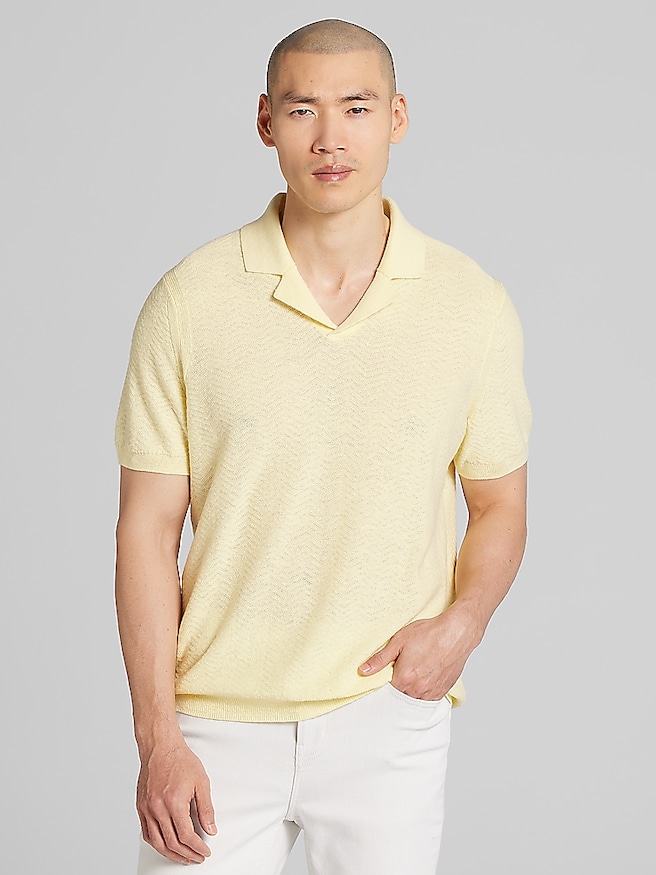
Evening sweaters are refined knit layers that bring a polished finish to dinner outfits, theater attire, and other after-dark looks without the structure of a dress shirt and jacket. For men, their appeal often lies in the balance between an easy feel and a deliberate appearance: a smooth neckline, a clean shoulder line, and a fabric that drapes neatly rather than bunching. A fine-gauge crewneck with tailored trousers creates an understated outfit for a restaurant reservation, while a V-neck leaves room for a shirt collar to frame the face. A turtleneck offers a continuous line beneath a sport coat, and a knitted polo introduces a defined collar without requiring an additional shirt. Cardigans bring another option, with an open front that can reveal a carefully coordinated layer underneath. Each shape gives evening knitwear a distinct character, from relaxed sophistication to something closer to traditional tailoring. Black, charcoal, and deep navy make particularly cohesive foundations because they pair easily with dark trousers and polished leather footwear. Burgundy, forest green, and softer neutrals can add depth without making the sweater the only thing anyone notices. Texture matters as much as color. A smooth knit tends to look sleek under a jacket, while a restrained rib or subtle stitch pattern adds dimension when the sweater stands on its own. A slight luster can feel dressier than a strongly textured surface, although a matte finish can be equally appropriate when the fit is precise. For a dinner that leads to a concert or an evening reception with a relaxed dress code, these details help an outfit feel considered without appearing overly formal. Evening sweaters are not substitutes for prescribed black-tie attire, but they fit naturally into settings where a suit is unnecessary and an everyday sweatshirt would feel out of place. Their role is to make that middle ground look intentional, with enough refinement for the occasion and enough ease for an unhurried evening.
Fabric and construction shape how an evening sweater looks, feels, and holds its form through repeated wear. Fine merino wool can provide a smooth surface and a supple drape, making it well suited to streamlined layers. Cashmere is valued for its soft hand and light feel, while cotton offers a familiar texture that can work especially well in a firmly knitted, neatly finished design. Silk blends may introduce a gentle sheen and fluidity; blends containing synthetic fibers can contribute resilience or shape retention, depending on the yarn and construction. Fiber content alone does not determine quality, and a heavier sweater is not automatically a more durable one. Even stitches, secure seams, and edges that recover after gentle stretching all contribute to a garment that continues to look composed. Fine-gauge knits generally create less bulk beneath tailoring, whereas larger stitches and pronounced cables give the sweater a more substantial visual presence. Fit brings those material differences into focus. On a traditional set-in sleeve, the shoulder seam should sit close to the natural shoulder rather than drooping down the upper arm. The chest needs enough room for comfortable movement without pulling the knit taut, and the body should fall smoothly rather than ballooning above the waistband. A hem that rests around the hip usually maintains a balanced proportion with tailored trousers; excessive length can make an otherwise dressy outfit seem casual. Sleeves should finish neatly at the wrist, with cuffs that stay in place without gripping tightly. When a collared shirt is part of the outfit, enough room through the neck and upper body helps prevent visible bunching. Under a jacket, a close but unrestrictive fit keeps the lapels lying smoothly and allows the sleeves to move comfortably. Sitting through a long dinner, reaching across a table, or standing during a reception all make ease of movement just as important as the view in a mirror. A well-proportioned evening sweater should retain its clean outline through those ordinary movements, not only while standing still.
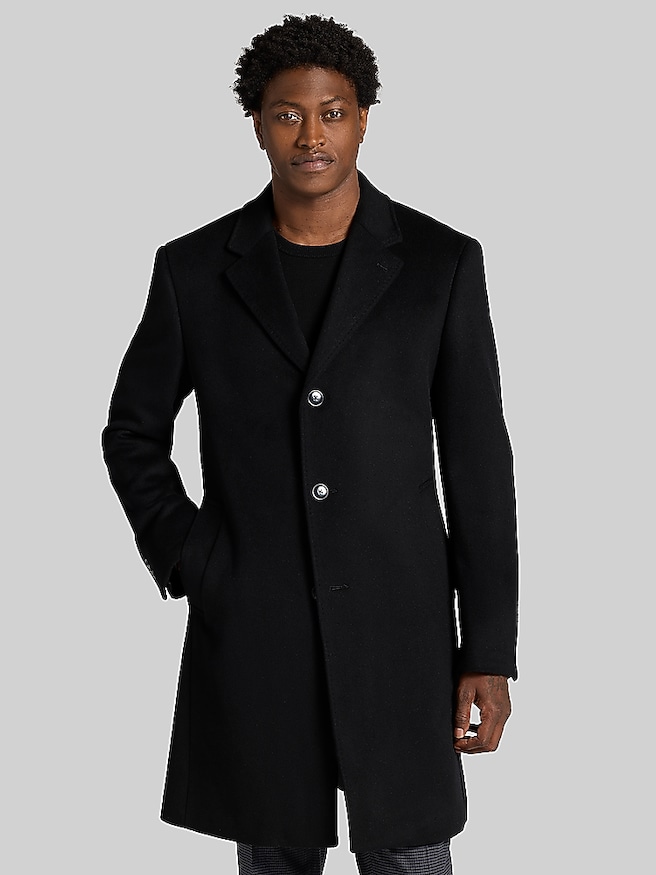
The most useful evening sweaters earn their place through versatility as well as appearance. A dark crewneck can accompany tailored pants for an anniversary dinner, then take on a more relaxed character with clean, dark denim for a live performance. A cardigan over a crisp shirt works for a birthday gathering or a dinner with colleagues, while a fine turtleneck and sport coat create a cohesive alternative to a shirt-and-tie combination when the setting allows it. Smooth trousers tend to emphasize the refinement of a fine knit; more textured pants can echo a sweater’s surface without requiring an exact match. Shoes and accessories help establish the final level of formality, with polished loafers, lace-up shoes, and a simple leather belt keeping the focus on proportion and finish. For a complete arrival-to-dinner outfit, Evening Coats offer a natural pairing, with sufficient room through the shoulders and sleeves helping the knit layer remain smooth underneath. Thoughtful care protects that appearance over time. The care label should determine whether a sweater needs hand washing, machine washing on a specified setting, or professional cleaning, since fiber blends and decorative details can have different requirements. When washing is permitted, gentle handling and an appropriate detergent help preserve the yarn, while avoiding twisting or wringing reduces unnecessary strain. Many knits benefit from drying flat and being reshaped while damp, according to their care instructions. Folded storage helps prevent the shoulder stretching that hangers can cause. Some pilling can develop where fabric rubs against itself or a bag strap, and careful removal with a suitable tool can refresh the surface without tugging at the stitches. These practical details also matter when an evening sweater is a gift for a partner, father, brother, or friend. A familiar neckline, a color that complements the recipient’s wardrobe, and care requirements that suit everyday habits can make the choice feel personal. The result is knitwear with a clear purpose: comfortable enough to enjoy wearing, refined enough for memorable plans, and adaptable enough to become part of a lasting evening wardrobe.