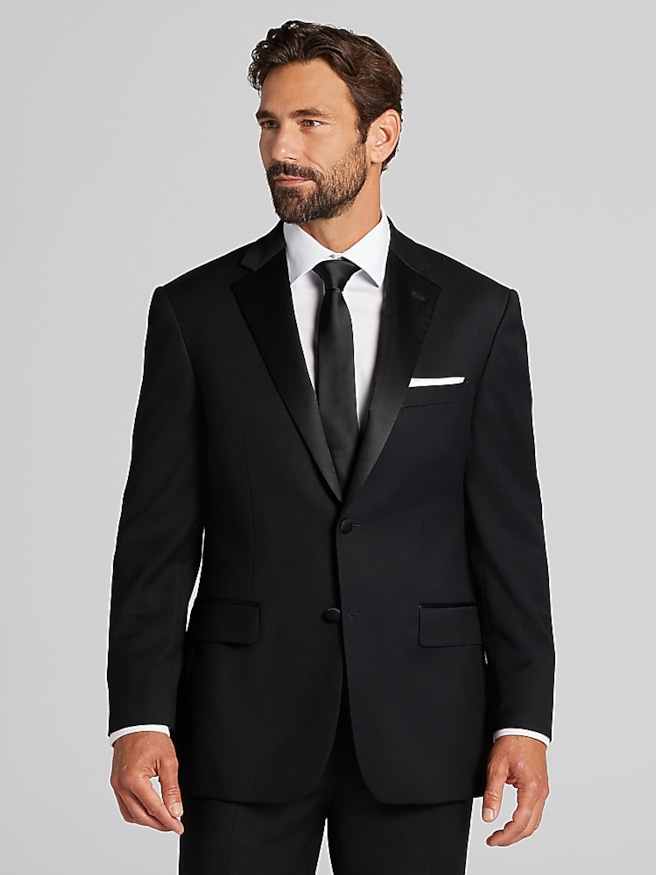
Evening coats are formal outerwear designed to be worn over suits, tuxedos, and other dress clothing for after-dark occasions. Their purpose is to provide an outer layer that looks appropriate with the clothing beneath it, rather than interrupting a carefully considered outfit. Unlike a dinner jacket or tailcoat, which forms part of an evening ensemble, an evening coat is generally removed upon arrival and checked or hung before the event begins. A tailored silhouette, restrained detailing, and enough length to cover the suit jacket help distinguish this category from casual outerwear. Dark shades such as black, charcoal, and deep navy work naturally with formal clothing, while a smooth surface and a clean front keep the overall effect understated. The right proportions matter as much as color: a coat that follows the line of the shoulders and falls neatly over the jacket creates a composed appearance from the curb to the entrance. Evening coats suit occasions such as black-tie weddings, charity galas, theater premieres, and formal anniversary dinners, where the arrival and departure are part of the experience. For someone who regularly attends dressy events, a versatile coat can serve across several types of evening attire without competing with a bow tie, a distinctive lapel, or a carefully folded pocket square. A single-breasted front often has a straightforward, adaptable look, while a double-breasted shape brings more visual structure through its overlapping front and paired buttons. Knee-length and slightly shorter silhouettes offer distinct proportions, with the best choice depending on height, jacket length, and personal preference. The defining quality is not ornament or dramatic styling, but a shape that belongs with tailored clothing. A coat should look complete when buttoned for the walk inside and fall naturally when opened, without exposing a jacket hem that extends below it.
Fabric and construction influence how an evening coat hangs, feels, and holds its shape through repeated wear. Wool is a traditional choice because its natural resilience supports a tailored silhouette, while its surface can range from softly brushed to smooth and closely finished. Cashmere has a soft hand and a gentle drape, and wool blends can combine the characteristics of several fibers; the actual composition matters more than a fabric name alone. A dense cloth often produces a more defined outline, whereas a lighter, more fluid fabric follows the body with less visible structure. Neither effect is automatically more formal, but the material should sit comfortably alongside the finish of the suit or tuxedo underneath. A smooth lining helps the coat slide over jacket sleeves without dragging them upward, and cleanly finished seams, secure buttons, and neatly reinforced pockets contribute to dependable wear. Fit is best understood as the relationship between the coat and the full outfit beneath it. Shoulder seams should sit cleanly without a hard ridge over the jacket, and the upper arms need enough space for a comfortable reach. Worn over a Black Tie Evening Suit, an evening coat should close without pulling across the chest or flattening the jacket lapels. There should also be enough room to sit in a car, extend an arm to greet a host, or hold a program without feeling bound across the back. At the same time, excess fabric around the waist or sleeves can make an otherwise polished outfit look oversized. Sleeve length should accommodate the jacket underneath rather than leave its cuffs projecting awkwardly beyond the outer layer. Vents can support movement and help the back fall smoothly, while pocket placement affects both convenience and the line of the coat. Carrying a phone, keys, and a wallet in several bulging pockets can distort even a well-cut shape, so a balanced fit includes the way the coat will actually be used.
The details that make evening coats comfortable on an event night also help determine their usefulness over time. A collar that rests neatly against the neck, lapels that lie flat, and a front closure that stays secure can make the difference between a coat that feels natural and one that needs constant adjustment. Quiet details tend to work across a broad range of formal settings, especially for someone whose calendar includes weddings, professional banquets, and performances with varying dress expectations. Accessories can remain equally restrained: a fine-textured scarf, simple leather gloves, and polished dress shoes can complement the coat without drawing attention away from the evening outfit. Care should follow the garment label, since fiber content, lining, and internal construction all affect the appropriate cleaning method. For tailored wool and cashmere garments, gentle brushing with a suitable clothing brush can remove surface dust, while prompt attention to marks helps prevent a small spill from becoming a lasting blemish. A broad, supportive hanger helps preserve the shoulders, and enough space in the closet allows the fabric and lapels to rest without being compressed. Emptying pockets after wear reduces unnecessary strain and helps the front retain its intended shape. Professional cleaning should be based on the care instructions and the garment’s condition, rather than treated as an automatic step after every evening out. Loose buttons, worn pocket edges, and lining damage are easier to address before they affect comfort or appearance. An evening coat can also make a thoughtful gift for a partner, parent, graduate, or frequent formal-event attendee, provided the recipient’s measurements and usual jacket fit are understood. Personal preferences deserve equal attention: some people favor a close, architectural silhouette, while others feel more comfortable with a little extra room through the body. A well-considered coat supports those preferences while keeping its essential purpose clear—covering formal clothing neatly and making the journey to and from an occasion feel as considered as the outfit itself.