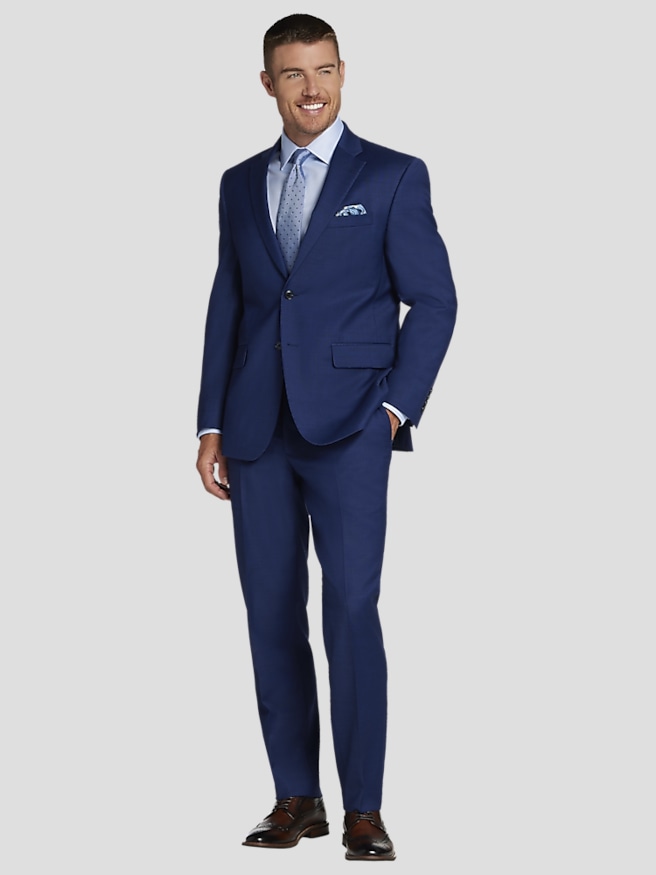
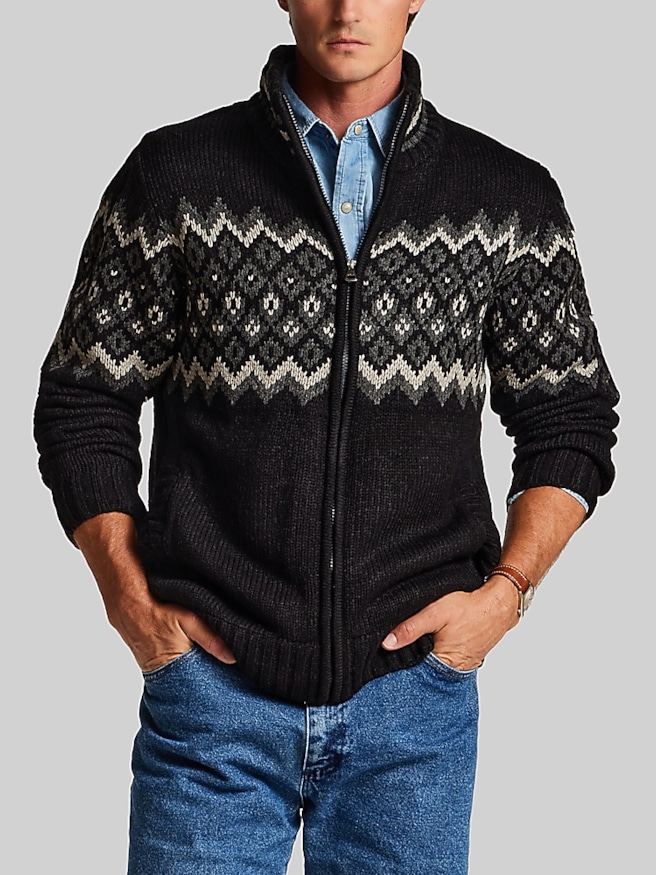
Winter essentials for men bring together warmth, comfortable layering, and the versatility to move between a cold sidewalk and a heated office without feeling overdressed. A useful winter wardrobe balances close-fitting base layers, insulating knitwear, protective outerwear, and accessories that cover exposed areas. Each layer has a distinct purpose: a base layer helps manage moisture next to the skin, a middle layer holds warm air, and an outer layer limits exposure to wind and precipitation according to its construction. For a commute followed by a full day indoors, lighter layers often feel more practical than a single heavy garment. Fine-gauge merino wool offers warmth with relatively little bulk and fits neatly beneath a sport coat, while cashmere has a soft feel that works well for dinners and dressier settings. Wool blends can combine insulation with added resilience, depending on the fibers and fabric structure. Cotton knits offer softness and easygoing texture for indoor wear, though cotton absorbs moisture and dries more slowly than many performance fibers, making it less suitable against the skin during sustained outdoor activity. Fit matters as much as fabric. A base layer should sit close without pulling across the shoulders or restricting movement, and a sweater should leave enough room for the shirt beneath it without bunching at the waist. Ribbed cuffs and hems help keep a knit layer in place, while smooth shoulder seams make layering more comfortable under a jacket. Crew necks create a clean frame over an undershirt or collared shirt; V-necks leave space for a shirt collar and tie; and higher necklines add coverage without requiring another accessory indoors. Neutral shades such as charcoal, navy, camel, and cream make these layers easy to combine with tailored trousers or denim. The result is a set of winter clothing essentials suited to everyday routines, from an early train ride to an evening meal after work.
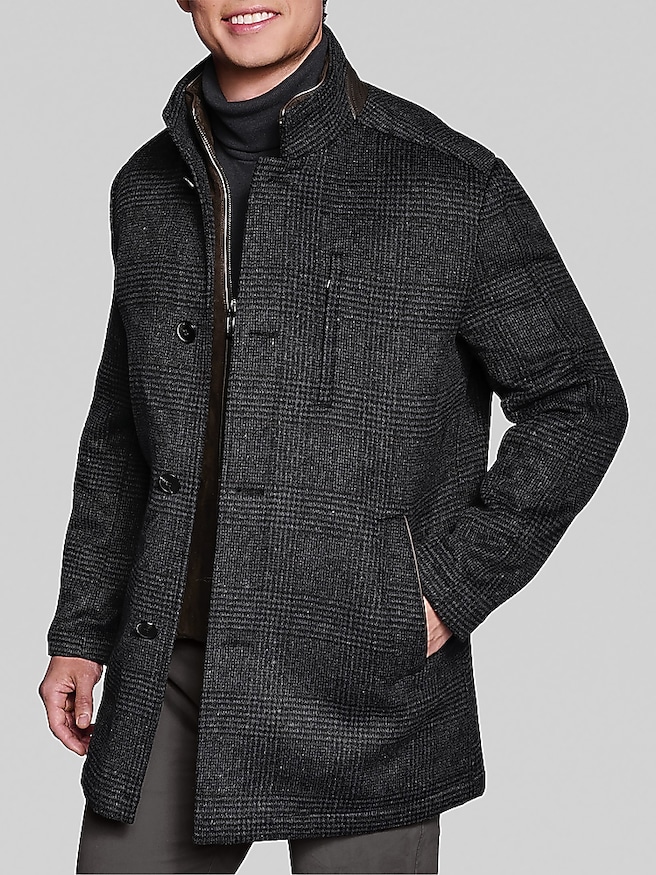
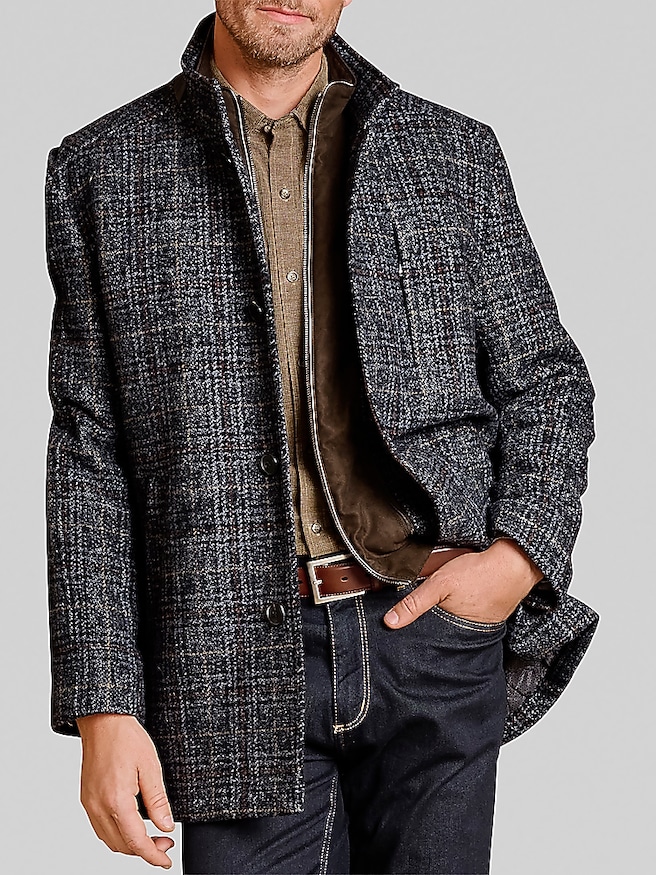
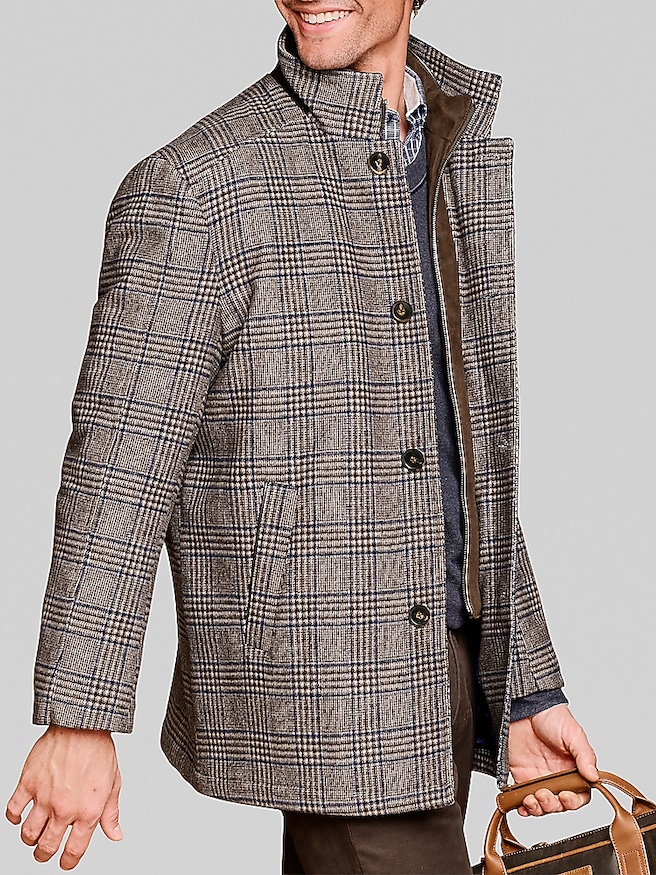
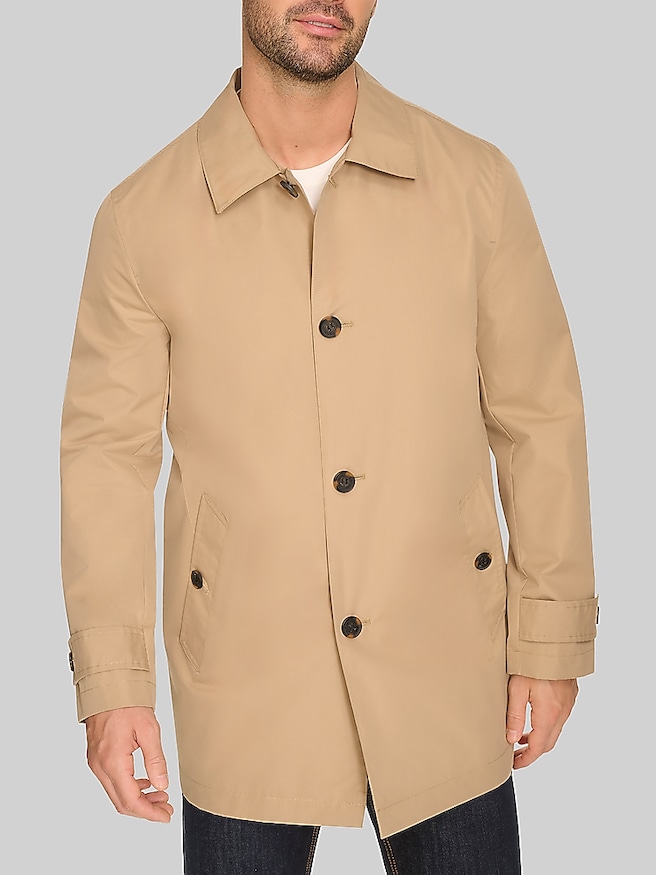
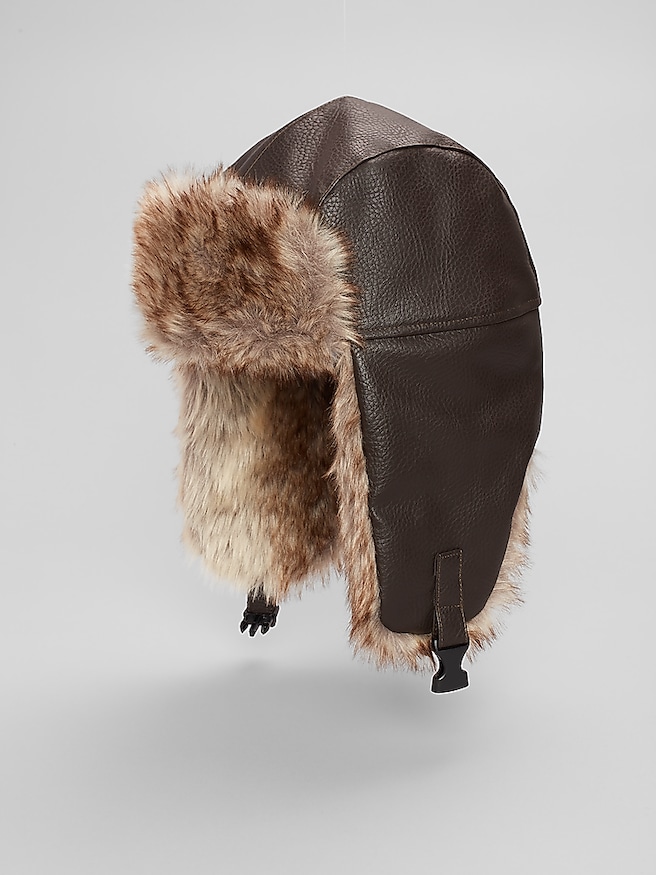
Outerwear gives those layers their finishing structure, with the best match depending on how long the wearer spends outside and what sits underneath. Wool-rich fabrics provide insulation and a refined drape that complements tailoring, although an unprotected wool surface is not a substitute for waterproof construction in prolonged rain or wet snow. Insulated outer layers offer another approach, using loft to trap warm air. Down provides substantial warmth for its weight, while synthetic insulation generally retains more insulating ability when damp; performance still depends on the garment’s design, fill, and shell. Water-resistant finishes can help shed brief, light precipitation, but water resistance and waterproofing are not interchangeable. Sealed seams, closures, and the stated fabric performance matter when extended exposure is part of the day. For office wear or a winter wedding, an outer layer needs enough room through the chest and upper arms to accommodate a jacket without flattening its shoulders. A comfortable fit allows the arms to reach forward and the front to close without strain. Extra length provides more coverage, particularly while standing on a platform or walking several blocks, while a shorter silhouette can feel less cumbersome when driving. Winter accessories address the gaps that a coat leaves uncovered. A scarf adds adjustable coverage at the neck, a close-fitting knit hat covers the ears, and gloves keep hands covered during outdoor errands. Dense knits limit open spaces in the fabric, while lined accessories add another insulating layer. Footwear deserves the same attention to use and conditions. Moisture-resistant materials, secure closures, and tread designed for traction are useful considerations for wet pavement, though no sole can guarantee grip on ice. Socks should provide cushioning and warmth without making footwear tight enough to pinch the toes. Smooth leather brings a polished finish to dressier outfits, while textured surfaces and substantial soles can complement casual clothing. Coordinated colors help these practical elements feel intentional rather than added as an afterthought.
The Winter Clothing Essentials collection reflects the value of pieces that work across several parts of a winter routine. A textured knit can soften the appearance of tailored trousers, while a fine, smooth layer keeps a sharper outline beneath a jacket. For business travel, fabrics that recover well after folding and layers that combine with more than one outfit help simplify packing. For someone who spends most of the day indoors, breathable, lighter-weight layers may get more use than exceptionally heavy insulation. Someone with a walking commute may place greater importance on neck coverage, outer-layer length, and moisture protection. Durability depends on more than thickness: even stitching, secure buttons, well-finished seams, and reinforcement at areas of frequent stress all contribute to how clothing holds up. Care also makes a noticeable difference over time. The garment’s care label takes priority, especially for lined outerwear, structured tailoring, and delicate knits. Many wool and cashmere pieces benefit from airing between wears and gentle handling, with washing or professional cleaning determined by their individual instructions. Folding knitwear rather than hanging it helps prevent stretched shoulders, while a broad, supportive hanger helps structured outerwear maintain its shape. A fabric brush can lift surface debris from suitable woven fabrics, and careful pill removal can refresh knitwear without pulling at the yarn. Footwear benefits from drying naturally away from direct heat and receiving care appropriate to its material and finish. These details are especially useful when winter clothing becomes part of a daily rotation rather than occasional wear. As gifts, scarves, gloves, and knit hats can be approachable choices when exact clothing measurements are uncertain, although glove sizing and personal preferences still matter. Sweaters and other fitted layers are more personal selections, with neckline, texture, and usual size all worth considering. Familiar colors and comfortable fabrics often make a gift easier to wear repeatedly. Whether intended for a workday, a weekend visit, or a dressed-up evening, well-chosen winter essentials balance protection, proportion, and comfort without making every outfit feel heavy.