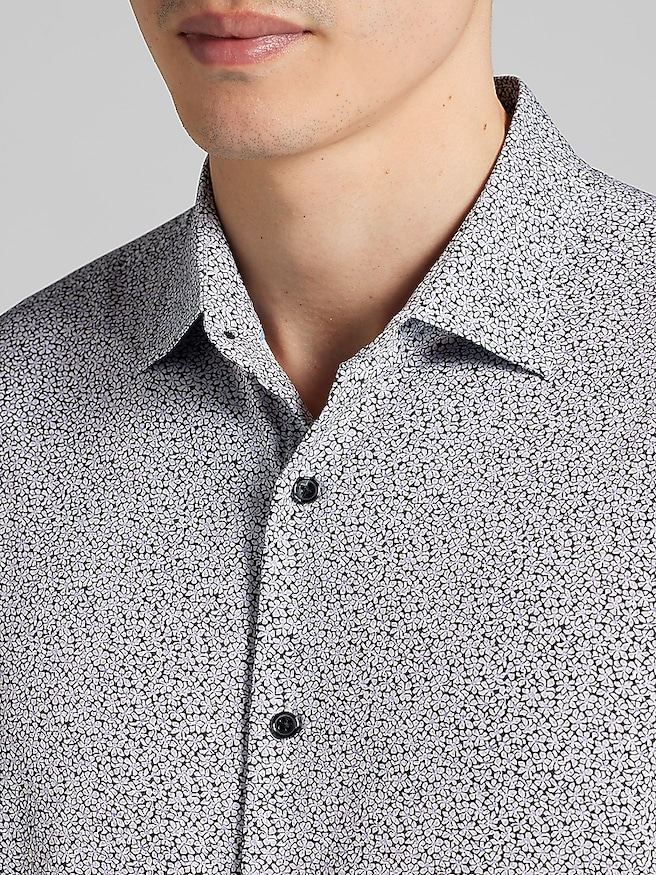
Essential shirts for men form the foundation of a wardrobe that moves easily between work, everyday plans, and occasions that call for a more finished appearance. The category spans simple crewneck tees, polos, casual button-front shirts, and dress shirts, with each shape serving a distinct purpose. A clean neckline and an even hem give a T-shirt enough presence to wear on its own, while a structured collar brings definition beneath a jacket or sweater. Relaxed, boxy proportions, substantial cotton jersey, and neutral colors create an understated casual look; closer-fitting silhouettes and smoother woven fabrics offer a sharper alternative. Neither approach needs elaborate details to feel considered. White, gray, navy, and black provide familiar starting points, while light blue, muted green, and subtle stripes add variety without making an outfit difficult to coordinate. Fabric makes a noticeable difference in how these shirts look and feel. Cotton jersey has a soft, flexible knit construction suited to everyday movement. Heavier jersey typically has more body and can hold a squared-off silhouette, although fabric weight alone does not establish quality. Oxford cloth has a visible basket-weave texture that works naturally with chinos and denim. Poplin offers a smoother surface and a crisp appearance under tailored clothing, while twill introduces a fine diagonal weave and often a softer drape. Cotton blends may combine familiar softness with performance characteristics such as stretch or easier wrinkle management, depending on their construction and finish. Linen has a textured appearance and an easy drape, with natural creasing that is part of its character. These distinctions matter more than a broad label such as “basic.” A shirt worn against the skin throughout a full day needs a pleasing hand feel, while one worn beneath a suit also needs a collar, front, and sleeves that sit neatly without excess fabric gathering.
Fit determines whether an essential shirt feels dependable after several hours, not just whether it looks good standing still. Shoulder seams that sit near the shoulder edge generally create a conventional tailored outline; dropped shoulders are an intentional feature of many relaxed and boxy designs. Across the chest, fabric should lie comfortably without pulling the button placket open or restricting the arms when reaching forward. A slim fit follows the torso more closely, a classic fit allows additional room, and a relaxed fit creates a looser shape, but those terms can vary between makers. Measurements and garment proportions provide more useful context than the fit name alone. Length also changes a shirt’s role. A curved shirttail generally offers coverage for tucking, whereas a shorter, straighter hem can look balanced worn outside the waistband. With dress shirts, enough sleeve length to reach the wrist helps the cuff sit properly beneath a jacket; with short sleeves, the opening and sleeve length influence whether the overall shape feels trim or roomy. Collar construction adds another layer of distinction. A button-down collar keeps its points anchored and lends itself to an approachable office outfit, while a spread collar can frame a tie and complement tailored clothing. A polo bridges casual and dressed-up settings through its knit fabric and defined neckline. For a day that includes a commute, desk work, and dinner afterward, a shirt with comfortable movement and a stable collar can make the transitions feel uncomplicated. For travel, fabric recovery and wrinkle resistance may matter more, provided those qualities are stated in the garment details. Someone who wears shirts primarily beneath jackets may prefer a smooth surface and less bulk through the sleeves. Someone who wears them untucked may place greater emphasis on hem shape, drape, and how the shirt looks from the side. Essential does not have to mean identical: a dependable rotation can include several silhouettes that reflect how a person actually dresses.
Durability comes from the relationship between fabric, construction, fit, and care. Even stitching, securely attached buttons, neatly finished seams, and a collar that lies evenly are useful details to examine. Fabric should suit the intended use rather than simply feel thick; a fine dress-shirt weave and a substantial jersey knit have distinct jobs. A shirt that strains across the back or catches tightly at the upper arm can place unnecessary stress on its seams, making comfortable proportions relevant to longevity as well as appearance. Care requirements deserve the same attention as color and cut. The garment’s care label is the best reference for washing, drying, ironing, or professional cleaning, particularly when stretch fibers, special finishes, or blended materials are involved. Excessive heat can affect shrinkage, surface appearance, and elasticity in some fabrics. Promptly treating marks according to the care instructions and avoiding overloaded wash cycles can help preserve a shirt’s finish. Woven shirts often benefit from being hung neatly after laundering, while folded storage can keep knit shirts from developing stretched shoulders. Wrinkle-resistant does not necessarily mean wrinkle-free, and a shirt may still need light pressing after packing or washing. These practical details help distinguish a shirt that suits an everyday routine from one that requires more upkeep than its wearer prefers. Essential shirts can also make thoughtful gifts for a father, brother, partner, or recent graduate, especially when the recipient’s size, preferred fit, and usual dress code are known. A familiar neutral or understated pattern is often easier to incorporate than a bold design chosen without that context. Alongside complementary pieces in Men's Essential Clothing, shirts provide a starting point for outfits built around tailored trousers, chinos, denim, and simple layers. The most useful choices earn repeat wear through small, tangible strengths: a collar that stays composed, cuffs that feel comfortable, fabric that moves naturally, and proportions that look right whether the day calls for a jacket or a more casual finish.