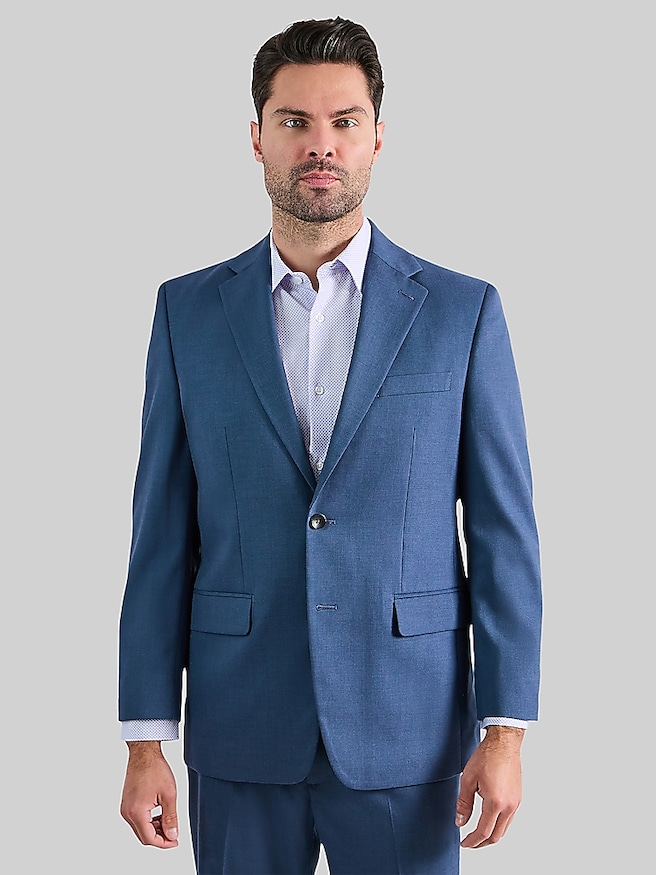
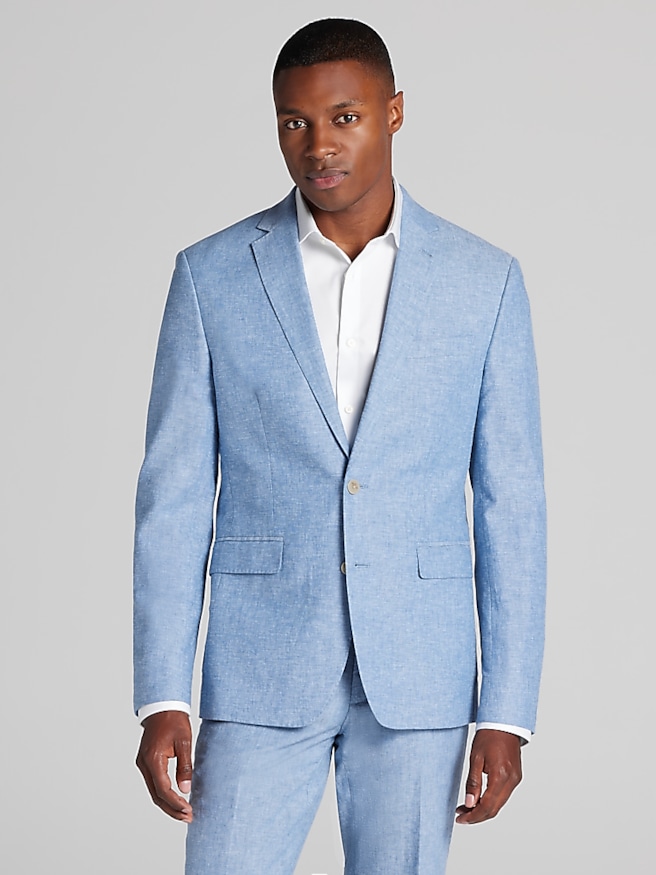
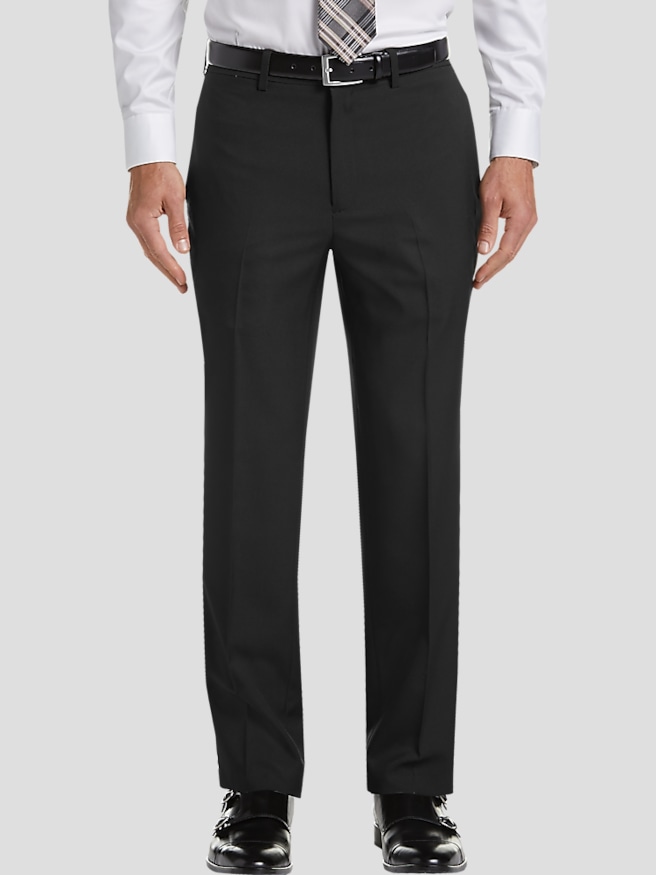
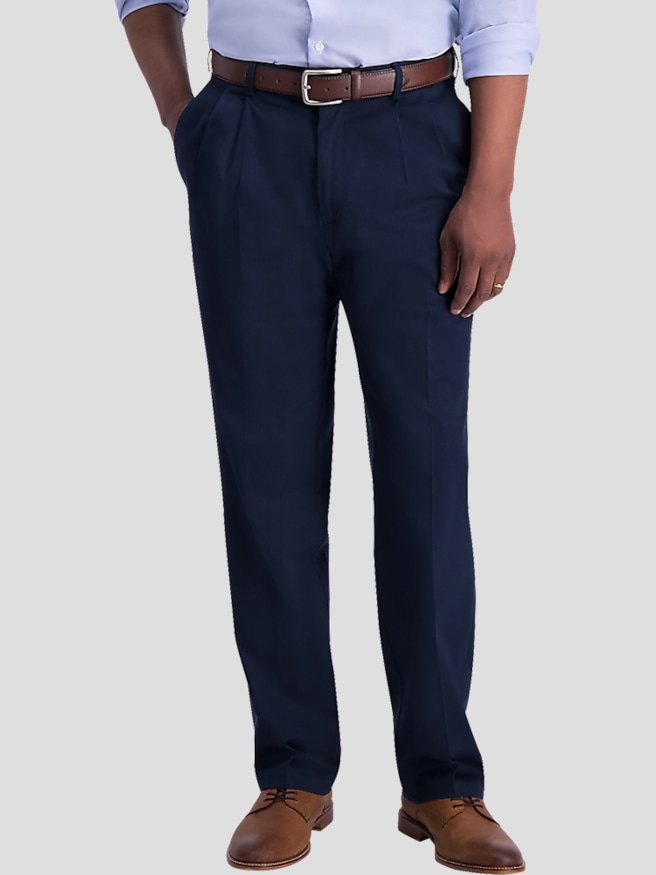
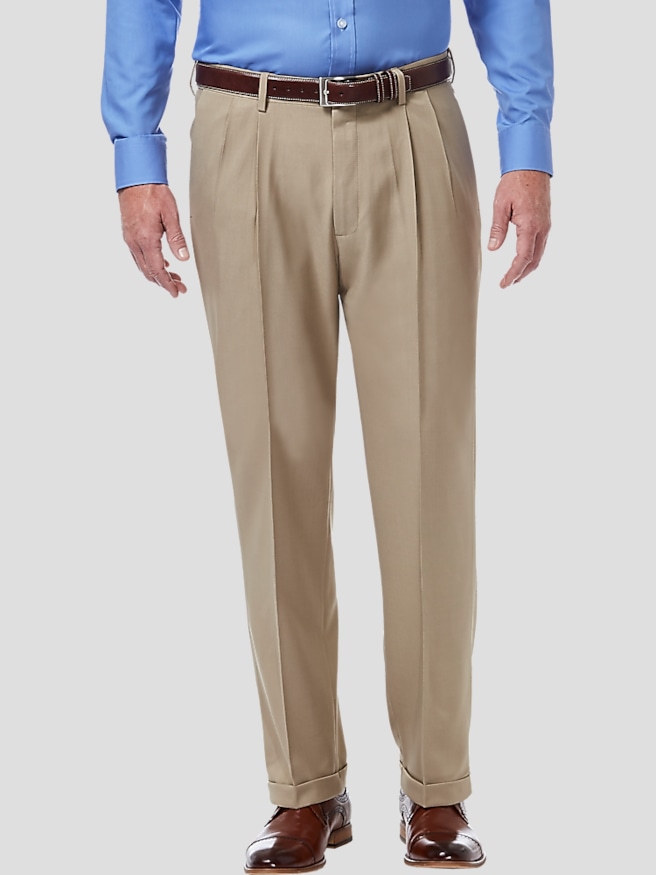
Dusty blue pants bring a softer note to a wardrobe built around navy, gray, and tan. The color sits between familiar blue and muted gray, giving trousers enough character to stand apart without making the rest of an outfit difficult to coordinate. That subdued quality works especially well for men who want an alternative to dark dress pants but still prefer an understated look. Against a white shirt, dusty blue feels crisp; beside cream knitwear or a textured brown jacket, it takes on a warmer, more relaxed appearance. The shade can also shift with the fabric and lighting, looking cooler in daylight and slightly grayer indoors. For an office with a business-casual dress code, dusty blue trousers can pair naturally with a pale shirt, a navy blazer, and dark brown leather shoes. For dinner or a family gathering, a fine-gauge sweater and suede loafers give the same color a less structured setting. During the cooler months, charcoal outerwear, substantial knitwear, and deeper brown accessories help pale blue tones feel grounded rather than summery. Dusty blue pants can also suit daytime wedding guests and other celebrations when the invitation allows separates, though the dress code should always determine how formal the outfit needs to be. A tailored pair with a sharp crease reads differently from a washed cotton pair with casual pockets, even when their colors are close. Men exploring a similar palette with a more casual emphasis may also consider blue khaki pants, where the familiar chino look offers another way to wear blue beyond denim. Across these settings, the appeal is versatility with a little distinction: a quiet color that complements established wardrobe staples while giving everyday combinations a fresh point of interest. Keeping neighboring colors simple lets the shade do its work, whether the finishing touch is a chocolate leather belt, a patterned pocket square, or a clean, understated pair of shoes.
Fabric and construction have as much influence on dusty blue pants as the shade itself. Cotton twill generally has a visible diagonal weave and a practical, easygoing character, making it a natural choice for casual offices, weekend plans, and travel days that involve plenty of sitting and walking. Depending on its weight and finish, cotton can feel crisp and structured or softer and more broken-in. Wool and wool-blend trousers often provide a smoother drape and a more tailored appearance, especially with a pressed crease. A lightly textured weave can add depth to the muted color, while a smooth finish creates a cleaner line under a blazer. Fabrics with stretch may offer extra ease through the seat and knees, but the fiber blend alone does not determine comfort or shape retention; weave, fabric weight, and construction matter, too. For cooler weather, a midweight cloth can feel more substantial alongside sweaters and jackets without requiring a heavy, bulky silhouette. Fit deserves the same attention. The waistband should sit securely without digging in when seated, and the pockets should lie reasonably flat rather than pulling open. A slim fit creates a closer outline through the leg, while a straight or more relaxed cut allows additional room and can balance heavier footwear. Neither should require fabric to strain across the thighs or seat. The rise affects where the waistband rests and how comfortably a tucked shirt stays in place, especially through a full day at a desk or an evening at a table. Hem length changes the finish: little or no break gives a neat, precise line, while a slight break offers a more traditional appearance over dress shoes. Trying pants with the shoes intended for them makes those proportions easier to judge. For gifting, a known waist size is only part of the picture; inseam, preferred rise, and the recipient’s usual fit are equally useful clues. Dusty blue is particularly thoughtful for someone who already enjoys neutral separates and would appreciate a subtle addition rather than a dramatic change.
Lasting wear starts with choosing pants that suit the routine they will actually see. A pair intended for frequent commuting benefits from comfortable movement, secure pocket construction, and a fabric that holds its shape through repeated sitting. Trousers reserved for celebrations may place more emphasis on drape, a clean crease, and a refined surface. Close, even stitching, neatly finished seams, and firmly attached fastenings are useful signs to examine, although no single detail guarantees durability. Care should follow the garment label rather than assumptions about color or fiber content. Some cotton and blended fabrics can be machine washed, while certain tailored trousers require dry cleaning or another specified method. For washable pants, turning them inside out and using the recommended cycle can help reduce surface abrasion; avoiding unnecessary heat can also help protect fit and finish. Prompt attention to a spill matters on a muted, lighter shade, but vigorous rubbing can spread a mark or disturb the fabric surface. Blotting gently and following appropriate care directions is a better starting point. Between wears, airing trousers and hanging them neatly helps keep them presentable, and alternating pairs allows time for moisture to dissipate. A steamer or iron may restore a smooth appearance when the care label permits it, with the correct heat setting and a pressing cloth where needed to reduce the risk of shine. Styling can be just as practical as maintenance. For a day that moves from the office to an evening meal, dusty blue pants with a light blue shirt and a dark knit layer offer a cohesive combination without an exact color match. A cream shirt brings more contrast, while a burgundy sweater adds richness without overpowering the trousers. Subtle checks or narrow stripes can introduce pattern when the rest of the outfit stays restrained. The most useful pair is ultimately one whose fabric, proportions, and care requirements fit comfortably into daily life, making dusty blue an easy color to reach for rather than one saved for a single occasion.