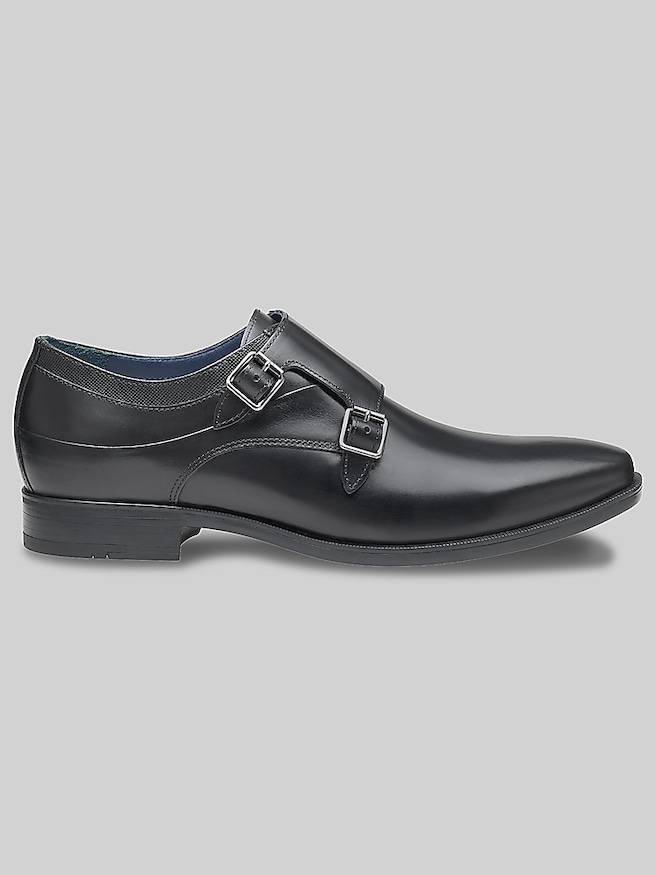
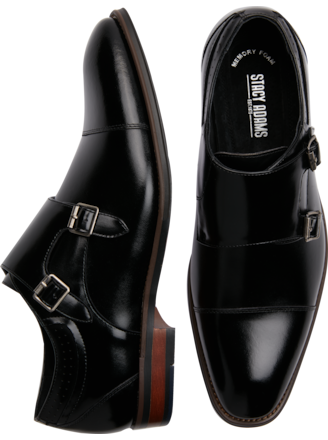
Double strap shoes, commonly called double monk strap shoes in men’s dress footwear, have two straps and buckles across the instep in place of traditional laces. An overlapping panel covers the top of the foot, creating a clean silhouette with a distinctive hardware detail. Compared with a single monk strap, the double-strap design adds a second buckle and a stronger visual accent, while retaining the polished appearance associated with leather dress shoes. The result fits naturally into a tailored wardrobe without looking quite like an oxford or a slip-on loafer. Shape and finish make a substantial difference in the overall impression. A gently rounded or almond-shaped toe tends to look understated, while a longer, narrower profile creates a sharper line beneath dress pants. Plain-toe designs keep the focus on the straps; cap-toe seams and decorative perforations add texture and definition. Smooth leather generally has a more formal appearance than suede, whose soft surface works particularly well with less structured tailoring. Black leather offers a crisp, restrained look, while shades of brown range from rich chocolate to lighter tan with more visible depth and variation. Buckle color also influences the character of the shoe: subtle hardware blends into an outfit, while brighter metal draws attention to the closure. Beyond appearance, the materials and construction affect how a pair feels and wears. Leather uppers can develop creases and a patina with use, and their longevity depends on leather quality, construction, and regular care. Suede needs a different cleaning routine to preserve its nap. Leather soles offer a traditional finish, while rubber soles can provide added grip and cushioning, depending on their design. Welted construction may make resoling possible, although repair options depend on the individual shoe. A balanced heel, neatly finished edges, and secure stitching all contribute to a refined appearance that holds up beyond the first few wears.
Double monk strap shoes work with business suits, separate jackets and trousers, chinos, and dark denim, making them useful for men whose schedules move between polished and relaxed settings. With a navy suit and a white shirt, dark brown leather introduces warmth without competing with the tailoring. A charcoal suit paired with black dress shoes with buckles creates a more restrained combination, especially when the belt and other leather accessories have a similar finish. Exact color matching is less important than keeping those details visually consistent. Suede and textured trousers create a softer combination for a dinner reservation or a gathering where a full suit would feel unnecessary. Dark, clean-lined jeans can also work with double straps, particularly when the shoes have a slightly fuller shape rather than a very narrow, formal profile. Trouser length matters because the buckles are part of the design: a clean hem with little excess fabric allows the upper to remain visible instead of disappearing beneath stacked pant legs. Fit deserves just as much attention as the outfit. The widest part of the foot should sit comfortably within the widest part of the shoe, with enough toe room to avoid pressure at the front. Straps provide some adjustment over the instep, but they cannot correct a shoe that is too short, too narrow, or too roomy through the heel. A higher instep may need more space beneath the overlapping panel, while a lower instep may feel more secure with a closer-fitting shape. Socks influence that fit, so the thickness normally worn with dress pants is the most useful reference. Leather may soften as it breaks in, but persistent pinching, numbness, or heavy heel movement are signs of a poor fit rather than something to ignore. Comfortable double straps should feel secure while walking, sitting through a meeting, and standing through a reception, without requiring the buckles to be pulled excessively tight.
For office days, wedding celebrations, graduation ceremonies, and dinners that call for thoughtful dressing, double strap dress shoes offer a recognizable detail without relying on bold color or elaborate decoration. They can suit a groom, a wedding guest, a professional building a work wardrobe, or someone who prefers buckles to lace-up closures. At the most formal events, the stated dress code still determines whether monk straps are appropriate. As a gift for a partner, father, brother, or close friend, footwear is most successful when the recipient’s size, preferred width, and usual style are already known; an appealing design cannot substitute for a comfortable fit. Long-term satisfaction also depends on straightforward maintenance. Dust and surface grit can dull leather, so a soft brush or cloth after wear helps keep the upper clean. Smooth leather benefits from an appropriate conditioner used sparingly and polish suited to its color and finish, following the shoe care instructions. Suede calls for a suede brush and compatible cleaning products rather than ordinary leather cream. Testing any treatment on a discreet area helps prevent an unwanted change in color. Buckles should be opened before putting shoes on or taking them off, rather than forcing the foot past a fastened strap and stressing the closure. A shoehorn helps protect the heel counter, and properly sized shoe trees can help maintain shape between wears. Allowing shoes to rest between outings gives the interior time to dry naturally; direct heat can damage leather and should be avoided. Soles, heel edges, strap holes, and buckle attachments deserve occasional attention because wear in those areas can affect both comfort and appearance. A cobbler can assess loose hardware, worn heels, or resoling needs before damage becomes more extensive. With a comfortable fit, a versatile finish, and consistent care, double strap shoes can become a dependable part of a wardrobe, bringing the same distinctive buckle detail to a carefully tailored suit or a simple combination of trousers and a collared shirt.