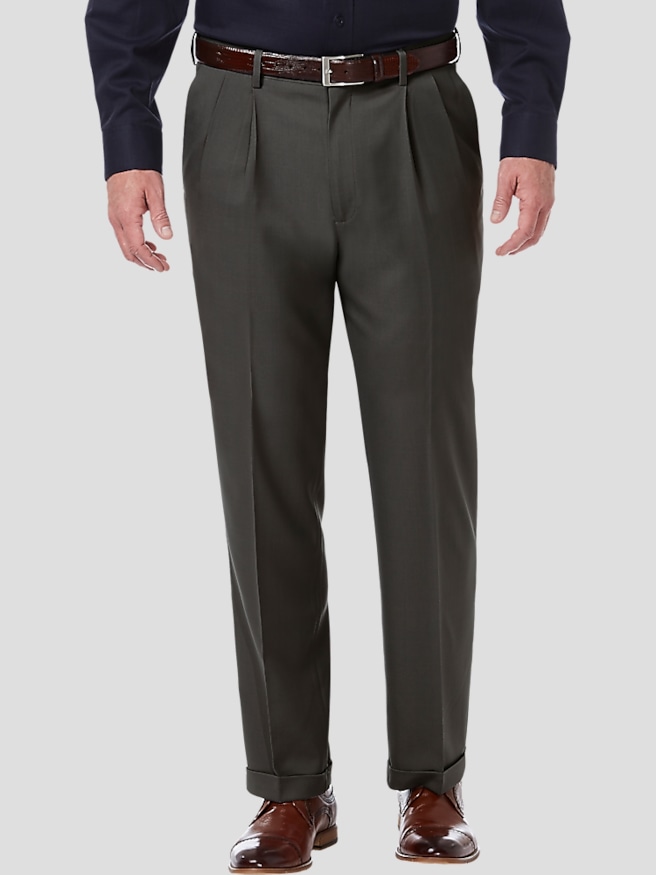
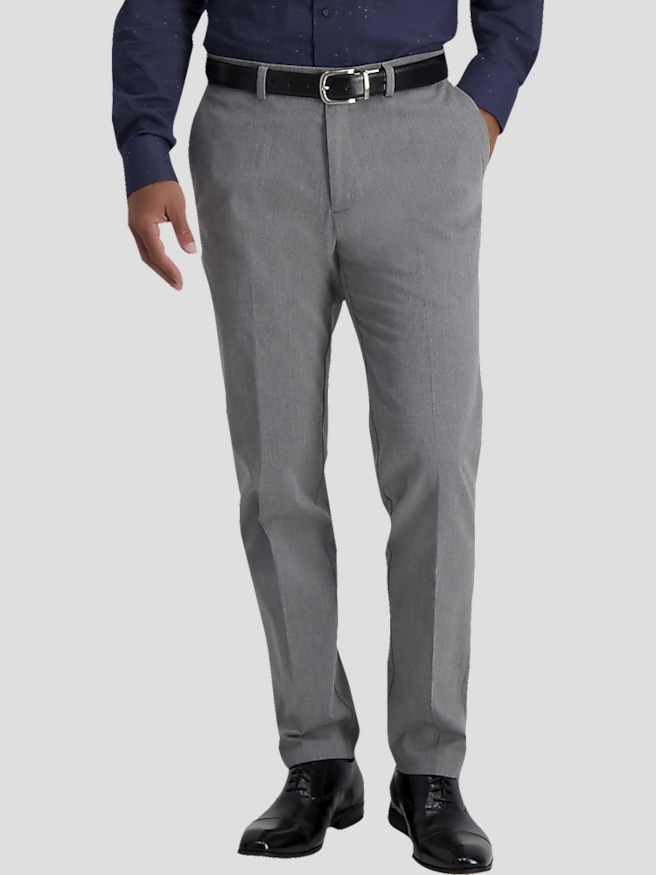
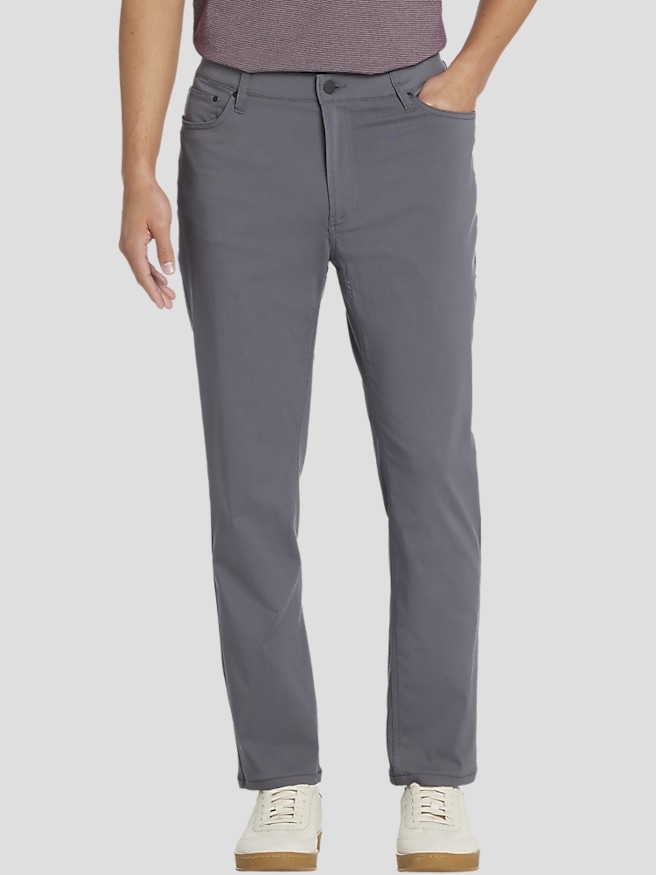
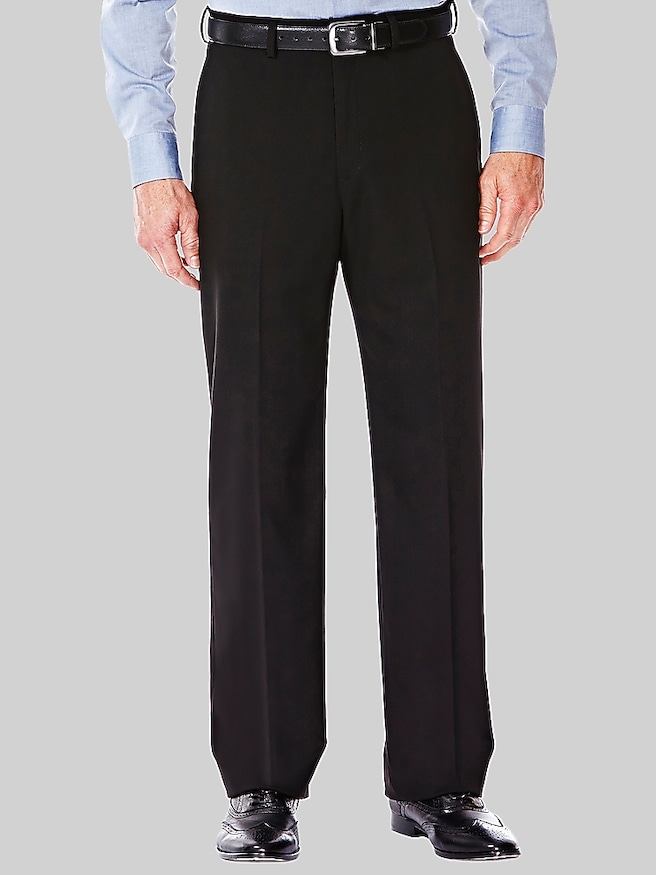
Dinner pants are tailored trousers worn for evening meals and dressier occasions, ranging from polished dress pants for a restaurant reservation to formal tuxedo trousers for a black-tie dinner. The right level of formality depends on the invitation, setting, and clothing worn with them. A pair of charcoal dress trousers can look at home beneath a sport coat at an anniversary dinner, while tuxedo pants belong with a coordinating dinner jacket and the details expected by the event’s dress code. Both share an emphasis on a clean silhouette, comfortable movement, and fabric that looks refined under evening lighting. Wool is a traditional choice because it drapes smoothly, holds a crease well, and offers natural resilience against everyday wrinkling. Fine worsted wool has a relatively smooth surface that works especially well with tailored jackets, while textured weaves can lend depth to a less formal combination. Wool blends may combine that structured appearance with added durability or stretch, depending on their composition. Cotton trousers offer a more relaxed alternative for dinners where a jacket is optional, though they generally develop more visible creasing through an evening. Fabrics with a small amount of elastane can provide some give when sitting through several courses without giving up a tailored appearance. Color also helps establish the mood. Black feels crisp and understated, charcoal offers a versatile foundation, and navy pairs naturally with a broad range of shirts and jackets. Subtle patterns can add interest, but a restrained weave is often easier to coordinate than a bold check when the rest of the outfit already has texture. For restaurant plans that call for polish without full formalwear, Date Night Pants explores a closely related approach to evening dressing. Whether the occasion is a quiet table for two, a rehearsal dinner, or a business meal, dinner trousers help make an outfit feel intentional without requiring every detail to draw attention.
Fit makes a noticeable difference when dinner pants need to look sharp standing at the host’s station and remain comfortable once seated. The waistband should sit securely at the intended rise without pinching, rolling, or relying on a tightly fastened belt to stay in place. A comfortable seat and enough room through the thighs allow the fabric to fall cleanly rather than pulling into horizontal lines. Slim-fit trousers offer a closer profile through the leg, but they should still allow an easy stride and a comfortable seated position. Straight-leg and classic-fit shapes provide more room while maintaining a tailored outline, especially when the jacket has a fuller cut. Neither a narrow leg nor a generous cut is automatically more formal; proportion and coordination matter more. The rise influences how the trousers meet a tucked shirt and jacket, with a mid or higher rise often creating a continuous line through the waist. Pleats can provide extra room through the upper leg and bring a traditional character to the outfit, while flat-front styles present a simpler surface. Hem length is another small detail with a visible effect. A slight break creates a familiar tailored finish over dress shoes, while little or no break produces a cleaner, shorter line. Excess fabric pooling at the ankle can make otherwise well-fitting trousers look unfinished. Formal tuxedo trousers typically have plain hems rather than cuffs, and a satin or grosgrain stripe may run along the outer seam to coordinate with the dinner jacket’s trim. Depending on their construction, side adjusters or suspender buttons can support a smooth waist without a belt. Dress trousers worn outside black-tie settings offer more flexibility with belts, shoes, and jacket combinations. A pale shirt, dark trousers, and leather loafers can suit an upscale restaurant, while lace-up dress shoes and a coordinating jacket bring more structure to a celebratory dinner. Thoughtful alterations to the waist or hem can sharpen the overall appearance, provided the original cut already fits well through the seat and thighs.
Construction and care help determine how well dinner trousers hold their appearance beyond a single evening. A smooth waistband, neatly finished seams, secure closures, and pockets that lie flat all contribute to a polished result. Partial lining can help trousers move comfortably over the legs, although the amount and placement vary by design. Pocket contents matter, too: a bulky wallet or crowded front pocket can interrupt the line of the fabric even when the fit is otherwise right. For someone who moves between client dinners, family celebrations, and restaurant reservations, versatile dress pants can serve several purposes with a change of shirt, shoes, or jacket. More formal evening trousers have a narrower role, but their value lies in looking appropriate when an invitation calls for black tie. Durability depends on the fabric, construction, fit, and frequency of wear rather than a single fiber claim. Fabric pulled tightly across the seat or thighs experiences added strain, while dragging hems are more likely to fray. Care should follow the garment’s label, particularly with wool, linings, decorative side stripes, or stretch blends that may need specific treatment. Some trousers require professional dry cleaning; others permit machine washing under stated conditions. Between cleanings, airing trousers and gently brushing suitable fabrics can help remove surface dust and keep them looking tidy. Hanging them neatly on a trouser hanger helps preserve their shape, and allowing space in the closet reduces unnecessary crushing. Pressing also deserves attention: excessive heat or direct pressure can leave shine on some fabrics, so the recommended settings and a pressing cloth matter. A food or drink spill is best addressed promptly and gently, without vigorous rubbing that can spread the mark or disturb the surface. For frequent dinners away from home, pants that combine a dependable fit with manageable care requirements are easier to keep in regular rotation. The strongest foundation is a pair that sits comfortably, complements the occasion, and retains a clean line from the first greeting through the last conversation at the table.