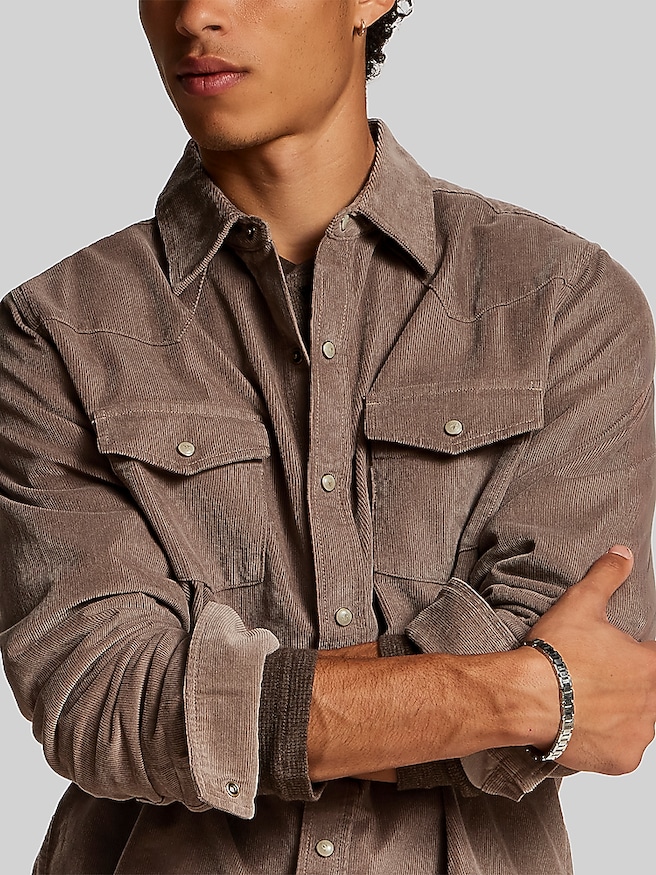
Denim western shirts are an American workwear staple, typically recognized by pointed front and back yokes, two chest pockets with flaps, and snap closures that may have pearlized or metal finishes. These details give the familiar denim shirt a more distinctive shape: the yokes frame the shoulders, the pocket flaps add structure, and the snaps create a clean line down the front. Some interpretations use buttons or more understated pocket treatments, so the western character comes from the overall combination of details rather than a single feature. Rooted in ranch clothing and everyday utility, the style works just as naturally for a country concert, a casual dinner, or an afternoon spent around town. Denim itself is a woven twill fabric, usually made primarily from cotton, with a diagonal texture that contributes to its recognizable appearance and sturdy feel. Traditional blue denim often combines indigo-dyed yarns with lighter yarns, creating a surface that develops subtle variation with wear. Lighter shirt-weight denim tends to drape more easily, while heavier fabric gives the collar, cuffs, and pockets a more substantial outline. Neither weight automatically determines quality; the right feel depends on whether the shirt is intended to sit neatly beneath a jacket, stand alone, or serve as an open layer over a T-shirt. A small amount of stretch can add flexibility, while all-cotton denim offers a more traditional fabric feel. Wash and finish also influence the impression. Deep indigo reads crisp and understated, faded blue emphasizes the casual workwear character, and black denim gives western detailing a quieter, more streamlined look. Contrast stitching makes the construction more visible, while tonal stitching lets the fabric and silhouette take the lead. Chambray can resemble lightweight denim from a distance, but its plain weave differs from denim’s twill construction, an important distinction for anyone drawn to a particular texture or drape.
Fit gives a denim western shirt much of its versatility. A close, tailored shape can look polished with chinos or dark jeans, provided there is enough room through the chest and upper arms for comfortable movement. A regular or relaxed fit leaves more space through the body and can work well worn open over a simple knit shirt. Shoulder seams generally sit near the natural edge of the shoulder in a conventional fit, while intentionally roomier cuts may extend farther. Across the chest, a smooth placket helps preserve the shirt’s lines; pulling between closures can suggest that more room is needed. The back yoke should sit comfortably when reaching forward, and the sleeves should allow the elbows to bend without excessive tension. Stretch can make movement easier, but it does not replace an appropriate cut. Length matters, too. A longer shirttail helps a tucked shirt stay in place when sitting or moving, while a shorter hem can create a balanced untucked shape. Fabric thickness affects that decision because substantial denim can add bulk at the waistband. With jeans, a noticeable difference in wash makes the combination feel deliberate: a faded shirt against dark denim creates separation without requiring an exact color match. Similar washes can also work together, especially when a plain T-shirt, leather belt, or contrasting footwear breaks up the look. Chinos offer another direction, softening the workwear association while keeping the outfit relaxed. Boots reinforce the western influence, but clean sneakers or casual leather shoes give the same shirt a more understated setting. For a dinner after a day out, a neat tuck and an unembellished belt can bring definition without making the outfit feel formal. Beneath an unstructured jacket, flatter pocket details and a comfortable shoulder fit help the layers sit smoothly. The strongest combinations usually give the shirt’s yokes, pockets, and denim texture enough space to be noticed without competing with several other prominent details.
Durability depends on more than the thickness of the fabric. Even stitching, securely attached closures, finished seams, and well-constructed pocket corners all contribute to a denim western shirt that holds its shape through repeated wear. Areas such as cuffs, elbows, collar edges, and pocket openings naturally receive more friction, and denim may gradually show lighter color at those points. That worn-in character is part of the fabric’s appeal, although pronounced distressing and a clean, uniform finish create very different impressions. Care should follow the garment’s label because fiber blends, dyes, finishes, and decorative details can require different treatment. For machine-washable denim, turning the shirt inside out and washing with similar colors can help limit surface abrasion and reduce the risk of visible dye transfer to lighter clothing. Deep indigo may release color, particularly early in its life, so contact with pale upholstery or accessories deserves attention as well. Excessive heat can contribute to shrinkage or affect stretch fibers; the recommended drying method matters more than a one-size-fits-all routine. Promptly reshaping the collar, smoothing the placket, and hanging or folding the shirt neatly can help maintain its appearance. When ironing is permitted, working around snaps and following the recommended temperature helps protect both the fabric and the hardware. Within the broader tradition of western shirts for men, denim offers a recognizable balance of texture, practicality, and personal character. It can suit someone who already wears boots and jeans daily or someone who simply appreciates a casual shirt with more distinctive construction. As a gift, the most useful considerations are the recipient’s usual shirt measurements, preferred fit, and comfort with details such as contrast stitching or pronounced yokes. A familiar wash and an easy-to-style silhouette can make the shirt a natural addition to an established wardrobe, while expressive stitching or a stronger faded finish may better reflect someone whose everyday clothing already has a western influence.