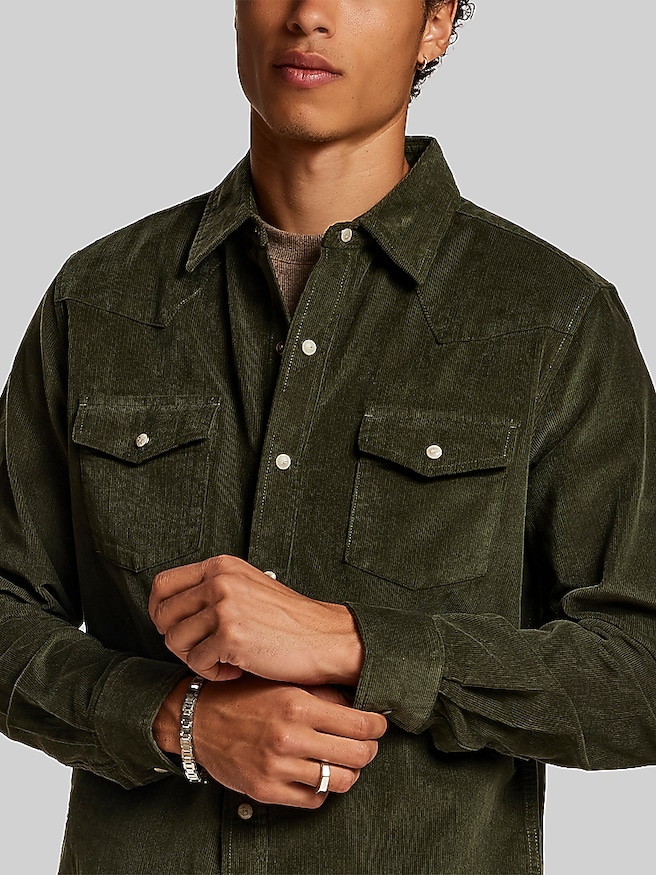
Corduroy western shirts combine the raised ribs of corduroy fabric with design details associated with traditional western wear, including shaped shoulder yokes, pointed collars, and chest pockets. Many have snap-front closures, sometimes with pearl-effect finishes, while others use buttons for a more understated interpretation. The result is a casual shirt with more surface texture than a smooth woven button-down and a distinctive look that works well beyond a ranch setting. Corduroy is commonly made from cotton or cotton blends, with a cut-pile surface that forms parallel ridges known as wales. Fine-wale fabric has narrower, more closely spaced ribs and often creates a subtler texture; wider wales make the ridges more noticeable. Wale size alone does not determine weight or softness, so fabric composition and construction matter alongside appearance. A small amount of stretch fiber can add give across the shoulders and elbows, while an all-cotton fabric may appeal to someone who prefers a more traditional feel. Western detailing adds another layer of character. A pointed front yoke frames the upper chest, a shaped back yoke defines the shoulders, and flap pockets reinforce the shirt’s workwear influence. These features vary by design, so the overall effect can range from restrained to distinctly vintage-inspired. A simple snap front and tonal stitching can feel easy to wear with everyday basics, while prominent yokes and contrasting details make a stronger statement. Within the broader category of Mens Corduroy Shirts, western styling offers a recognizable identity without requiring a head-to-toe cowboy look. The fabric’s nap also catches light differently as it moves, giving even a solid-colored shirt visual depth. Brown, tan, navy, and other grounded shades can complement denim and leather, while a deeper or more saturated color lets the ribbed texture become a focal point. That balance of familiar shape and tactile detail is a large part of the category’s appeal.
Fit determines whether a corduroy western shirt reads as a neat everyday button-up or a relaxed outer layer. Across the shoulders, the seams should generally sit near the natural shoulder edge without pulling when the arms reach forward. The chest needs enough room for comfortable movement, with no persistent gaps between snaps or buttons. Because corduroy has a raised surface and can have more body than a lightweight woven fabric, a very tight fit may create bunching around the upper arms and strain at the front closure. A closer cut can still look clean when it follows the torso without gripping it. A relaxed fit offers more space for a T-shirt underneath, but extra width should not leave the shoulder line collapsing or the sleeves swallowing the hands. Checking the garment measurements against a shirt that already fits well is especially useful when choosing between a trim silhouette and an overshirt-style fit. Sleeve length, cuff openings, and hem shape deserve attention, too. A curved hem often works well tucked into jeans or chinos, while a shorter hem can look balanced worn loose. For an untucked outfit, the shirt should cover the waistband without extending so far that it overwhelms the proportions of the pants. Dark, straight-leg denim creates an easy pairing that lets the texture and yokes stand out. Chinos soften the western influence and work well for a casual dinner, a relaxed office, or an afternoon gathering. Boots echo the shirt’s heritage, while simple leather sneakers keep the combination more understated. One or two western elements are usually enough to establish the mood; a textured shirt does not need an oversized belt buckle or elaborate footwear to look intentional. Worn open over a plain crewneck, it adds depth without demanding a complicated outfit. Buttoned or snapped and tucked in, it creates a sharper line, especially when the belt and shoes share a similar level of formality. Keeping neighboring fabrics relatively smooth allows the corduroy’s ribs to remain visible rather than competing with several equally strong textures.
The appeal of a corduroy western shirt extends beyond its first impression, especially when the fabric, construction, and care requirements suit the wearer’s routine. Even stitching, securely attached closures, and neatly finished pocket edges are useful details to examine. Corduroy’s substantial appearance does not automatically make every shirt suitable for demanding physical work, and decorative western features should not be mistaken for protective construction. For everyday use, a good fit helps reduce unnecessary pulling at seams, cuffs, and pocket corners. Areas exposed to repeated friction, such as elbows and cuffs, may gradually develop a softer or flatter nap, contributing to a worn-in appearance. Care should follow the garment label because cotton content, stretch fibers, finishes, and trim can call for distinct treatment. When machine washing is permitted, turning the shirt inside out and washing with similar colors can help limit surface abrasion and color transfer. Avoiding an overloaded machine gives the fabric more room to move, and removing the shirt promptly afterward can reduce deep creases. Drying instructions matter: excessive heat can affect fit and damage some fibers or finishes, while hanging a wet, heavy shirt carelessly may distort its shape. If pressing is allowed, working from the reverse side with the recommended heat setting can help protect the raised texture. A suitable steamer may ease wrinkles without flattening the ribs, provided the care label permits that treatment. Snap-front shirts also benefit from being opened at the fasteners rather than pulled apart by the surrounding fabric. For someone who regularly wears denim, boots, or casual button-ups, this style can make a thoughtful birthday or graduation gift with a little more personality than a plain shirt. Shoulder fit, sleeve length, preferred colors, and willingness to follow the care routine are more useful gift considerations than size alone. The strongest choice feels natural in the recipient’s existing wardrobe: distinctive enough to be appreciated, comfortable enough to reach for often, and versatile enough for ordinary days as well as casual occasions.