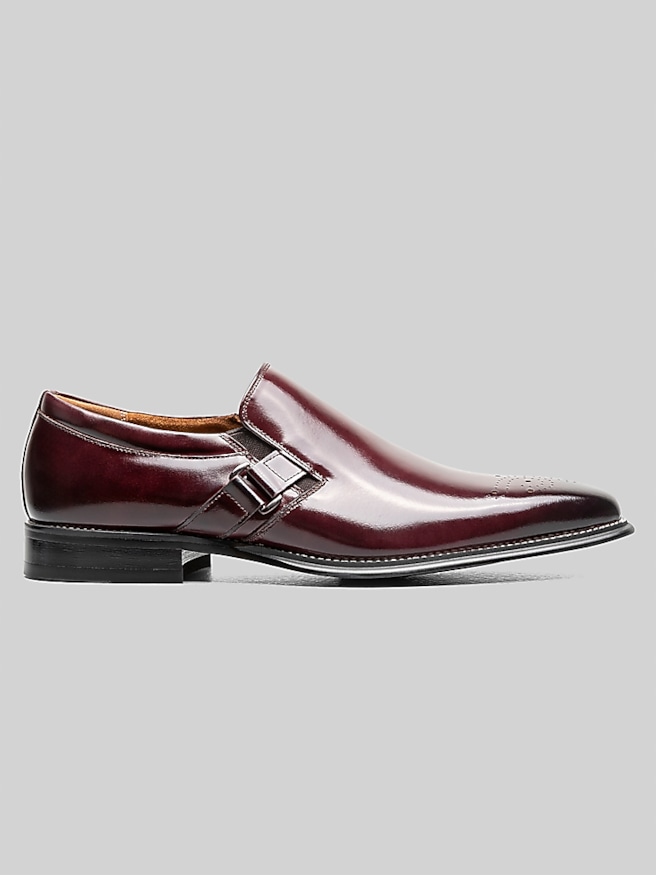
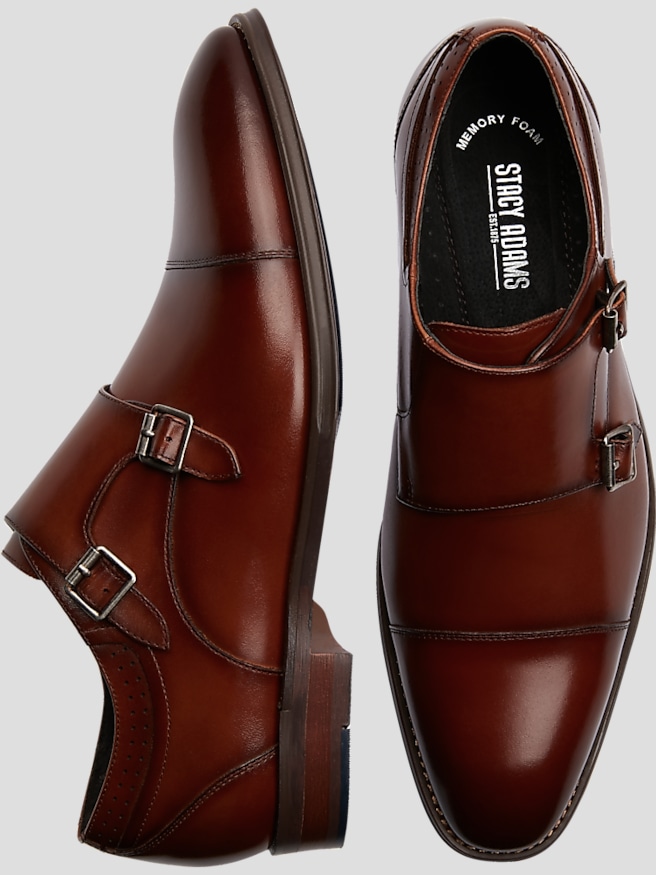
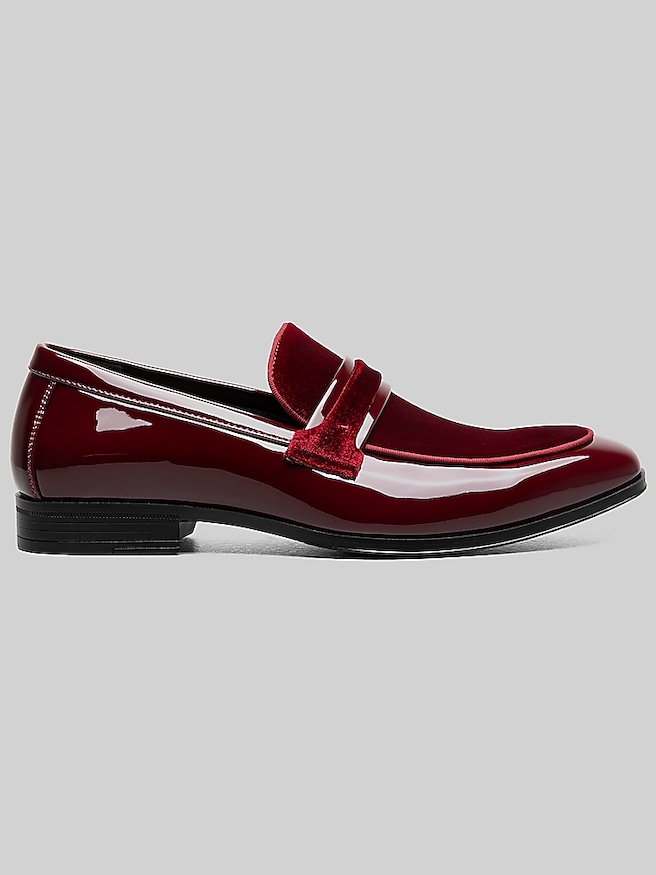
Dark red dress shoes bring a rich, understated accent to tailored clothing, with shades ranging from wine-toned burgundy to brown-leaning oxblood and deep cherry red. These colors sit between familiar brown footwear and brighter statement shades, adding distinction without overwhelming a suit or a neatly pressed pair of trousers. Burgundy often has a subtle purple undertone, while oxblood generally reads as a deeper red with brown or almost-black shading; color names can vary, so the actual finish matters more than the label alone. A smooth, evenly colored upper creates a restrained appearance, while burnished toes and darker edges give the leather more visual depth. Shape and detailing also influence the overall impression. An oxford’s closed lacing creates a compact, tailored profile, making it a natural companion to a business suit. A derby’s open lacing has a slightly more relaxed character, while a streamlined loafer works well with tailored separates and less formal office clothing. Cap toes provide definition without much ornamentation; wingtip patterns and decorative perforations add texture and generally make a shoe feel less formal. Against navy trousers, dark red leather creates a clear but measured contrast. With charcoal or medium gray, it adds warmth to an otherwise neutral outfit. Brown, taupe, and olive separates can also complement the color, particularly when the shoe has a brown undertone. A burgundy belt can create continuity, though an exact color match is less important than compatible depth, finish, and formality. Shirts and ties do not need to repeat the shoe color; a white shirt and a subtly patterned tie often leave enough space for the footwear to stand out naturally. When choosing red dress shoes for a wedding, the suit color, venue, and stated dress code all deserve consideration. Dark red can complement many wedding suits, but it is not a universal substitute for the black footwear traditionally associated with black-tie attire.
Materials and construction shape how dark red dress shoes look, feel, and hold up through repeated wear. Smooth leather supports a polished appearance and can develop subtle creasing and character over time. Full-grain leather retains the hide’s natural surface, while corrected-grain leather has been treated to create a more uniform appearance; neither description alone establishes how comfortable a finished shoe will be. Suede gives burgundy a softer, more muted look that pairs comfortably with textured trousers and tailored casual clothing, though its care requirements differ from those of smooth leather. Synthetic uppers also require material-specific care, and products intended for natural leather may not suit their finish. Inside the shoe, lining texture, seam placement, cushioning, and the shape of the footbed all affect comfort. A soft lining is useful, but it cannot compensate for a toe box that crowds the forefoot or a heel that slips with every step. A good fit holds the heel securely, gives the toes room to rest naturally, and allows the widest part of the foot to align with the widest part of the shoe. Trying dress shoes with the socks intended for them provides a more realistic sense of fit than using unusually thick athletic socks. Feet can expand over the course of a day, so an afternoon fitting may reveal pressure that is less noticeable earlier. Leather may soften with wear, but shoes should not need a painful break-in period to become wearable, and insufficient length will not resolve through stretching. Lace-up styles allow some adjustment across the instep, while loafers depend more heavily on a close match between foot shape and shoe shape. Outsoles deserve attention, too. Leather soles offer a traditional dress-shoe profile; rubber soles can provide cushioning and traction, depending on their design. For a commute followed by several hours at a desk or an event with extended standing, support, flexibility, and secure footing matter as much as the silhouette.
Regular care helps preserve the depth of dark red leather and keeps small signs of wear from becoming more noticeable. Dust can dull a polished finish, so a soft cloth or horsehair brush is a useful starting point after wear. Smooth leather benefits from occasional conditioning with a compatible product, applied sparingly rather than layered on heavily. Burgundy polish is not interchangeable with every dark red shade: a formula that is too purple, too brown, or too bright can gradually alter the appearance. Testing a small amount on an inconspicuous area helps check compatibility before treating the entire upper. Neutral products may be suitable for some finishes, but the care instructions should take priority, especially for coated, burnished, or specialty leathers. Suede needs a dedicated brush and an appropriate cleaner rather than conventional shoe cream or wax. Allowing shoes to dry naturally away from direct heat helps protect the uppers, while cedar shoe trees can help maintain shape and absorb residual moisture between wears. A shoehorn reduces unnecessary pressure on the heel when putting shoes on. Alternating pairs gives interiors time to air out, and checking heel edges and soles for uneven wear can identify repairs before damage spreads. Repair options depend on construction, so a shoe repair professional can assess whether replacing a heel or sole is practical. These details matter for footwear intended to move between client meetings, presentations, dinners, and celebrations rather than serve only a single occasion. Dark red dress shoes can also make a thoughtful gift for someone who already enjoys tailored clothing and wants a color beyond black or brown. Knowing the recipient’s size, width, preferred fastening, and usual dress code makes the choice more personal. The most useful pair is one that complements an existing wardrobe, fits securely, and feels appropriate for the places it will actually be worn.