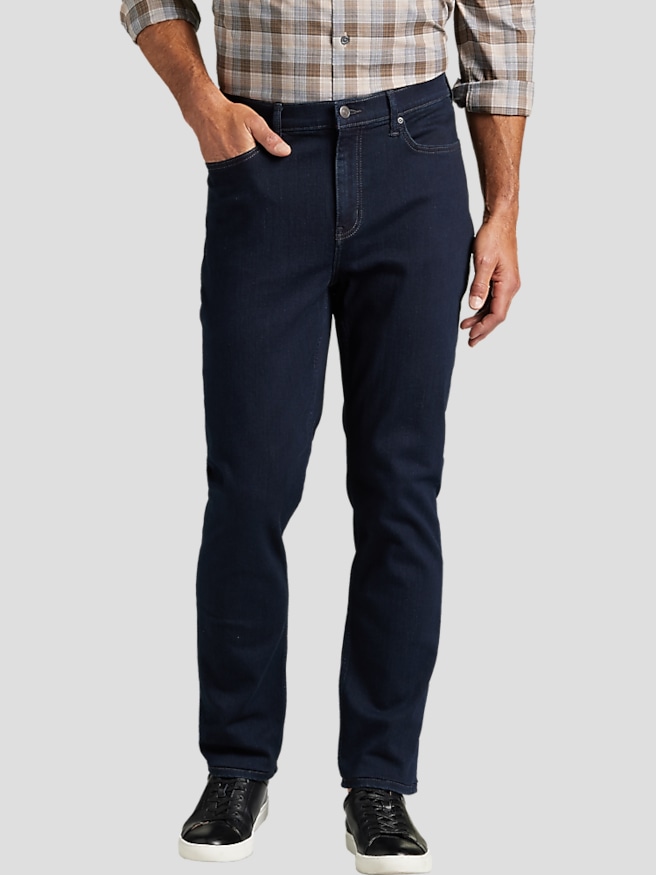
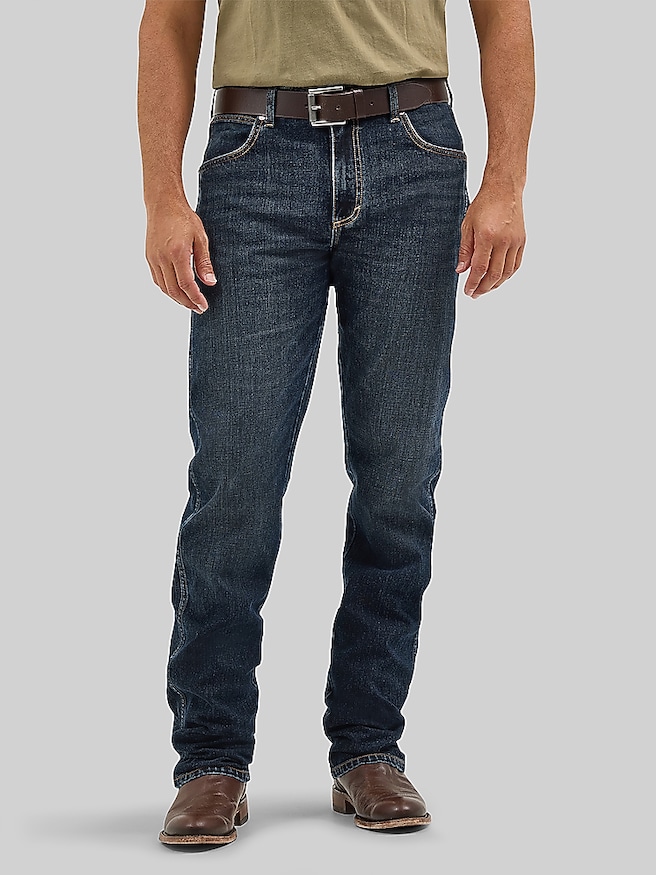
Dark blue jeans are denim pants with a deep blue or indigo color, offering a versatile middle ground between relaxed everyday denim and a more polished casual look. Their appearance can range from an even, dark rinse with very little fading to a gently washed finish with subtle variation at the seams and pockets. That distinction matters: a uniform color tends to look cleaner with a tucked-in shirt, while visible fading gives an outfit a more laid-back character. Indigo-dyed denim also develops character through wear, gradually revealing lighter tones where the fabric bends and rubs. Much of denim’s familiar texture comes from its twill construction, which creates the fine diagonal lines visible across the surface. Cotton provides the foundation, with a substantial feel that can soften over time. Some denim includes a small amount of elastane or other stretch fibers to make sitting, bending, and walking more comfortable. Stretch content alone does not tell the whole story, though; fabric weight, weave, and the way the jeans are cut all influence how they feel throughout the day. Rigid cotton denim usually feels firmer at first and relaxes with wear, while stretch denim offers more immediate give. Neither is automatically the better choice. Someone who prefers a structured silhouette may appreciate a firmer fabric, while someone who spends long stretches seated may value flexibility through the waist and thighs. Heavier denim often feels more substantial, but weight alone does not guarantee durability. Sound stitching, secure belt loops, and reinforcement around pocket openings also contribute to everyday performance. Within the broader category of Men's Dark Jeans, deep blue denim offers a distinctive balance: the familiar texture of jeans, enough color depth to complement tailored clothing, and an easy connection to everyday shirts, knitwear, and casual footwear.
Fit gives dark blue jeans much of their character, and the most useful labels describe shape rather than a particular body type. Slim fits generally sit closer through the seat and thigh, straight fits maintain a more consistent line down the leg, and tapered fits narrow toward the ankle. A relaxed fit offers additional room, though the exact proportions vary by cut. The best starting point is a waistband that stays comfortably in place without needing a belt pulled tight. Through the seat and thighs, the fabric should allow a natural stride and a seated position without sharp pulling across the front pockets. Extra fabric can be just as noticeable as a tight fit: a sagging seat or large folds below the hips may interrupt the clean line that makes dark denim so adaptable. Rise matters, too. A higher rise places the waistband farther up the torso, while a lower rise sits closer to the hips; comfort depends partly on personal preference and partly on how the jeans work with shirt length and body proportions. At the hem, a slight break over shoes creates a traditional finish, while little or no break gives tapered legs a neater outline. Heavy stacking at the ankle can make an otherwise streamlined pair look bulky. These details become especially useful when dressing for a specific setting. For a casual office that permits denim, an even dark wash with a button-down shirt, an unstructured jacket, and leather loafers can look composed without becoming formal. For dinner with friends, a textured knit shirt and suede boots add depth without competing with the denim. A simple T-shirt and clean sneakers bring the same jeans back to an easy everyday outfit. Deep blue works particularly well with white, gray, olive, tan, and burgundy, allowing the color to anchor an outfit rather than dominate it. Dark denim still remains denim, however, so occasions with a stated business-formal or formal dress code call for clothing suited to those expectations.
Keeping dark blue jeans looking their best involves preserving both the color and the shape of the fabric. The care label is the most reliable starting point because cotton content, stretch fibers, dyes, and finishing treatments can require different handling. When machine washing is permitted, turning jeans inside out, using cold water, and washing with similar dark colors can help limit surface abrasion and noticeable fading. A detergent intended for dark fabrics may also help maintain their appearance when used as directed. Washing after every brief wear is not always necessary, but visible dirt, odors, and the amount of activity should determine the schedule rather than a fixed rule. Small marks may respond to careful spot cleaning; rubbing aggressively can create a lighter patch that stands out against the surrounding indigo. Drying deserves equal attention. High heat can contribute to shrinkage and affect stretch fibers, so follow the label’s instructions and use a lower-heat method when appropriate. Reshape the legs before air drying to reduce twisted seams and stubborn creases. Saturated indigo can transfer onto light upholstery, shoes, or other clothing, particularly when new or damp, so check any color-transfer warnings before pairing deep denim with pale materials. Over time, some fading is normal and can become part of the appeal, especially along pocket edges and natural creases. Rotating between pairs can allow each one to air out and reduce concentrated wear. Dark blue jeans can also make a practical gift for someone who regularly wears denim for casual workdays, travel, or time with friends. Waist and inseam measurements help, but matching a familiar rise and leg shape is just as important. For everyday use, the strongest choice is a pair that feels comfortable while seated, moves easily through a full stride, and complements the shirts and shoes already in regular rotation.