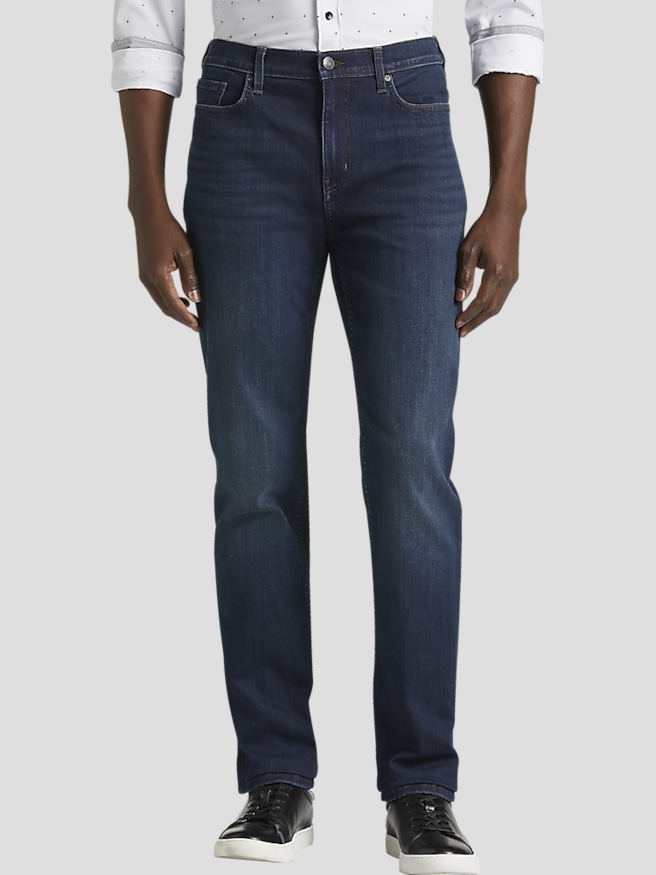
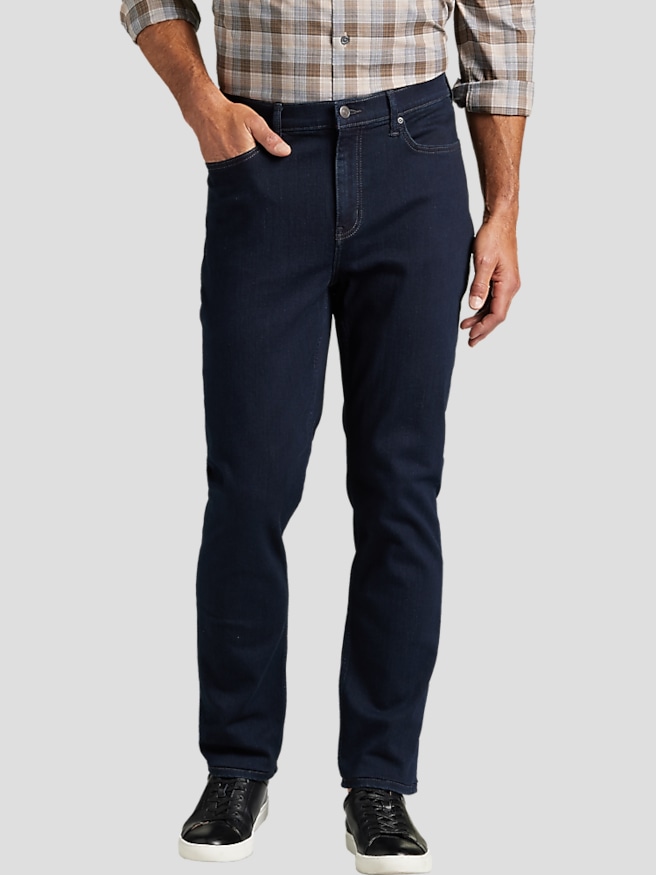
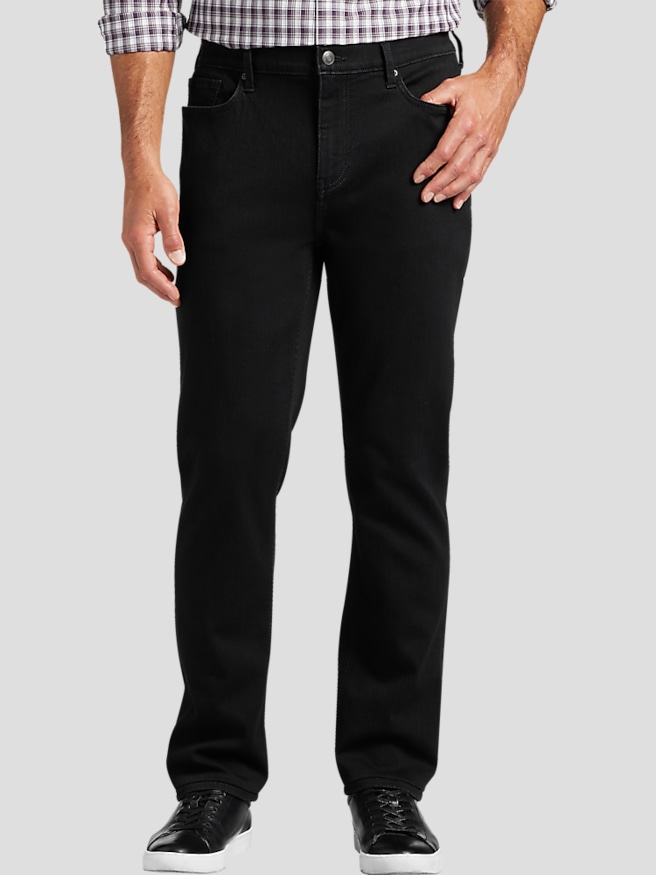
Men’s dark jeans offer a dressier, more versatile look than lighter washes, making them a useful choice for dinners, relaxed work events, and smart-casual settings. Deep indigo, dark blue, charcoal, and black denim create a clean foundation that pairs easily with button-down shirts, knit polos, sweaters, and casual jackets. Their understated appearance comes partly from the wash: less fading, subtle stitching, and minimal distressing allow the shape of the jeans and the surrounding clothing to stand out. A dark, even finish can look polished without losing the familiar texture and comfort of denim. For an office that permits jeans, a dark pair with a tucked-in shirt, leather belt, and loafers strikes a practical balance between professional and relaxed. For dinner afterward, an unstructured blazer adds definition without making the outfit feel overly formal. The same jeans can take on a more casual character with a simple T-shirt and clean sneakers, making them useful for a full day that includes several different plans. Dark blue denim provides a softer contrast against white, cream, gray, and muted green, while black denim creates a sharper outline with tonal layers or a lighter shirt. Charcoal sits between the two, offering depth without the saturated appearance of indigo. These distinctions matter when building outfits around clothing already in a closet. Texture also changes the overall effect: a fine-gauge knit keeps the look smooth, while an Oxford shirt or textured sport coat adds visual interest. Shoes help establish the level of formality, but a dark wash alone does not make jeans appropriate for every occasion. They work best where denim fits the stated dress code, rather than at events that call for a suit or formal attire. For everyday dressing, their appeal is straightforward: they provide the ease of jeans with a more composed appearance, whether the day involves a desk, a restaurant table, or an informal gathering.
Fit determines whether dark denim looks tailored, relaxed, or somewhere between the two. A comfortable waistband should stay in place without needing a tightly cinched belt, and the seat should have enough room to sit naturally without sagging or pulling. Through the thigh, the fabric should allow normal movement rather than forming strong horizontal lines whenever the wearer bends or sits. Straight-leg jeans maintain a relatively consistent line toward the ankle and offer a classic shape that works with sneakers, boots, or casual leather shoes. Tapered cuts provide more room higher on the leg before narrowing toward the hem, while men’s slim fit dark wash jeans follow the body more closely for a streamlined silhouette. Slim does not need to mean restrictive; the right fit leaves enough space through the seat and thighs to walk, climb stairs, and sit comfortably. An athletic build may benefit from additional room through the upper leg, even when a narrower opening is preferred. Rise matters just as much as leg shape because it affects where the waistband rests and how a tucked shirt sits. Length influences the finished appearance, too. A slight break over the shoe often looks neat, while excess fabric stacked at the ankle can interrupt an otherwise clean line. Denim composition adds another layer to these decisions. All-cotton fabric generally has a more structured feel and may soften with wear, while blends containing a small amount of elastane can provide additional give. Stretch can be especially comfortable during a commute or a long stretch at a desk, though the amount of stretch and the fabric’s recovery vary by construction. Fabric weight, weave, and finishing also influence how substantial the jeans feel. A lighter fabric may drape more softly, while heavier denim often holds a firmer shape. Neither is automatically better; the useful choice is the one that balances comfort, structure, and the way the jeans will be worn.
Dark denim develops character over time, and thoughtful care helps preserve the depth of color that makes it so versatile. The care label should always take priority, since fiber blends and finishes can require different treatment. When washing is needed, turning jeans inside out, using cold water when permitted, and choosing a mild detergent can help limit surface abrasion and unnecessary fading. Washing with similar dark colors is especially important for newer denim, which may release dye. Dark indigo can also transfer color through contact, so extra care around pale upholstery, light shoes, and light-colored clothing is worthwhile until the fabric’s behavior is familiar. Bleach and aggressive stain treatments can leave uneven patches, while excessive heat may affect fit or stretch fibers. Air-drying or using a low-heat setting, if the label allows it, can help reduce that stress. Prompt attention to spills and a gentle approach to spot cleaning can keep a small mark from becoming a reason for more intensive washing. Durability depends on more than fabric thickness: secure seams, sound pocket construction, and a fit that does not strain at the crotch or thighs all contribute to everyday wear. Even sturdy denim can wear faster where it repeatedly rubs, making adequate room and comfortable movement important beyond appearance alone. Some gradual fading is normal, especially at the knees, seams, and pocket edges, and gives the fabric a more individual look. For someone who prefers an consistently polished finish, an even dark wash with restrained detailing is an easy starting point. Dark jeans can also be a thoughtful gift for a partner, family member, or friend who regularly wears denim but appreciates a cleaner look for evenings out. Knowing the recipient’s usual waist size, inseam, preferred rise, and favorite leg shape is more useful than relying on size alone. Those familiar details help make dark jeans a natural addition to an established wardrobe rather than a pair that feels unfamiliar from the first wear.