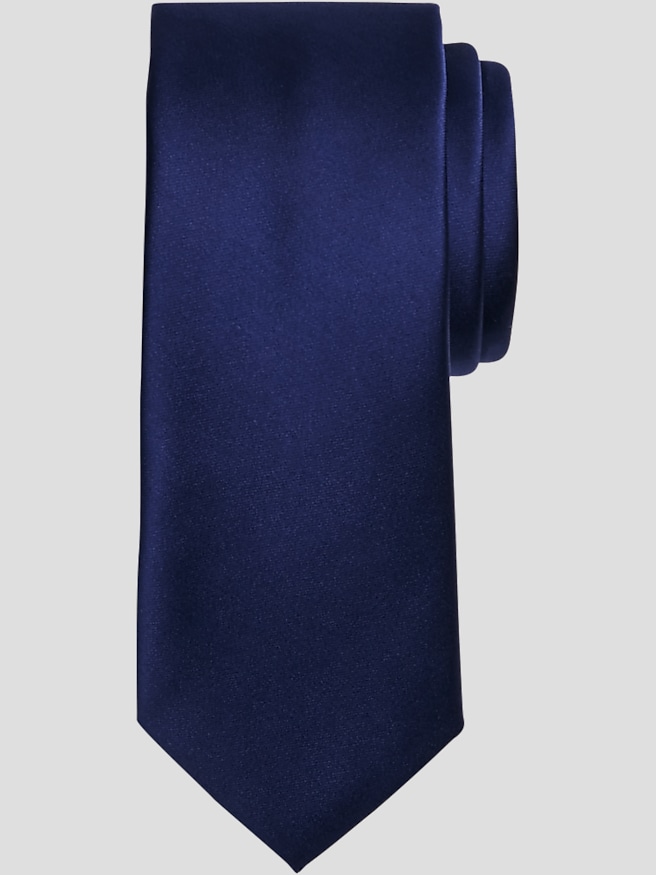
A solid tie gives a shirt and jacket a clear point of connection without adding another pattern to the mix. Against a crisp white shirt, navy creates a composed look for an interview or client meeting; burgundy adds depth to a gray suit; and a muted blue can soften the contrast of a dark jacket. The appeal goes beyond simplicity. With no stripes, checks, or printed motifs to draw attention, the color, weave, and shape of the tie become more noticeable. A smooth surface can look precise and dressy, while a textured weave brings dimension to an otherwise restrained outfit. That makes solid ties useful for everything from everyday office dressing to wedding celebrations, graduation ceremonies, and dinners that call for a jacket. They also provide an anchor when the rest of an outfit already has visual detail. A fine-striped shirt and a subtly checked jacket are easier to coordinate when the tie picks up one color rather than introducing a third pattern. Choosing a shade darker than the shirt usually creates a clear distinction, though closely related tones can produce a quieter effect. A pale blue shirt with a deeper blue tie, for example, feels coordinated without requiring an exact match. With a pocket square, a shared accent color is often enough; identical fabrics and shades are not necessary. The occasion should help set the level of contrast. Deep, restrained colors tend to feel appropriate in conservative professional settings, while brighter shades can bring personality to a celebration. Even a black solid tie changes character depending on its surroundings: paired with a white shirt and dark suit, it reads as sharp and deliberate; against a textured gray jacket, it can feel less severe. The most useful choice is one that works with shirts and tailoring already in regular rotation, rather than one that needs an entirely new outfit around it.
Fabric makes a substantial difference in how a solid tie looks, knots, and holds its shape. Silk is valued for its drape and natural luster, but not every silk tie has the same finish. A smooth satin weave reflects light more clearly, giving color a richer, dressier appearance, while a twill weave introduces fine diagonal texture and a more restrained sheen. Open, textured weaves can add depth without relying on a printed design, making them especially effective with a plain shirt. Wool generally has a softer, matte appearance that pairs well with visibly textured tailoring. Cotton tends to look relaxed and less reflective, though its crispness and crease recovery depend on the weave and construction. Linen has a dry texture and an intentionally less polished character, with natural creasing that suits less formal combinations. Polyester and other synthetic fibers can offer color consistency and resilience, but their hand, sheen, and response to heat vary. Fiber content is only part of the picture: the lining and construction also affect thickness, flexibility, and the fullness of the knot. A substantial tie may form a larger knot even when the blade looks relatively narrow, while a lighter construction may sit more neatly beneath a close-fitting collar. Width is best considered alongside jacket lapels, shirt collars, and personal proportions rather than as an isolated measurement. A narrow tie beside broad lapels can look disconnected; a wider blade beneath a small collar can overwhelm the neckline. Length matters just as much. Once tied, the tip of the front blade should generally reach the waistband or belt area without extending well below it. Torso length, neck size, and knot choice all influence that result. For a closer look at silk as a material, explore Cyber Monday Sale On Silk Ties, keeping the same attention on texture, drape, and proportion.
Small adjustments and sensible care help a solid tie keep its clean appearance over repeated wear. A four-in-hand knot produces a slightly asymmetrical shape that works well with many collars, while a half-Windsor creates a more balanced triangle without necessarily becoming bulky. The fabric should settle beneath the collar rather than force the collar points upward, and the knot should sit comfortably at the neckline without visible gaps. A shallow dimple beneath the knot adds dimension, particularly on a smooth solid surface, but it should form naturally rather than through aggressive pulling. At the end of the day, undo the knot by reversing the tying steps instead of dragging the narrow end through a tightly cinched loop. Leaving a tie knotted can set creases and put unnecessary strain on the fabric. Let it rest between wears, then hang it on a suitable rack or roll it loosely without compressing the tip. Keep it away from rough hardware, hook-and-loop fasteners, and sharp edges that can catch delicate yarns. If a spill happens, blot gently with a clean cloth rather than rubbing; water, stain treatments, and heat can leave marks or affect the finish, especially on silk. Follow the care label, and consult a cleaner experienced with neckwear when professional treatment is appropriate. These practical details also matter when choosing a tie as a gift. Someone who wears a suit several days a week may get the most use from a restrained shade that coordinates with several shirts, while an occasional tie wearer may appreciate a color suited to an upcoming celebration. For a graduate preparing for interviews or a colleague marking a career milestone, the recipient’s usual collar shape, jacket proportions, and preferred colors are more useful clues than trends. A solid tie earns its place through those repeated, ordinary moments: getting dressed for an important meeting, standing beside friends at a ceremony, or making a familiar suit feel considered again.