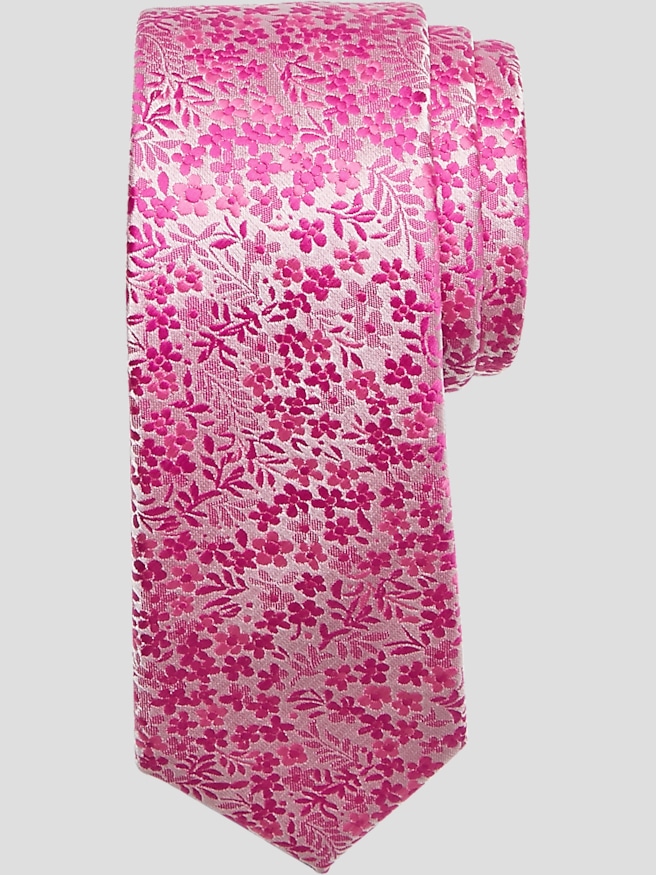
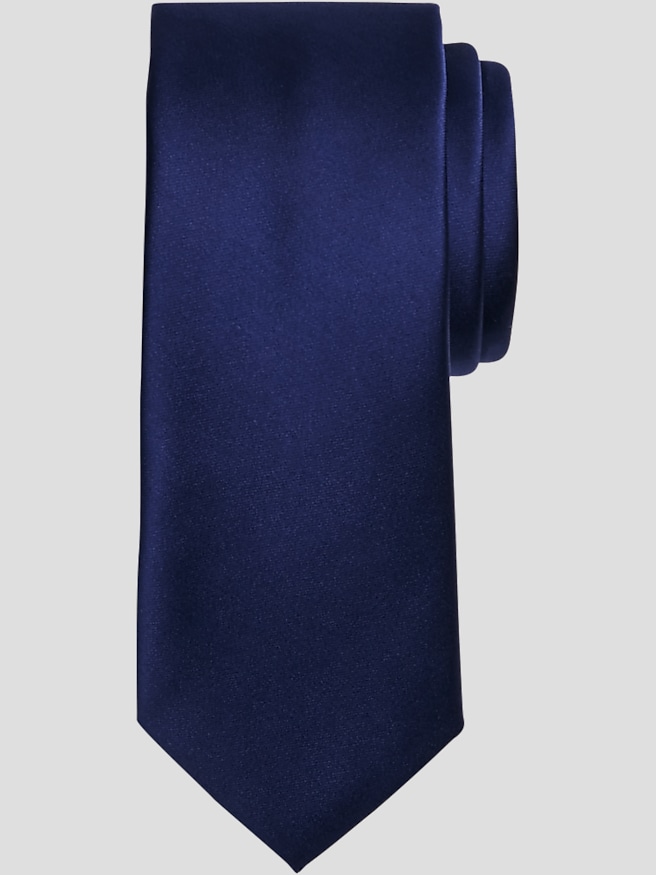
Narrow ties bring a clean, understated line to tailored clothing, adding definition without making the tie the dominant part of an outfit. Their appeal is largely about proportion: a slimmer blade can sit comfortably alongside trim jacket lapels, a moderately sized shirt collar, and a suit with a close but comfortable fit. Many narrow ties measure roughly two to three inches across at the widest point, although exact dimensions vary, and even a small change in width can alter the overall impression. The most balanced look depends on the whole outfit rather than a single measurement. A narrow tie paired with especially broad lapels can appear disconnected, while a similar width repeated through the collar, lapels, and tie creates a more cohesive silhouette. Length matters just as much. With the knot settled at the collar, the front tip generally looks best near the belt buckle or waistband, without a long tail extending beneath it. Taller wearers or those with longer torsos may need additional length to achieve that finish comfortably. A compact four-in-hand knot suits many narrow ties, giving the collar a little shape without excessive bulk; thicker fabrics naturally create a fuller knot than lightweight ones. These proportions work across business settings, wedding celebrations, graduation ceremonies, and dinners that call for something more considered than an open collar. In an interview, a quiet solid color keeps the emphasis on the conversation. At a reception, a small geometric pattern or textured weave can add personality while remaining easy to coordinate. Navy, burgundy, charcoal, and deep green offer useful starting points because they sit comfortably beside common suit and shirt colors. A white shirt provides a crisp backdrop, while pale blue softens the contrast. The result need not feel rigid or overly formal: a narrow tie can lend structure to a suit, sharpen a sport coat, or make a familiar shirt feel ready for an occasion.
Fabric gives a narrow tie much of its character, influencing everything from the surface finish to the way the blade hangs after the knot is tied. Silk can have a smooth, luminous face, a matte texture, or a visibly woven surface, so the fiber name alone does not tell the whole story. A restrained sheen can bring depth to a dark suit, while a textured silk can feel less ceremonial beside a patterned sport coat. Shoppers interested in that balance of drape and finish may also explore Cyber Monday Sale On Silk Ties when considering how fabric contributes to the overall look. Wool offers a softer, more substantial appearance that pairs naturally with visibly textured tailoring. Cotton often has a comparatively matte finish, while linen brings an irregular texture and a relaxed character that may include visible creasing. Synthetic fibers and blends can offer practical handling characteristics, but feel, wrinkle recovery, and care requirements depend on the weave and construction as well as the fiber content. The fabric inside the tie matters, too. Interlining helps provide body and supports the shape of the knot; excessive thickness can make a narrow tie look bulky at the neck, while insufficient structure can leave the blade looking limp. Neat stitching, securely finished edges, and a blade that hangs without twisting are useful signs of careful construction. Pattern scale deserves similar attention. Fine stripes, small dots, and closely spaced motifs generally read clearly within a narrow shape, whereas a large design may appear only in fragments. When a shirt already carries a pronounced check, a solid or softly textured tie gives the eye somewhere to rest. With a plain shirt and an understated jacket, a measured pattern adds interest without requiring several competing accents. Color contrast also changes the effect: a tonal combination feels quiet and cohesive, while a deeper tie against a light shirt creates a clear vertical line.
Narrow ties can become dependable parts of a wardrobe when their intended use matches their fabric, proportions, and upkeep. Someone who wears a tie several days a week may value a resilient weave, a knot that settles neatly, and colors that coordinate with multiple shirts. A tie reserved for ceremonies or evening events might place greater emphasis on surface texture or a distinctive but restrained pattern. For gifting, familiar clothing habits provide more useful clues than age alone. A recipient who favors slim lapels and close-fitting shirts may appreciate a narrow silhouette, while someone who wears broader tailoring may prefer more width. Length is worth considering as well, particularly for a tall recipient. A solid shade that echoes colors already worn often feels thoughtful without being difficult to style, and a small repeating motif offers personality without depending on a novelty design. Graduation, a new job, a promotion at work, or a wedding celebration can all make a tie an appropriate gift when it suits the recipient’s routine. Care helps preserve that usefulness. The care label should determine cleaning methods, since silk, wool, cotton, linen, and blends do not respond identically to moisture, heat, or cleaning agents. Prompt attention to a spill is sensible, but rubbing can spread a mark or damage the surface; delicate fabrics may need professional assessment. After wear, gently reversing the steps used to tie the knot reduces strain compared with pulling the narrow end through a tightened knot. Woven ties generally benefit from resting unknotted on a suitable hanger, while knit constructions are often better stored flat to avoid stretching. Packing loosely rolled ties in a protective compartment can help prevent hard creases during travel. Even small finishing details make a visible difference: a tie bar should stay within the width of the blade, and a pocket square can echo a color without duplicating the tie exactly. Together, proportion, texture, and considerate care give a narrow tie lasting value beyond a single occasion.