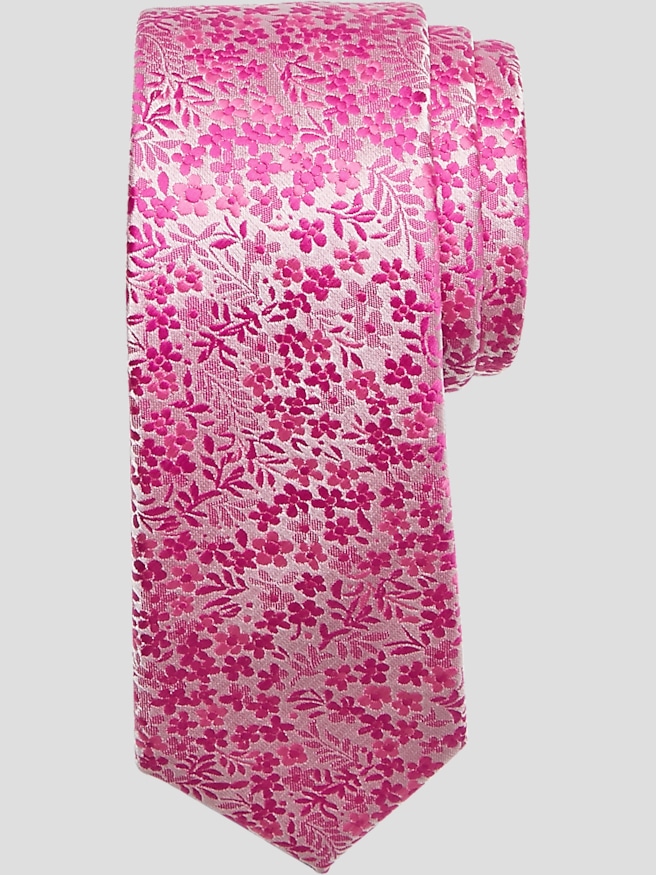
A floral tie adds character to tailored clothing without changing the foundation of an outfit. Against a navy suit and white shirt, a small botanical pattern brings detail into focus; with a charcoal jacket and pale blue shirt, a larger bloom can become the defining accent. The effect depends as much on the background color and spacing as it does on the flowers themselves. Closely spaced blossoms in muted shades tend to read as texture from across a room, making them an approachable choice for office settings, presentations, and dinners where a polished appearance matters. More open patterns, with visible space between stems or petals, create a stronger focal point and work well for wedding guests, celebrations, and occasions that welcome personal style. Dark grounds can give pink, cream, burgundy, or blue flowers a crisp outline, while lighter grounds produce a softer contrast. A useful connection often comes from one supporting color: a blue detail that echoes a shirt, a burgundy petal that complements a pocket square, or a green leaf that adds depth beside a brown jacket. Those connections do not need to be exact matches. A pocket square in a related shade or a simple white linen square can look more considered than an identical print repeated twice. Pattern scale also shapes the overall impression. A fine floral design sits comfortably beside a solid shirt, while a bolder print benefits from enough quiet space around it to remain clear. With a striped or checked shirt, a noticeable difference in pattern size helps separate the two designs visually. The result can feel expressive without becoming busy, particularly when the jacket stays solid. Floral neckwear spans understated and lively territory, giving the same familiar suit a distinct mood for a client dinner, a family celebration, or a wedding reception.
Fabric changes how a floral pattern looks and how a tie behaves throughout the day. Silk can give printed petals clean definition and a subtle luster, while woven silk can introduce dimension through the pattern itself. For anyone who enjoys a smooth surface and fluid drape, silk ties offer another way to explore color, texture, and the relationship between a knot and a shirt collar. Cotton generally has a more matte appearance, and linen often shows natural slubs that lend a floral design a relaxed character. Blends and synthetic fabrics vary in sheen, weight, and resilience, so the fabric description and care label matter more than broad assumptions about a fiber. A softly structured tie can fall close to the shirt, while a fuller construction may create a more substantial knot. Neither effect is inherently dressier; the balance comes from the collar opening, the jacket, and the proportions of the wearer. Tie width usually looks most cohesive when it relates to the width of the jacket lapels. A narrow blade beside broad lapels can appear disconnected, just as a very wide tie can overwhelm a sharply cut jacket. Length matters, too: when tied, the front tip generally looks balanced around the waistband or belt buckle, with the narrow end secured behind it. Taller wearers or those who prefer larger knots may need additional length to achieve that placement. A four-in-hand knot tends to keep the shape compact and slightly asymmetrical, leaving more of the floral pattern visible below the collar. A fuller knot occupies more space and generally works better with a wider collar opening, provided the fabric is not too bulky. Smooth edges, even stitching, and a blade that hangs without twisting are useful signs of careful construction. The best fit is less about a rigid rule than a clean line from the collar to the waist, with enough structure to stay neat through a seated dinner or a full day of meetings.
Floral ties also offer a practical way to bring personality into an established wardrobe, especially for someone who already wears solid suits and familiar shirt colors. A restrained botanical print can become a regular part of a work rotation, while a more expressive design may be reserved for milestone celebrations, anniversary dinners, or portraits. Dress codes still set the boundaries: a floral necktie can suit many tailored occasions, but an invitation specifying black tie calls for the neckwear associated with that level of dress. For wedding parties, related colors across ties can create cohesion without requiring every accessory to repeat the same pattern. Photographs benefit from that balance, since a clear floral motif can register as an intentional accent rather than competing with a checked jacket or a heavily patterned shirt. As a gift, a floral tie feels personal when its colors connect to clothing the recipient already enjoys wearing. Someone who favors navy tailoring may appreciate blue-based or burgundy-accented florals; someone drawn to textured jackets may prefer a matte finish and a less formal botanical design. Practical details, including preferred tie width, usual shirt collars, and care requirements, can make the gift easier to wear. Lasting appearance depends on handling as well as construction. Untying the knot after each wear, rather than pulling the narrow end through a tightened loop, helps limit unnecessary strain. Hanging a tie smoothly or rolling it loosely can reduce sharp creases, while adequate space keeps the blade from being crushed among other accessories. Spills need prompt, fabric-appropriate attention: rubbing can spread a mark or disturb the surface, and home washing is not suitable for every material. The care label should determine whether cleaning is handled at home or by a professional, and any pressing should respect the fabric and the tie’s shaped edges. With thoughtful proportions, compatible colors, and careful storage, a floral tie can remain a distinctive finishing touch across many occasions.